Granada is not dominated by the Alhambra so much as organised around it. One hill holds the Nasrid city, another looks back at it, and the streets below contain the Christian city that grew after 1492. Three days are enough to read those layers separately: palace-city first, Albaicín second, Granada below on the third day.
The traveller first encountered these places on a long Granada day from Seville. This three-day version gives the Alhambra, Albaicín and historic centre the time they deserve without pretending that the traveller spent three nights there. The distinction is simple; the city is substantial enough to make the expanded stay worthwhile.
Day 1 — The Red Palace on the Hill
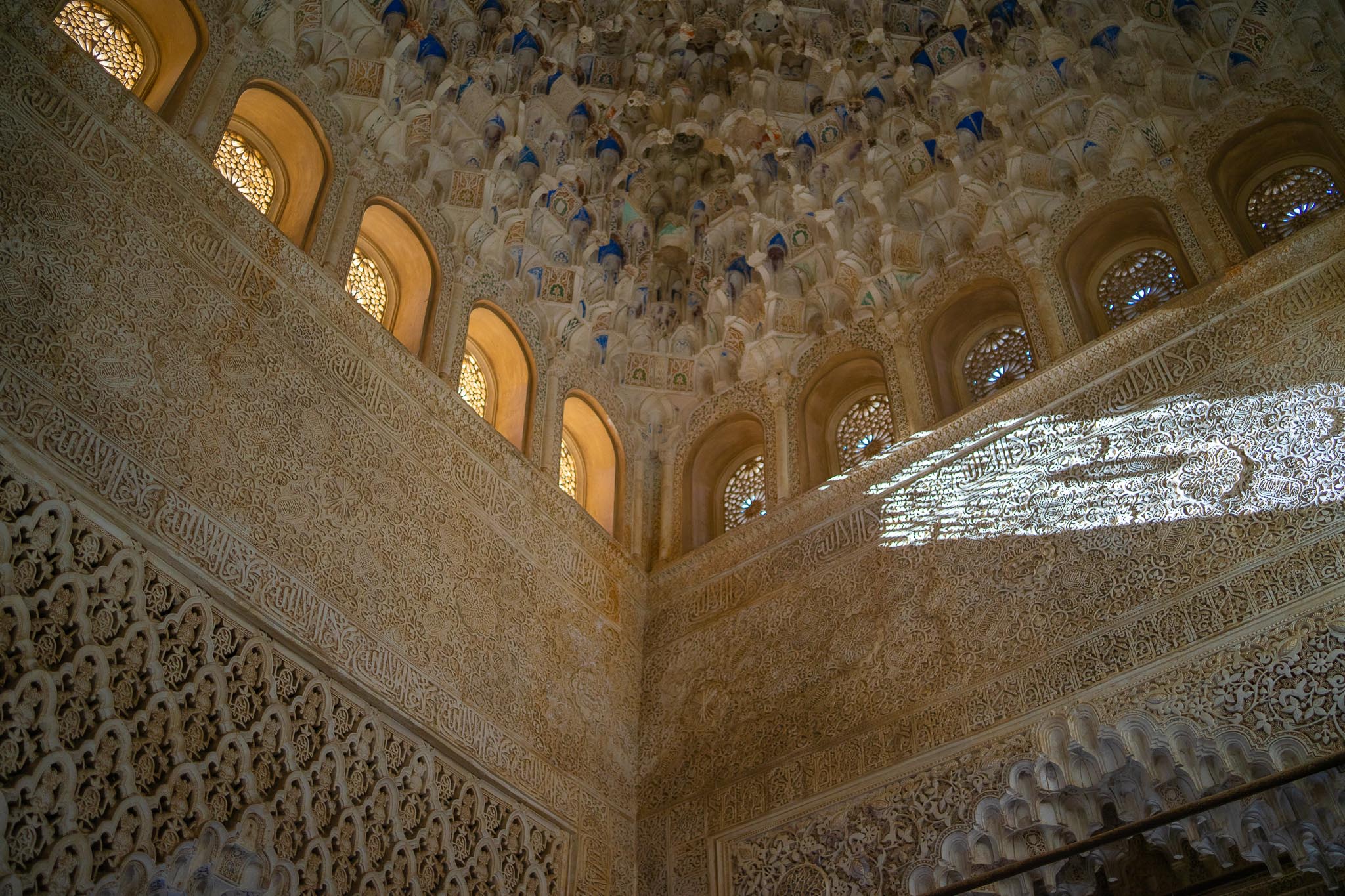
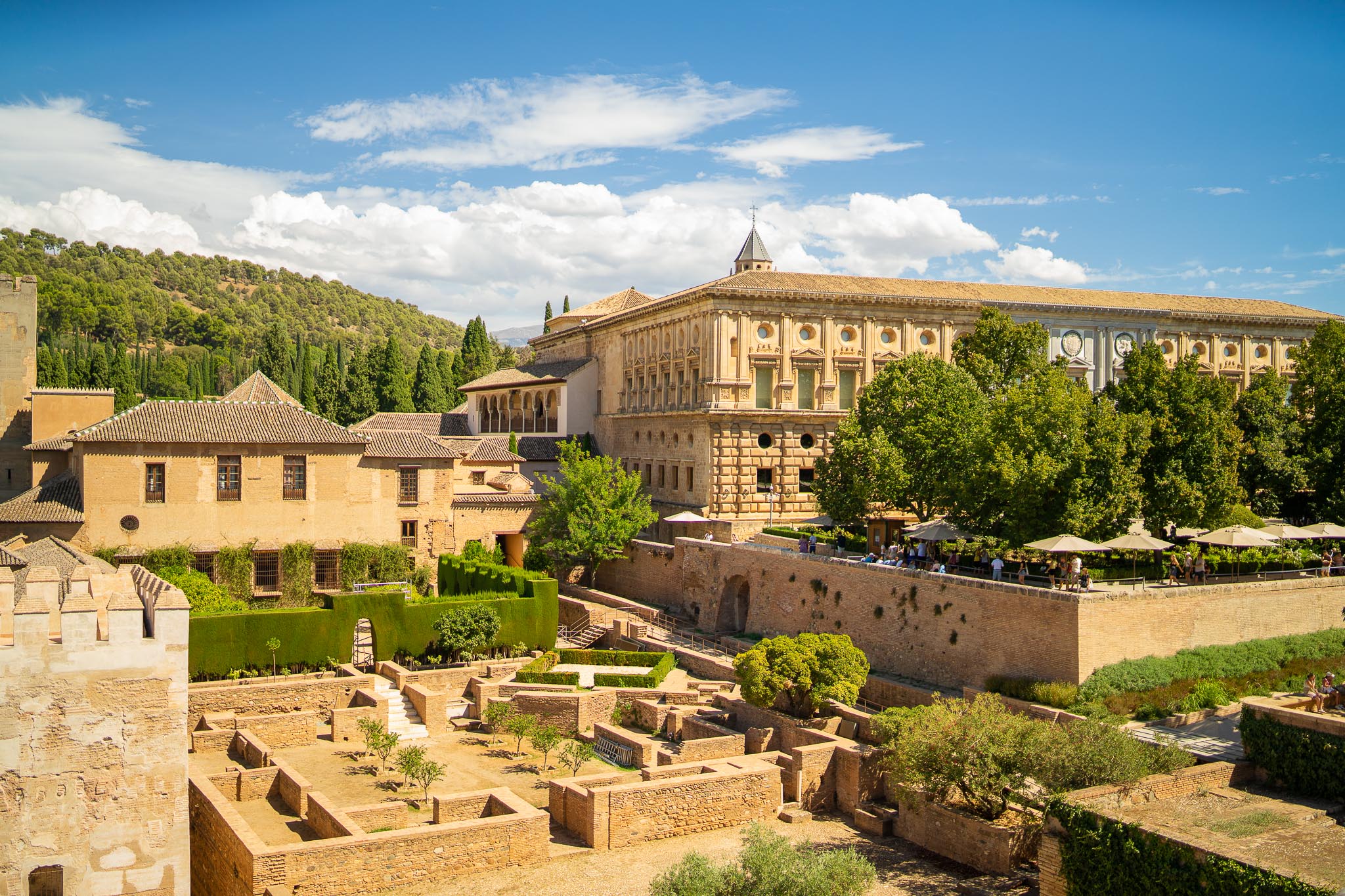
The Alhambra is often introduced as a palace. That is true, but it is not enough. The complex was a palatine city: a fortified settlement with defensive works, royal residences, ceremonial rooms, gardens, water systems and the spaces required to sustain power on the hill above Granada. The Alcazaba, Nasrid Palaces and Generalife are not three unrelated appointments. They are different parts of one political and architectural world.
The Alcazaba gives the day its defensive beginning. Its walls and towers establish the hill as a place of command, looking across the city and towards the wider landscape. From there, the Nasrid Palaces change the language of the visit. The heavy logic of the fortress gives way to courtyards, carved plasterwork, proportioned rooms and surfaces that make ornament feel structural rather than applied.
The Nasrid dynasty ruled Granada from this hill, and the palaces turn that history into architecture. Power is not announced only through size. It is organised through sequence: a threshold, a courtyard, a framed view, another room opening into another controlled interval. The courtyards are not empty gaps between interiors. They are the rooms through which the palace breathes.
Water is one of the Alhambra’s defining devices. Channels guide it through the complex, pools hold the sky in still surfaces, and fountains make movement visible without turning it into spectacle. Water cools, irrigates and divides space, but it also gives the architecture its reflection and rhythm. The Nasrid garden is ordered through the relationship between stone, planting and water; each element makes the others legible.
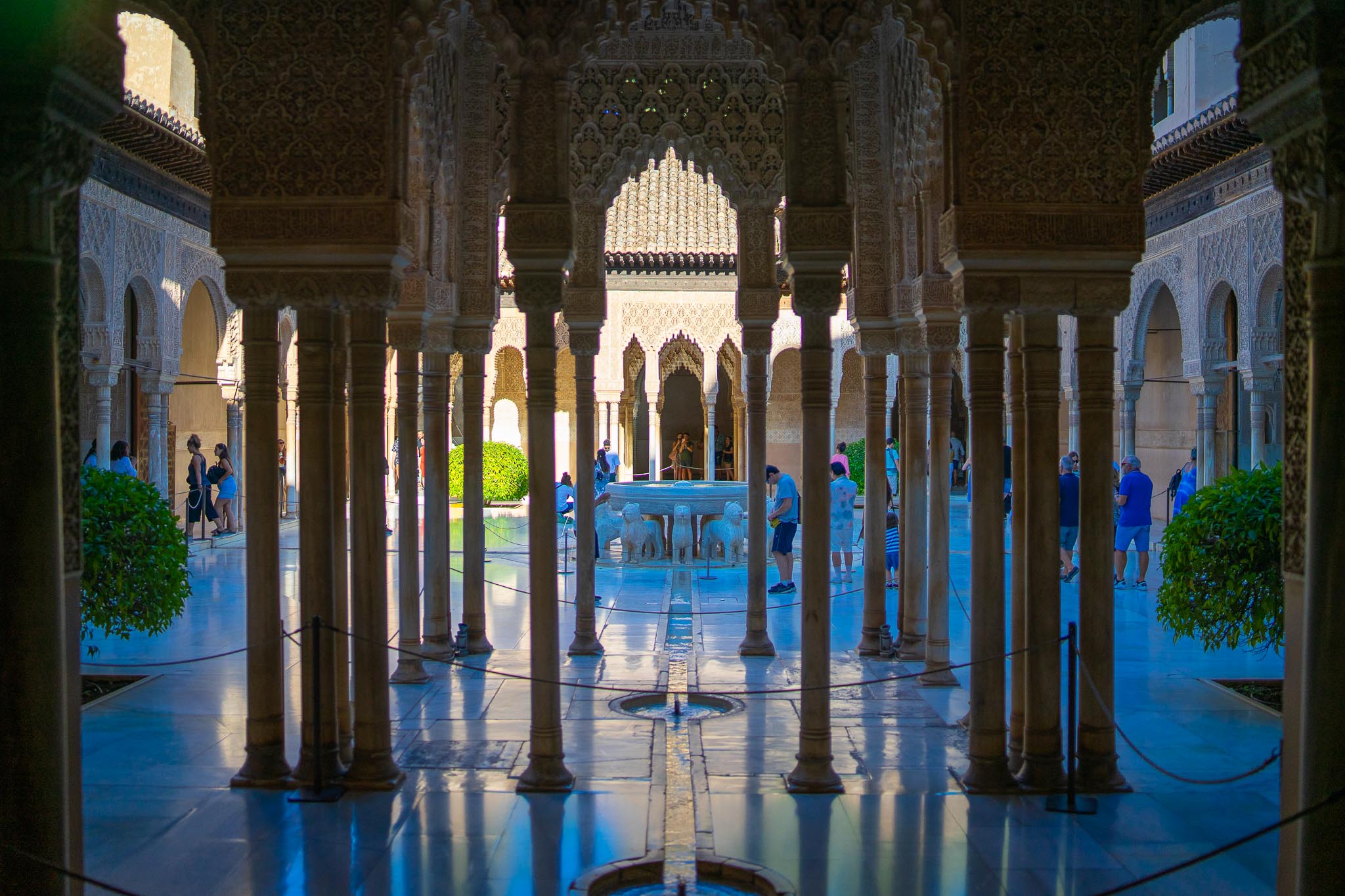
The Generalife extends the same world beyond the formal palace rooms. It was the Nasrid rulers’ country estate and summer palace complex, a place of gardens, planted terraces and water arranged for retreat without losing sight of the court above the city. Calling it simply “the gardens at the end” misses its role. The Generalife is the point where royal architecture becomes a cultivated landscape.
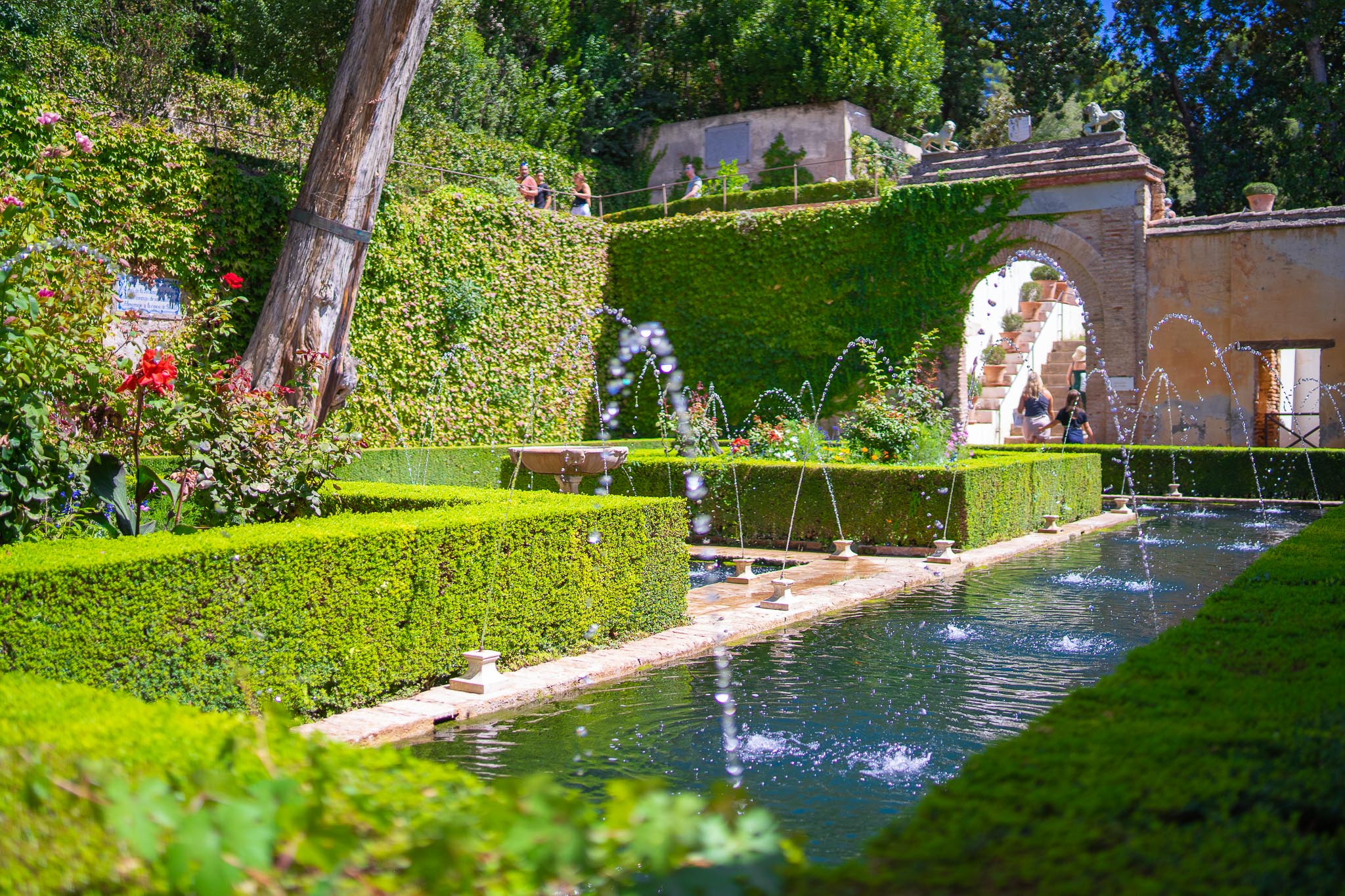
The whole complex deserves substantial time. Do not place another major Granada attraction immediately afterwards. The Alhambra is not a single viewing platform; it is a day of changing scales, from military hill to royal courtyard to garden estate, with Granada and the mountains repeatedly returning through the spaces between.
Book the Alhambra First
Reserve the Alhambra in advance through the official system. The Nasrid Palaces have a timed entry printed on the ticket, and that time must be observed; the Alcazaba, Generalife and gardens follow the ticket’s wider visit rules. Check current hours, prices and entry requirements before travel, because these details can change. The official Alhambra visit guidance is the place to verify them.
Day 2 — The Hill That Looks Back
Day One looked out from the Alhambra. Day Two looks back at it. The Albaicín occupies the opposite hill, its streets climbing through one of Granada’s oldest urban quarters towards the Mirador de San Nicolás. From this side, the Alhambra stops being a succession of rooms and becomes a complete hilltop presence: fortress, palace-city, gardens and walls held together against the landscape.
The Albaicín’s importance is not only the view. Its steep streets, traditional houses, small plazas and walled urban pattern carry Granada’s Islamic inheritance into the neighbourhood itself. The quarter was shaped before the Christian city below took its later form, and its position opposite the Alhambra makes the two hills read as a pair rather than as separate attractions.
That relationship is the reason to keep the Albaicín for its own day. The Mirador de San Nicolás is not merely a place to look towards the palace. It is the hinge of the whole Granada argument. The first day places the traveller inside the Nasrid world; the second places that world across the valley, with the city and, when visibility allows, the Sierra Nevada extending behind it.
The walk through the Albaicín should be allowed to remain geographical rather than over-timed. Hillside streets rarely reward the same logic as a flat centre. Keep the viewpoint, the neighbourhood and the descent towards the lower city within one broad day, leaving room for the change between narrow lanes, open viewpoints and the larger view of Granada below.
The reversal matters. From the Alhambra, Granada seemed to gather beneath the hill. From the Albaicín, the palace becomes the subject and the city becomes the space that joins the two elevations. The view is not an interruption to the neighbourhood. It is the explanation of why the neighbourhood matters.
The Albaicín forms part of Granada’s UNESCO-listed Alhambra, Generalife and Albaicín ensemble, and the designation makes sense as a statement about urban form rather than a promise of one perfect street. The quarter’s value lies in its accumulated relationship with the Alhambra: hill facing hill, old houses and walls holding the middle ground, the modern city continuing below.
Day 3 — Granada Below
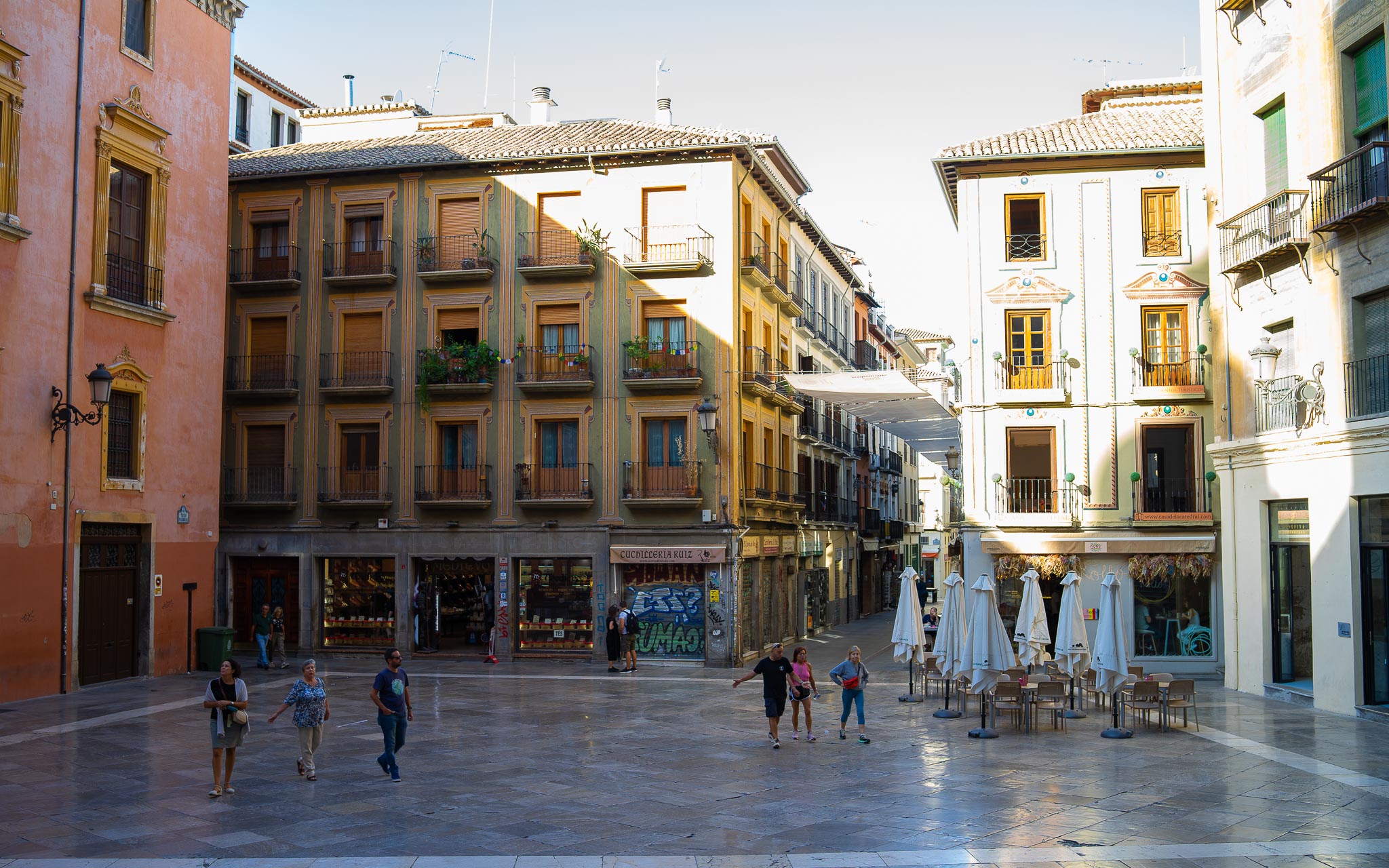
The third day returns to the city below the hills. This is Granada after the palace and the viewpoint: the cathedral quarter, historic streets, plazas and the Christian monumental city that developed beneath the former Nasrid capital.
The Cathedral of Granada gives the day its clearest centre. The building belongs to the post-1492 transformation of the city, when Christian power remade the symbolic heart of Granada after the Catholic conquest. Its scale and position make the change visible. The hill above still holds the Alhambra, but the city below now speaks through a different religious and political language.
The nearby Capilla Real, or Royal Chapel, belongs naturally to the same historical reading and can be paired with the Cathedral on the third day. Granada’s Christian centre was not built beside the Nasrid world by accident. It was built into the meaning of the city after the conquest.
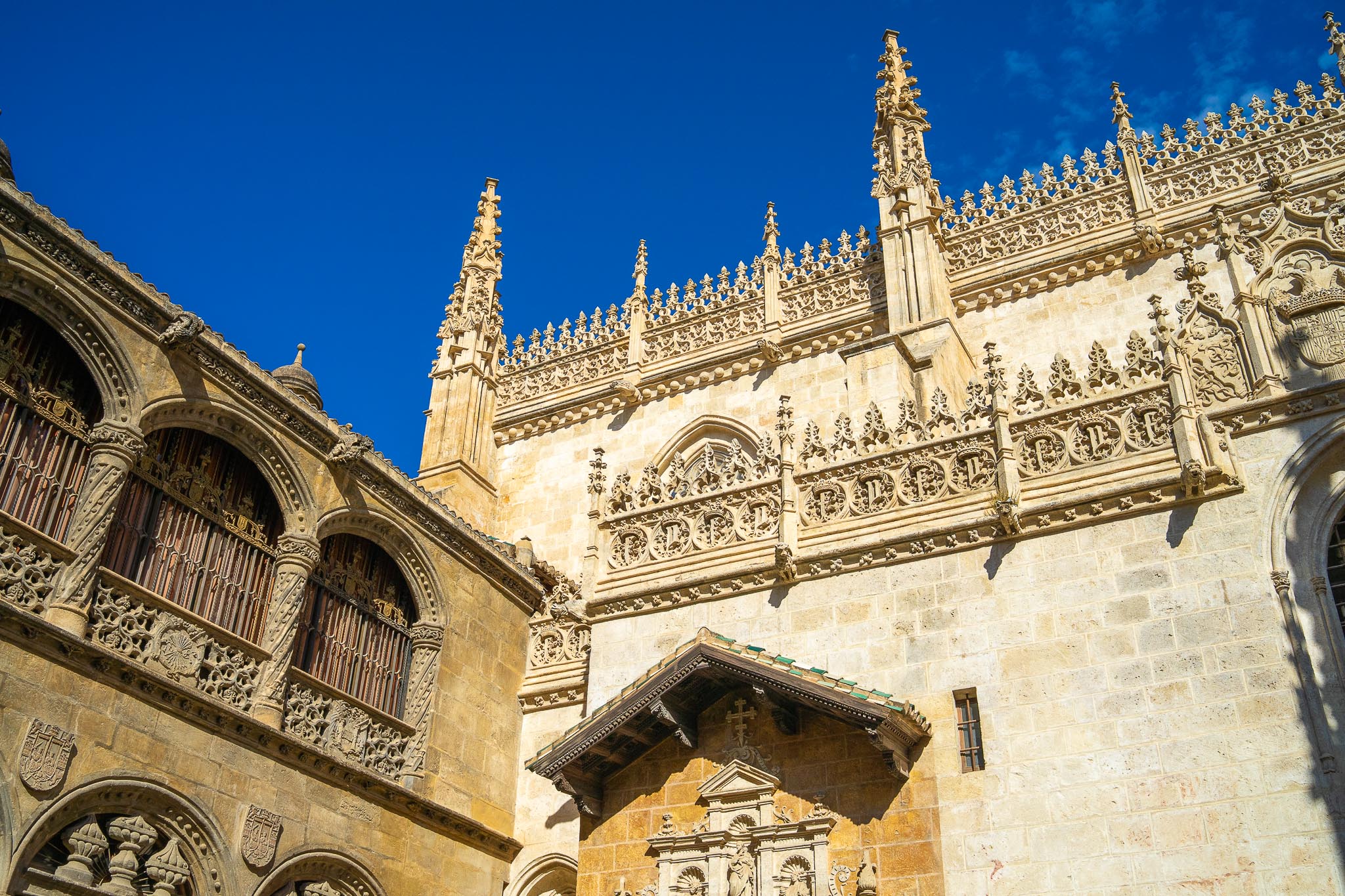
Keep the remainder of the day at street level. Plazas and historic façades give the centre a different kind of scale from the Alhambra: less secluded, more public, with the city’s religious and civic life arranged around open spaces. The traveller is no longer looking down from a hill or across a valley. Granada is now encountered as a city that has absorbed several histories without flattening them into one style.
This day is also where the two hills become useful rather than merely beautiful. The Alhambra explains the Nasrid height of Granada. The Albaicín explains the view back. The cathedral quarter explains what happened below after the old kingdom fell. Without the third layer, the city risks becoming a palace and a panorama. With it, Granada becomes a historical city in full.
Granada in Layers
Granada is a city read from above and below. The Alhambra holds the Nasrid hill, its fortress, palaces, water and gardens arranged as a city of power. The Albaicín reverses the view, placing that hill across the valley and making the relationship between the two elevations visible. The third day returns to the cathedral quarter and the streets beneath them, where Christian Granada occupies the ground below the former sultanate.
That is why three days work. Not because Granada can be reduced to three headings, but because the city changes when the traveller changes position. Palace-city, facing hill, Christian centre: three elevations of the same history.