Machu Picchu is often treated as a single viewpoint: arrive, look, leave. That is the quickest way to miss the shape of the place. The mountain citadel is the centre, but Aguas Calientes is the town beneath it, Huayna Picchu is the separate height above it, and the railway is the thread that ties the visit to the wider journey. Two nights make those levels visible.
The traveller first reached these places on 13 September 2026, stayed in Aguas Calientes for two nights, returned to the archaeological park on 15 September, and then continued towards Cusco and the overnight road to La Paz. The result is a compact three-calendar-day sequence: rail town, mountain, ruins, town again, ruins again, then the road onward.
The two-night logic is straightforward. Arrival does not have to carry the weight of the ruins. Huayna Picchu can occupy its own part of the middle day. Aguas Calientes becomes a real base rather than a station platform, and the final morning can return to Machu Picchu before the railway and the road take over.
I. Day One — The Rail Town Beneath the Mountain
The railway brings the traveller into Aguas Calientes, also known as Machupicchu Pueblo, below the archaeological park. The town is compressed by geography: roofs, tracks and market buildings occupy the lower valley while steep green walls rise immediately beyond them. The mountain is not yet the citadel. It is the pressure around the town, the thing that turns an ordinary rail arrival into the beginning of a larger ascent.
That is why sleeping below the mountain changes the visit. The first day can remain an arrival day. The town can be crossed without competing with a timed palace visit or a return train. Market streets, the railway and the surrounding valley give Machu Picchu a human scale before the stone terraces take over.
Aguas Calientes is not an alternative to Machu Picchu. It is the inhabited level beneath it. The town holds the practical parts of the stay — accommodation, meals, market, hot springs and the connections back towards Cusco — while the citadel occupies the higher, more formal world above. The contrast is useful. Without it, the archaeological park becomes a detached image; with it, the site belongs to a journey through changing elevations.
The arrival day should therefore be kept light. Check in, orientate around the town, and leave the major mountain visit for the time already reserved for it. Current rail schedules and entry arrangements should be checked before travel, but the larger planning principle does not change: the first night belongs to Aguas Calientes.
For a closer account of the lower town, continue to Aguas Calientes Beyond Machu Picchu.
II. Day Two — Huayna Picchu and the Town Below
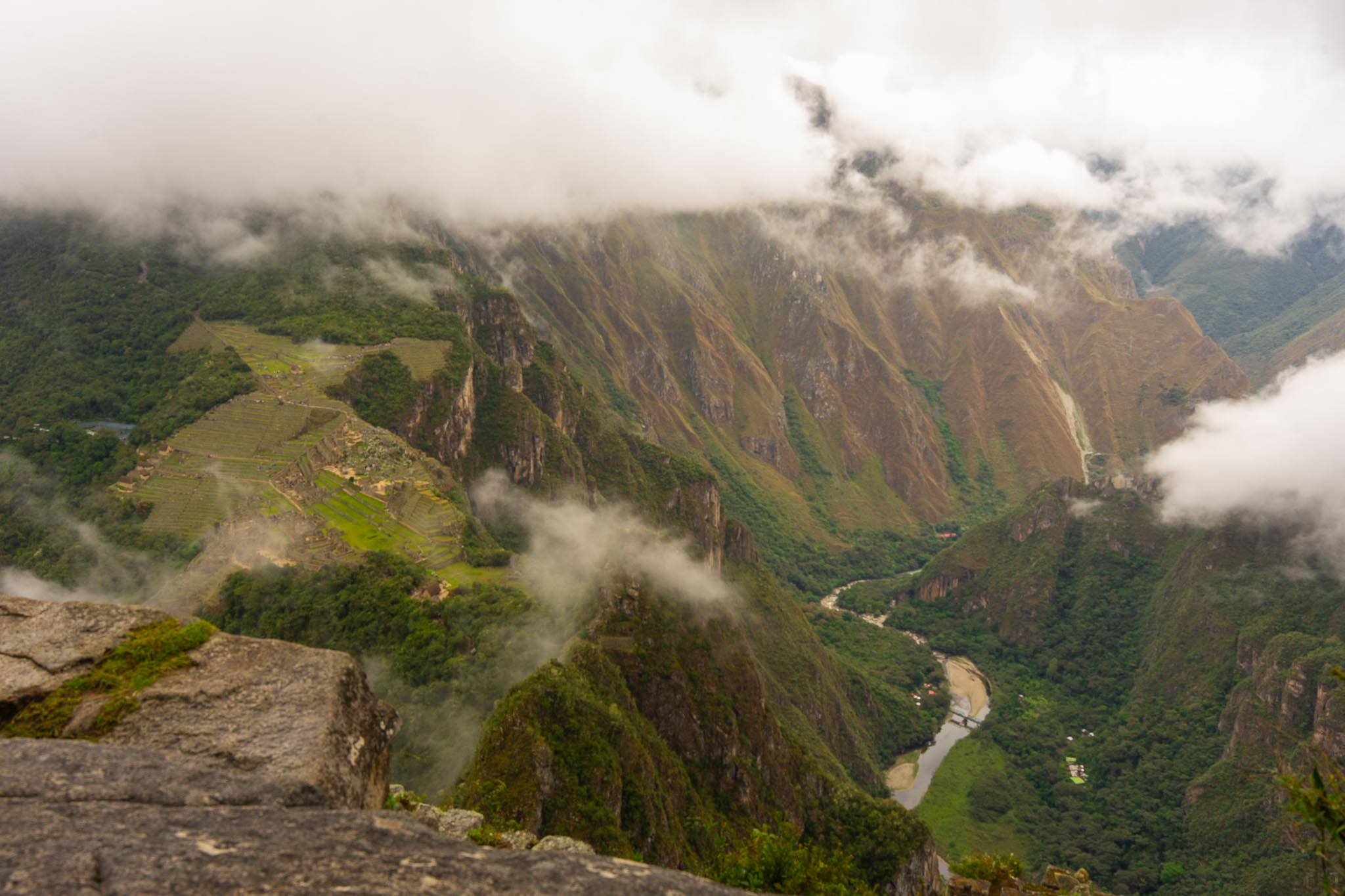
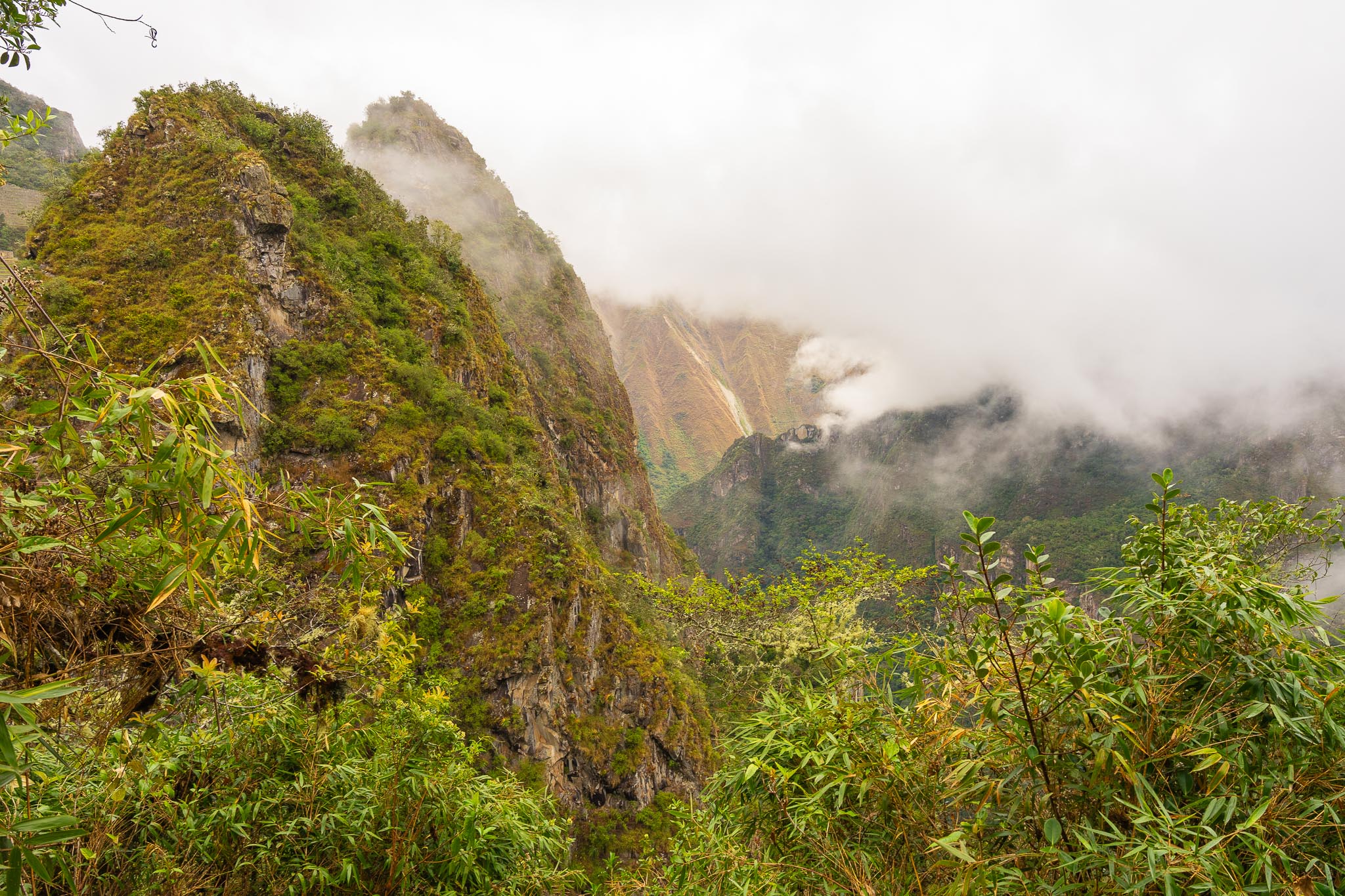
Huayna Picchu is not a second angle on the same postcard. It is the steep mountain rising above Machu Picchu, the dark triangular height that appears behind the citadel in so many views. A Huayna Picchu entry changes the middle day from a visit to the ruins into a distinct mountain experience before the traveller returns to the lower town.
It is also a separate ticketed experience, so it belongs in the planning from the beginning rather than being added after the main entry has been arranged. The mountain changes the physical emphasis of the day: the citadel is read from above and within the wider ridge system, while Machu Picchu itself remains the architectural centre below. The full account belongs in the separate Huayna Picchu hike guide; here, its role is to explain why the second day deserves its own shape.
The contrast continues after the mountain. The Butterfly Zoo returns the visit to the lower valley and to a smaller scale. Butterflies, foliage and enclosed paths make a useful counterpoint to the citadel’s walls and terraces. It is not another monument competing for the afternoon. It is a brief change of register between the mountain above and the town below.
The market and hot springs then make Aguas Calientes feel inhabited rather than merely useful. The market belongs to the town’s everyday scale; the hot springs offer a different kind of pause after the mountain. Meals in town complete the middle day without needing invented restaurant recommendations or dish descriptions. The point is not to fill every hour. It is to let the town carry the hours that do not belong to the citadel.
This is the strongest argument for two nights. The middle day has room to move from Huayna Picchu to the Butterfly Zoo, market, hot springs and town streets without pretending that each stop is part of the same kind of experience. Mountain, enclosure, market and water are four different ways of occupying the valley.
III. Day Three Morning — Machu Picchu Before the Road Continues
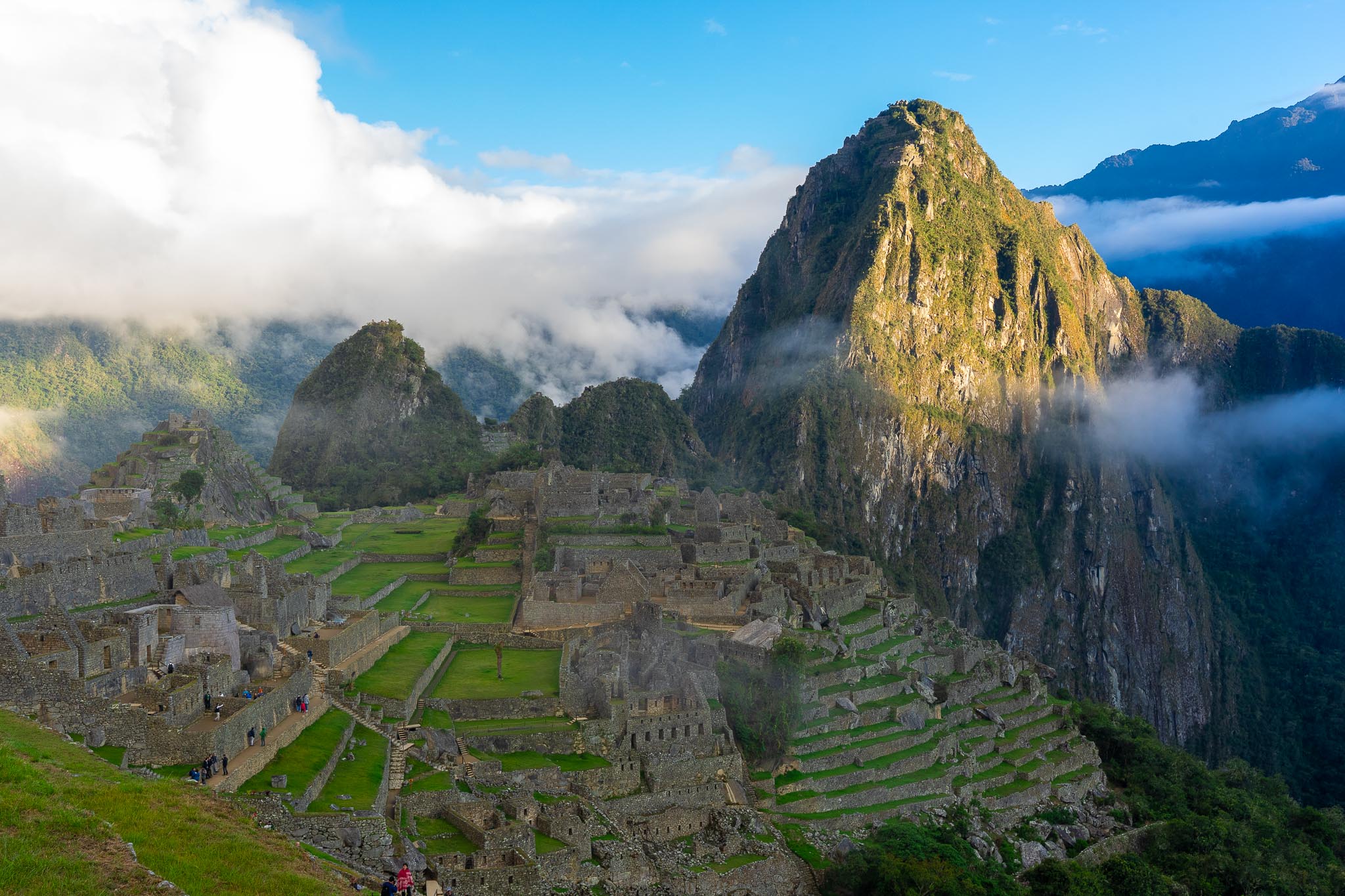
The final morning returns to the Machu Picchu archaeological park. The early visit gives the site its own last movement before the descent to Aguas Calientes and the railway departure. The day is not another attempt to collect every structure. It is a return to the relationship between stone, terraces and mountain.
Machu Picchu was built in the fifteenth century, at the height of the Inca Empire, and was abandoned in the sixteenth century as the empire collapsed under Spanish conquest. The site entered broad international attention after Hiram Bingham reached it in 1911, guided by people from the surrounding area who already knew the ruins. The old language of “discovery” obscures that local knowledge. The citadel is not an isolated object waiting for a modern name. It is a planned Inca settlement whose agricultural, residential, ceremonial and defensive functions were adapted to a steep ridge.
The terraces make that adaptation visible. They do not simply decorate the mountain; they turn difficult slopes into organised ground. Stone walls, paths and levels hold together a settlement that seems to have been cut from the ridge while remaining inseparable from it. The geometry is the achievement: built order and mountain form are not competing subjects.
The wider sanctuary is recognised by UNESCO for both cultural and natural value. That combination matters at the site itself. The archaeological park cannot be understood without the surrounding peaks, deep valleys and cloud-forest setting. Huayna Picchu is one part of that geography, but so are the ridge, the terraces and the spaces falling away from the citadel on every side.
After the park, the visit descends to Aguas Calientes and returns by rail. The exact departure should be checked against the live ticket rather than carried over from an old timetable. What matters to this itinerary is the connection: the final visit to Machu Picchu becomes the beginning of the return towards Cusco, and the return through Cusco feeds into the 10:00 pm Cusco-to-La Paz overnight bus.
The road towards Bolivia therefore begins before the night bus leaves. It begins when the traveller leaves the mountain, passes back through the rail town and exchanges the archaeological park for the long overland movement that follows.
The Mountain and the Town
Machu Picchu was the destination, but Aguas Calientes was where the two-night itinerary actually lived. The town received the railway, held the market and hot springs, made room for Huayna Picchu, and then returned the traveller to the tracks below the citadel.
The mountain was not a single viewpoint. It was a sequence of levels: rail town, steep ridge, Inca terraces, town again, then the road through Cusco towards Bolivia. Two nights give each level enough time to become part of the same journey.