Aguas Calientes is usually written as a pause beneath Machu Picchu: arrive by rail, sleep, climb, return, leave. That description gets the logistics right and the town wrong. The railway settlement below the ruins deserves more attention because it gives the mountain stage a human scale — rails, market buildings, hot springs, meals, steep valley walls and the unplanned intervals between the famous climbs.
Two nights were enough for the place to register. The first could belong to arrival; the middle day could hold Huayna Picchu and the smaller town activities; the final morning could return to the archaeological park before the long journey onward. Machu Picchu remained the reason for coming. Aguas Calientes became the place where the visit actually happened.
For the complete sequence, see the Machu Picchu and Aguas Calientes itinerary. This page stays below the citadel: with the rail town, the market, the springs, the Butterfly Zoo and the geography that makes the settlement feel compressed between river and mountain.
I. The Railway Town Beneath the Mountain
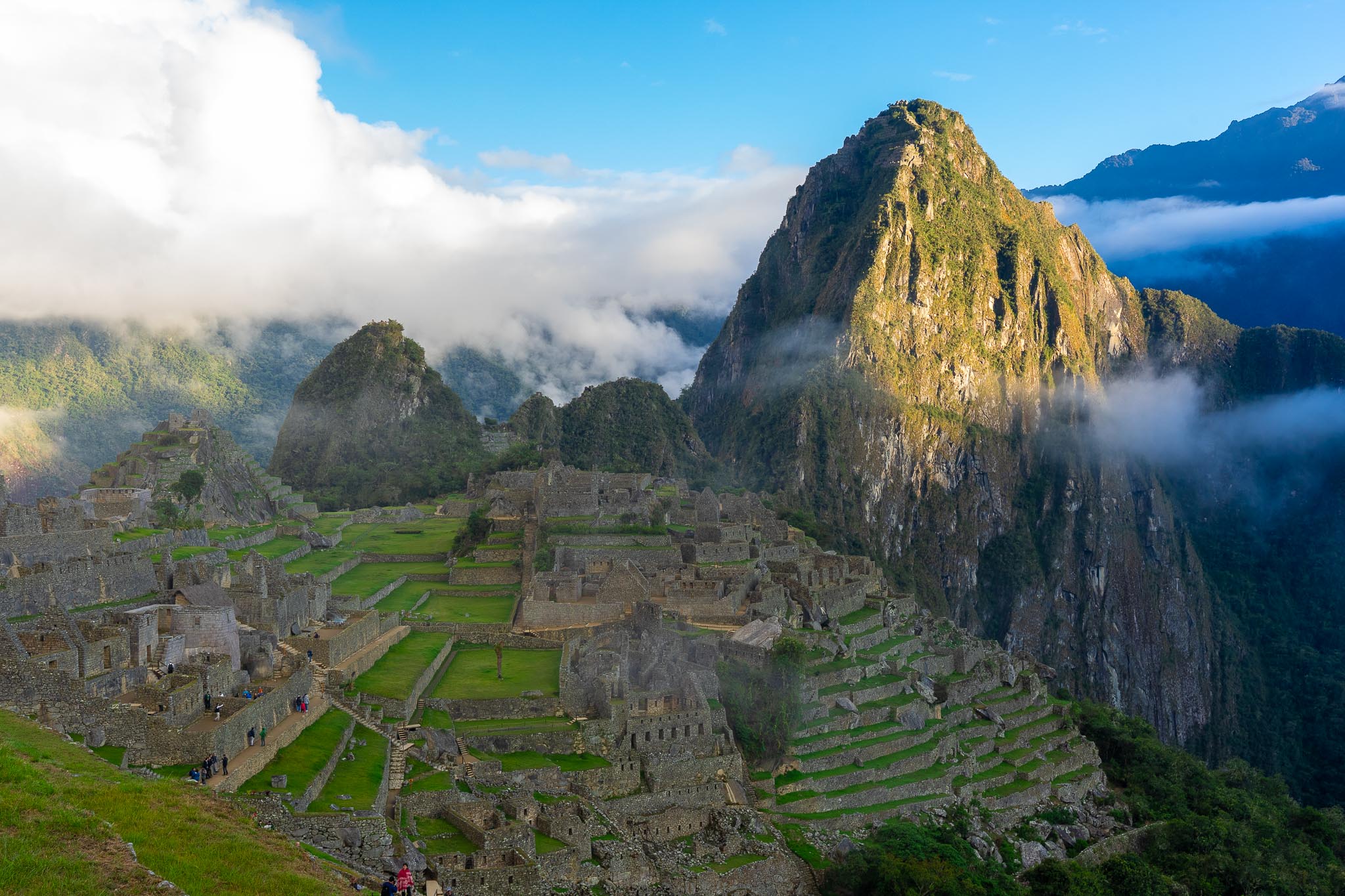
Aguas Calientes enters the journey by rail. The train arrives below the ruins, in a settlement whose compact footprint is pressed against steep green walls. The railway is not a background detail to be crossed on the way to a hotel. It is the town’s defining line: the way people enter, the way they leave and the reason the streets remain oriented towards movement even when the mountain visit is over.
The official name, Machupicchu Pueblo, is useful here. It describes a town rather than an attraction, and the distinction matters. Machu Picchu is the archaeological park above. Huayna Picchu is a separate mountain experience. Aguas Calientes is the human base around both — a place of roofs, rails, market structures and short pauses between larger excursions.
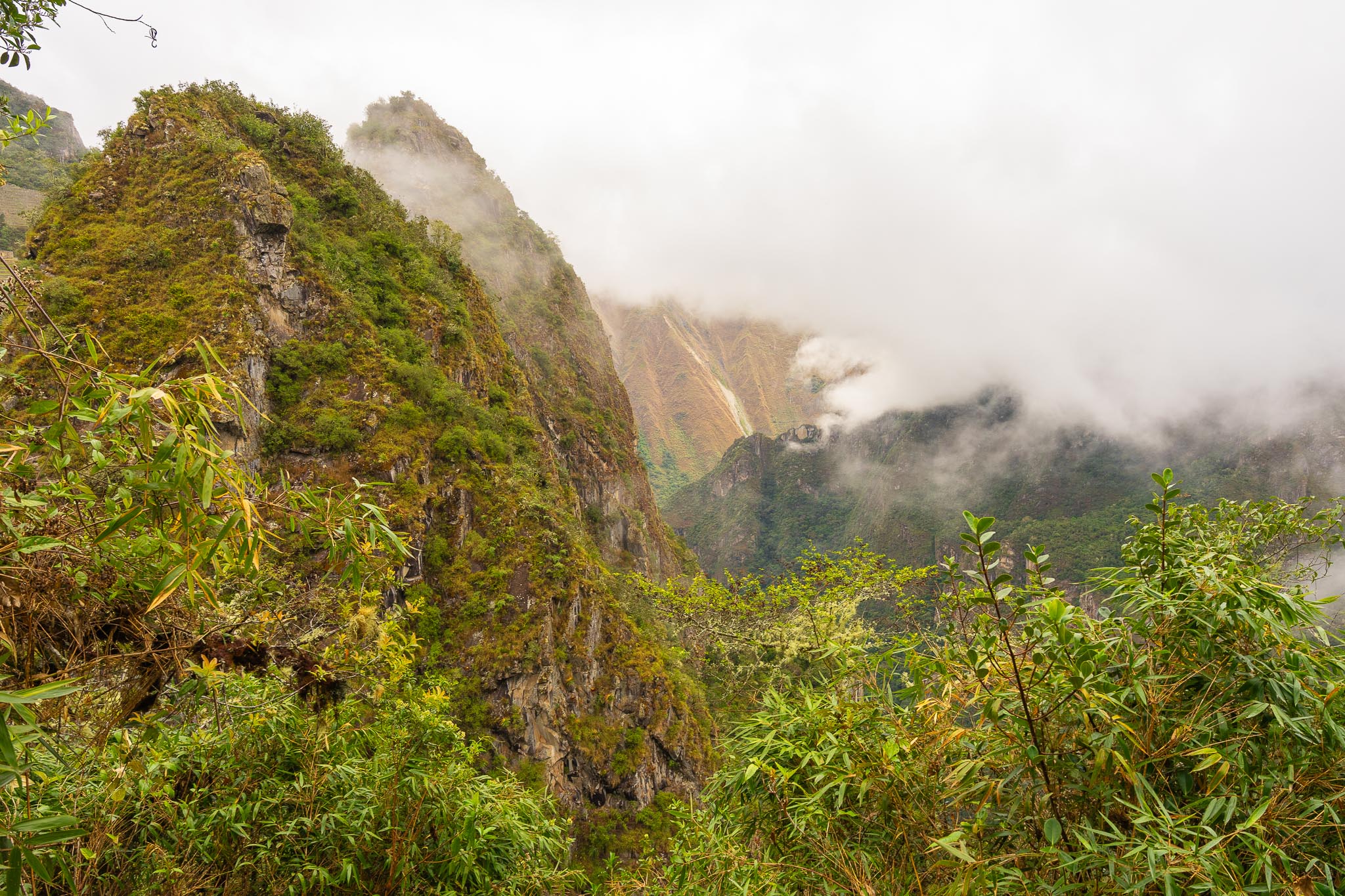
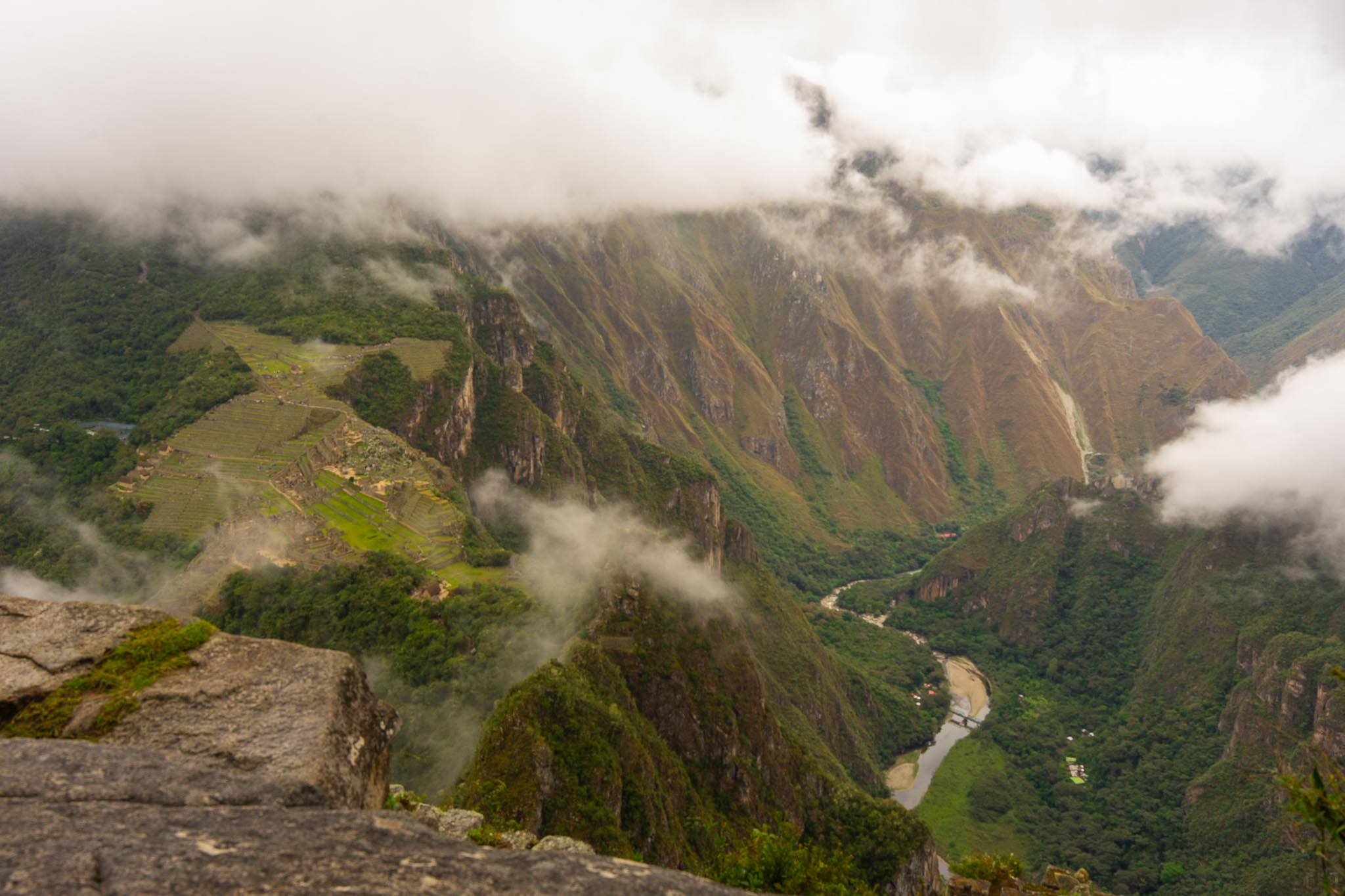
The settlement’s geography does much of the writing. The surrounding mountains rise sharply, while the town occupies the narrow space left for streets, accommodation, food and transport. Nothing here has the broad civic scale of Cusco or Lima. The valley walls are too close, the railway too present, the mountain above too dominant. The result is not merely a gateway. It is a railway town physically organised by the attraction that stands above it.
II. Why Two Nights Work
The stay ran from 13 to 15 September 2026. Its shape was simple:
- 13 September: rail arrival from Cusco/Wanchaq, accommodation handoff and the first orientation to the town below the mountain.
- 14 September: Huayna Picchu, the Butterfly Zoo, the market, the hot springs and meals in Aguas Calientes.
- 15 September: an early visit to the National Archaeological Park, return to town and the onward rail and overnight-bus connection.
That arrangement is worth repeating. Arrival should be allowed to remain arrival. Huayna Picchu deserves its own block rather than being squeezed into a day already crowded with the citadel. The town activities work best in the intervals around the mountain, and the final archaeological-park morning can remain separate from the departure that follows it.
One night can work for a compressed visit. Two nights are better when Huayna Picchu, Machu Picchu and the town are all part of the plan. The extra night does not turn Aguas Calientes into a rival destination; it prevents the town from disappearing behind the timetable of the ruins.
Exact rail timings vary, so the sequence is more useful than a fixed clock. Check the current operator and live timetable close to travel. The town needs room around the mountain, not just a bed before an early entry.
III. The Market and the Town Centre
The market is one of the ordinary places that gives Aguas Calientes a centre of its own. It belongs to the settlement rather than to the archaeological park, and that is precisely why it matters. Above the town, Machu Picchu gathers terraces, stonework and history into one monumental experience. Below, the market returns the journey to stalls, roofs, paths and the practical business of a town receiving people by rail.
There is no need to turn it into a shopping guide. The useful recommendation is simpler: leave time to pass through the market on the town day, rather than treating every hour below the ruins as spare capacity. It is one of the places where the settlement stops being a transfer point and becomes somewhere with its own daily shape.
IV. Butterflies Below the Ruins
The Butterfly Zoo fits into the middle of the stay because it changes the scale without trying to compete with the mountain. It was part of the 14 September sequence after Huayna Picchu, a small nature stop below the archaeological park rather than another summit or monument.
That makes it a useful counterpoint. Huayna Picchu pulls the traveller upwards into ridge, stone and valley. The Butterfly Zoo keeps the visit at ground level, within the green world that surrounds the town. The point is not to inflate it into a headline attraction. It is to notice how a two-night stay allows a smaller stop to sit naturally beside the major ones.
The Huayna Picchu hike account covers the mountain block in more detail. Here, the Butterfly Zoo belongs to the town day: a modest activity that gives the hours below the citadel their own shape.
V. The Hot Springs
The hot springs were another part of that 14 September town day. They fit the identity of Aguas Calientes because the settlement is not only a rail stop below Machu Picchu; it is also a place built around water, heat and the pause after the larger excursions.
Keep the practical treatment current rather than over-specific. Check access, opening hours and admission arrangements close to travel, and allow the springs to occupy part of the town day rather than forcing them into the same timetable as Huayna Picchu. Their value is in giving the hours below the ruins a purpose of their own.
VI. The Place Around the Monument
Meals in Aguas Calientes belong to the journey in the most straightforward way: they happened between the larger excursions. The town’s role is not to supply a separate food itinerary. It is to make room for eating, walking, waiting and looking back towards the mountains without pretending that every pause needs to become an attraction.
That human scale is the reason to stay. Machu Picchu is encountered as an archaeological park, with terraces, masonry, paths and a carefully managed visit. Huayna Picchu is encountered as a distinct mountain block. Aguas Calientes holds the accommodation, meals, market, springs, butterflies and rail journeys that connect them.
The relationship is geographical as much as practical. The town sits in the lower valley; the citadel occupies the mountain stage above it; the railway ties the settlement to Cusco and to the onward journey. The steep walls keep all three places in the same frame while ensuring that they never become the same experience.
Is Aguas Calientes worth staying overnight?
Yes, especially when the plan includes Huayna Picchu or an early Machu Picchu entry. Staying overnight keeps the rail arrival, the mountain visits and the town activities from collapsing into one hurried transfer. Two nights are the stronger choice when both the citadel and Huayna Picchu matter.
Is two nights too much?
One night is enough for a compressed visit centred on Machu Picchu. Two nights are better when the itinerary also includes Huayna Picchu, the Butterfly Zoo, the market, the hot springs and a final archaeological-park morning before departure.
That second night gives the town time to become visible. It lets arrival remain arrival, gives the middle day room to move between mountain and town, and protects the final morning from being reduced to a race between the ruins and the railway.
Practical planning
Arriving by rail
The journey reached Aguas Calientes from Cusco/Wanchaq by train. Treat the railway as part of the town’s geography from the moment of arrival: accommodation, market, meals and the departure connection all gather around it. Confirm the current operator, departure point and timetable before booking the rest of the day.
Pairing the town with Huayna Picchu
Keep Huayna Picchu as its own mountain block. The Huayna Picchu hike account explains that experience separately, while the complete Machu Picchu itinerary places it inside the full two-night sequence. The town day can then hold the market, Butterfly Zoo and springs without turning every stop into a rushed add-on.
Leaving room for departure
The journey returned to the archaeological park on 15 September before the onward rail connection and the Cusco-to-La Paz overnight bus. Do not build a current timetable from that sequence. Leave enough margin for the park visit, the return to town and the next departure, and check the live rail and bus details close to travel.
Beyond Machu Picchu
The wider 24 Days in South America itinerary follows the journey through Peru and Bolivia. The Cusco to La Paz overnight bus article continues from the transfer after Aguas Calientes. These are onward links, not reasons to turn the town into a footnote.
The town where the journey pauses
Aguas Calientes does not compete with Machu Picchu. It is the place from which the mountain is approached, returned from and remembered: by rail, through the market, after the springs, between meals, beneath the valley walls and before the next climb.
Machu Picchu was the reason for the stop. Aguas Calientes was where the journey found its human scale.
But the road is ever onward.