Mendoza works best when the city and wine country are given separate time. Three nights allow the journey to arrive from Santiago, settle into the streets and parks, move towards the foothill edge, and then give a full day to the vineyards before the road turns east again.
The stay ran from 23 to 26 September 2026. The bus from Santiago left Terminal Sur at around 10:00 am and reached Mendoza at approximately 4:00 pm, making the first afternoon a partial beginning rather than a full sightseeing day.
Day 1 — 23 September — Arrival and Mendoza as a City
The bus from Santiago carried the journey into Argentina on 23 September. Mendoza began in the afternoon, with the city still ahead and the larger journey temporarily held at the edge of the map.
The useful choice was not to force a wine-country excursion into the arrival window. Mendoza’s first impression belonged to its own streets and greenery: the formal city, Parque General San Martín and Mendoza University, whose surrounding area would shape the city day.
That division also gives the visit a better beginning. The transfer from Santiago is a substantial piece of the journey in its own right, while the afternoon arrival leaves enough time to settle in and see how Mendoza is arranged. The city does not need to be treated as a waiting room for the bodegas. It has its own sequence of streets, trees and public spaces, and the first evening is better used to enter that sequence gradually.
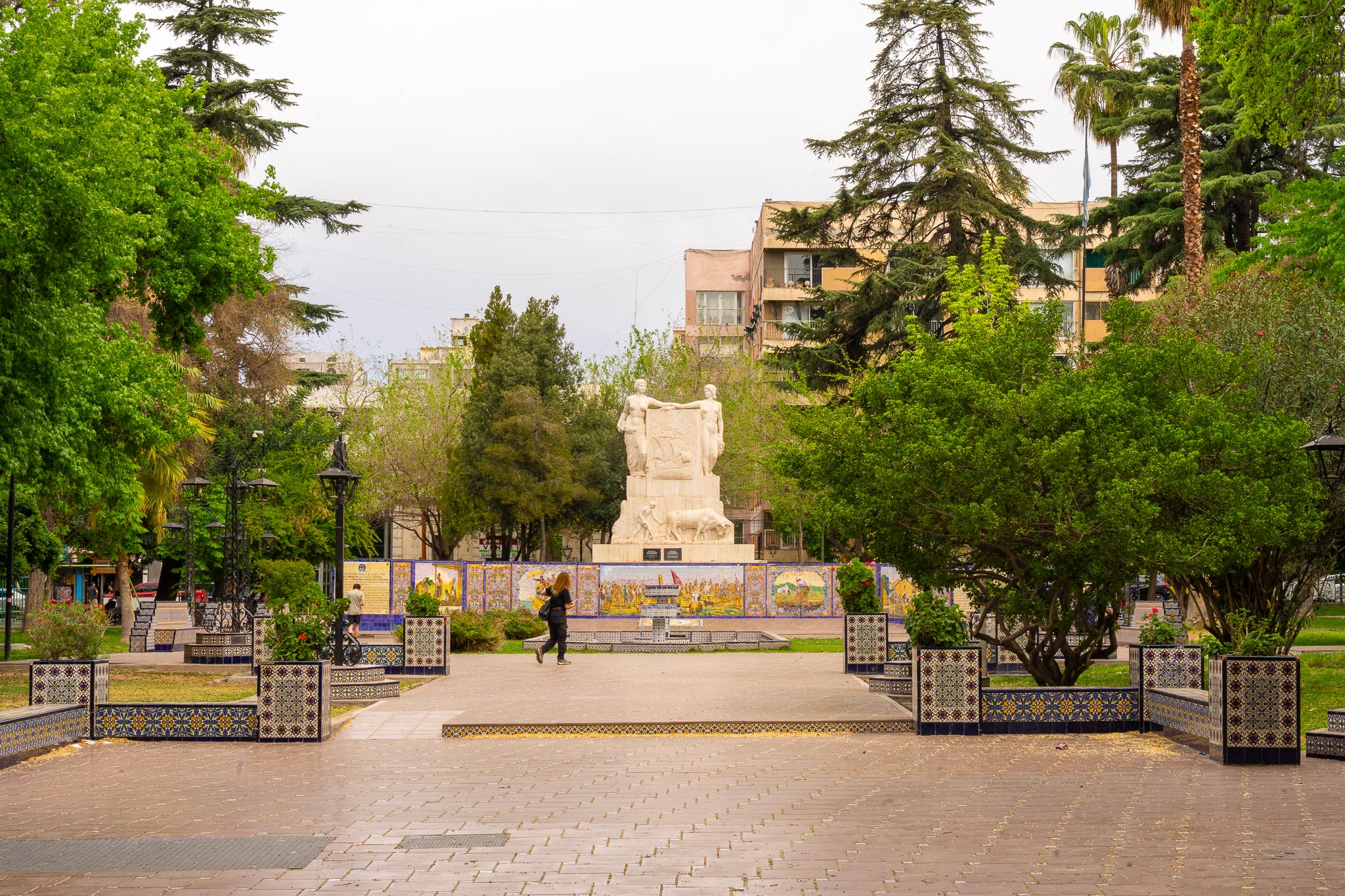
The first day therefore combines arrival with a first reading of Mendoza itself. Central streets, formal buildings and mature trees make the city legible before the vineyards enter the story. Mendoza University adds another part of that civic geography, while Parque General San Martín gives the city room beyond its blocks and avenues.
That relationship between institution, street and park is the useful city context for a short stay: Mendoza is not a single centre to cross off, but an urban pattern that opens into public space.
Parque General San Martín is the natural centre of the day. Its trees, routes and monuments make Mendoza’s green character visible as part of the city’s structure rather than as decoration around it. Architecture gives way to landscape, then returns; the change is part of the place.
The park is important here because it changes the way the city is read. Mendoza’s centre can feel ordered and deliberate, but the park prevents that order from becoming hard or enclosed. It provides a longer line through the day, linking the university area and the formal streets to a larger public landscape. The broad streets, mature trees, university grounds and park do not sit as unrelated stops; together they explain why Mendoza feels unusually green and spacious for a city itinerary.
The practical mistake would be to treat every stop as a separate appointment. The city works better as a connected first day, with the streets, university area and park allowed to explain one another. Mendoza deserves that time before the vineyards enter the itinerary. For a more focused account of the city side, continue to Mendoza Beyond Wine.
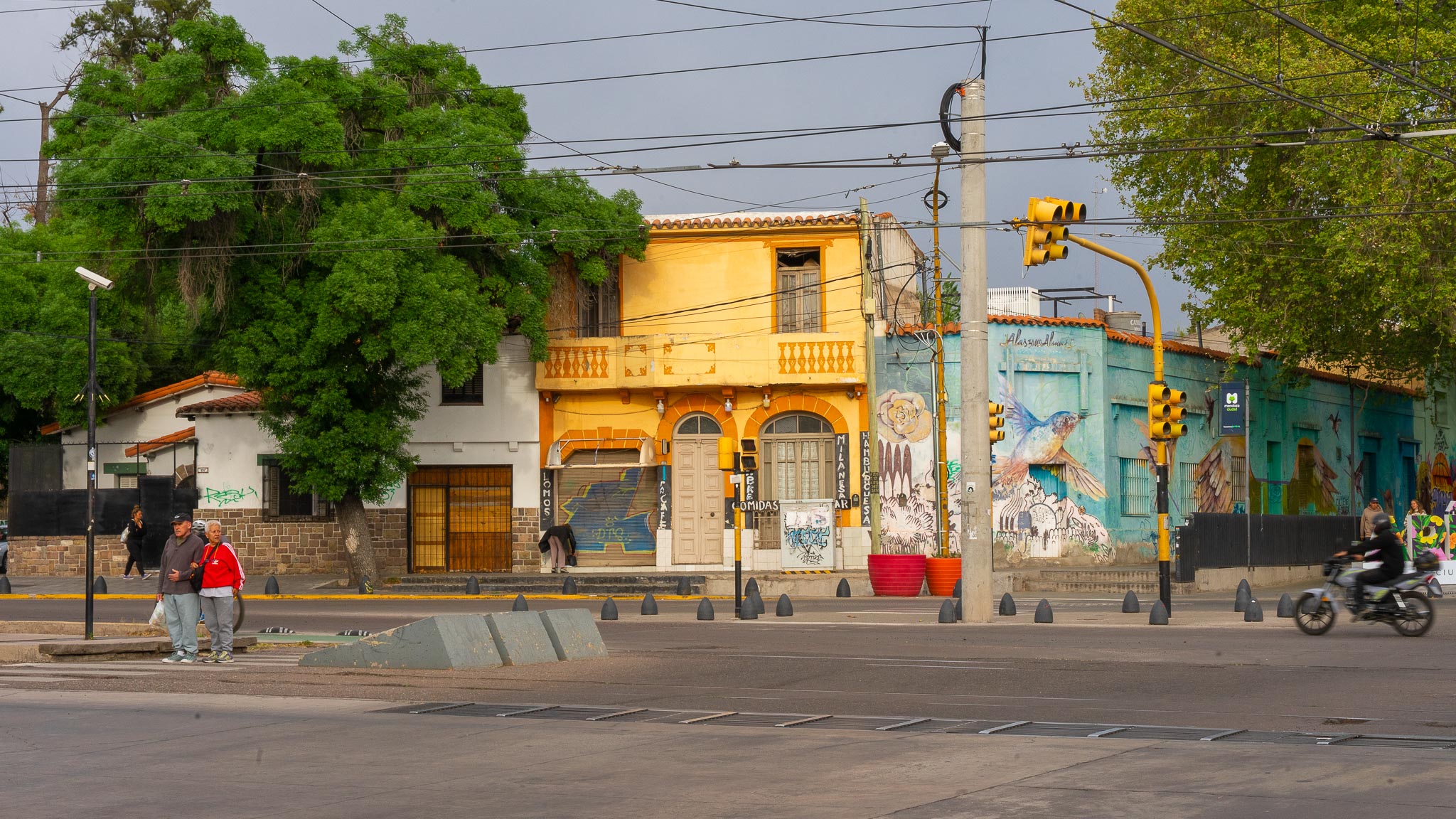
Day 2 — 24 September — Cerro de la Gloria and the Foothill Edge
The second day widens the geography. Cerro de la Gloria is the anchor: a monument in a foothill setting where Mendoza’s ordered streets meet the land beyond the city. The monument honours the Army of the Andes and the liberating campaign led by General José de San Martín, giving the foothill stop a direct place in Argentine history rather than making it only a viewpoint or city-edge landmark. The Andes are no longer only a distant edge behind the urban plan; the surrounding terrain enters the day.
San Vicente Park supports that movement towards the edge. It belongs to the same wider geography as Cerro de la Gloria, helping the day move from central streets through green public space and towards the foothills. It is not a competing headline attraction. Its value is in the transition.
Together, the monument and park show a Mendoza larger than its centre. Keep the day geographically coherent: move from the city’s planned greenery to the San Martín monument and then through the supporting parkland at the edge. San Vicente Park broadens the setting again, so the day connects public history, foothill geography and the city’s green structure without turning into a collection of disconnected stops.
Day 3 — 25 September — Wine Country
Wine country gets the whole day. After the city and foothill edge have had their time, the vineyards become the destination rather than an excursion squeezed around everything else.
The day’s named producers were Carmelo Patti, Bodega Viamonte, Cecchin, Pasrai, Vistandes and Bodega Esencia 1870. Together they give the wine-country day its shape. They are not presented as a ranking: Mendoza’s wine identity is broad enough to deserve a day without turning every stop into a verdict.
The balance matters. The city is not scenery on the way to the wine-country stops, and those stops do not need to compete with the city. Mendoza’s wine identity is tied particularly closely to Malbec, but the region is not one uniform vineyard or one single kind of producer. Luján de Cuyo, Maipú and the Uco Valley are distinct parts of the wider wine map, which is why a full day and sensible arrangements matter more than trying to improvise every visit around the city schedule.
That is the reason to resist overloading the itinerary. The vineyards are not an add-on after the city has been exhausted. They are the second half of the Mendoza visit, and they need enough time to stand apart from the streets and parks that came before them. The two sides belong to the same destination, but they should not be flattened into one continuous list.
26 September — Departure towards Iguazú
The Mendoza stay ended on 26 September. The next movement continued towards Iguazú, and the morning belonged primarily to transit rather than another full sightseeing plan. The exact onward connection is not needed to understand the shape of the visit: three nights in Mendoza, then east again.