Iguazú is one landscape divided between two national parks, two border crossings and two ways of standing beside the same river. Argentina takes the traveller into the waterfall system through a succession of circuits. Brazil steps back and lets the whole width of the falls enter the frame. Two full days are enough because the second side does not repeat the first.
The base was Puerto Iguazú, in Argentina. The first evening belonged to the town and to Hito Tres Fronteras, where the rivers and borders make the geography visible before the water becomes the subject. The following day stayed inside Iguazú National Park. The next crossed into Brazil for the Cataratas trail, Macuco Safari and Parque das Aves.
This is the correct shape for a first visit. One day for movement through the Argentine falls; one day for the Brazilian panorama and its neighbouring attractions. The two countries do not compete for a single verdict. They complete one landscape by showing it at different distances.
For the deeper comparison, continue to Iguazú Falls: Argentina vs Brazil. For the wider journey, see the 24 Days in South America itinerary.
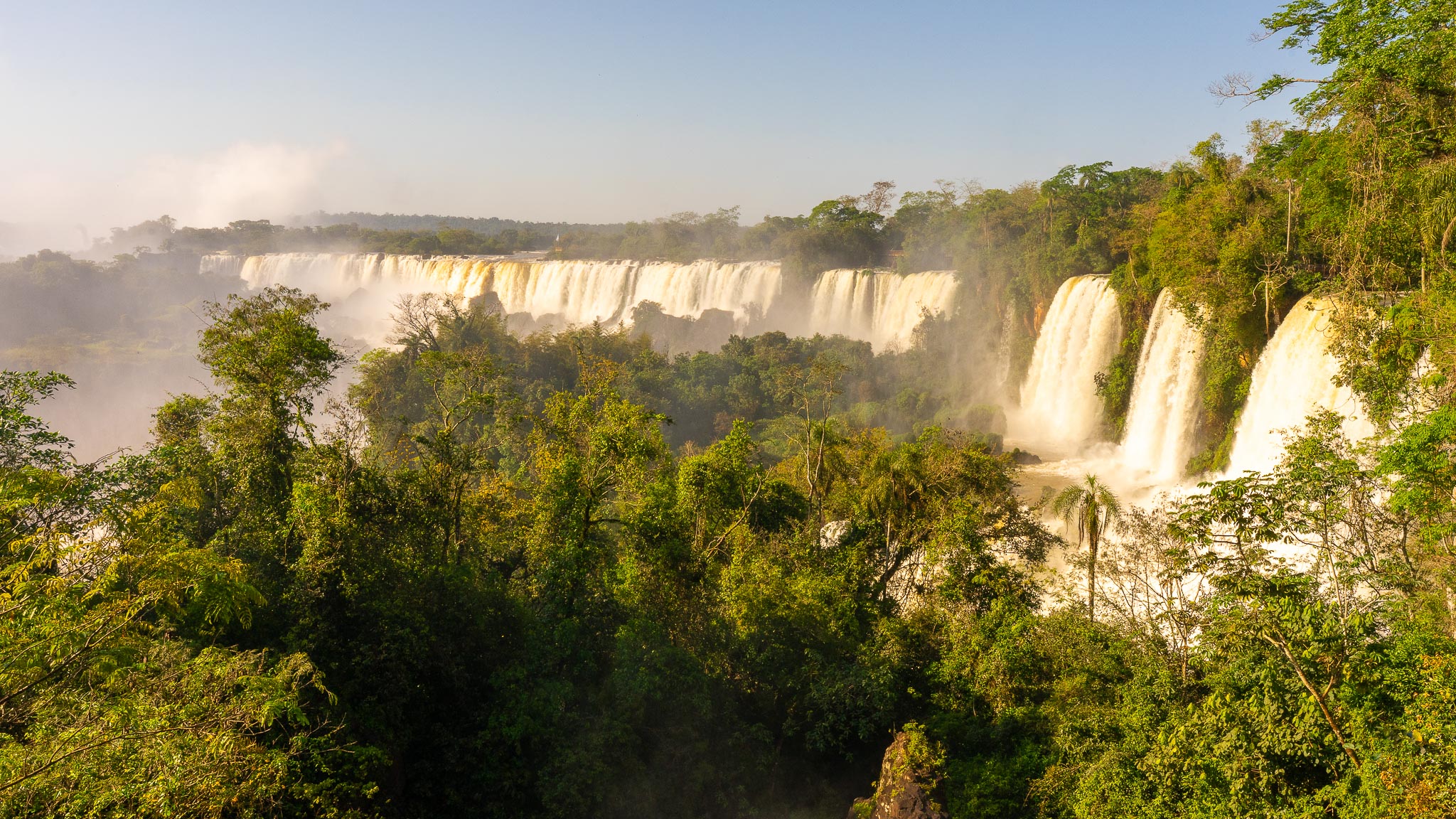
I. Arrival at the Three Borders
Puerto Iguazú is the practical Argentine base: close to the national park, easy to use for an evening and well placed for the crossing into Brazil the following day. The town does not need to carry the drama of the falls. Its value is that it gives the journey a human scale before the forest and water take over.
Hito Tres Fronteras makes the geography legible. The Paraná and Iguazú rivers meet at the edge of the town, and the opposite banks belong to Paraguay and Brazil. The three countries are not an abstract map here. They sit across the water, separated by a river and held together by the shape of the border.
The arrival evening moved from the airport to Hito Tres Fronteras and then to dinner at El Hito Restaurante Mirador. The sequence kept the first night light: arrive in Puerto Iguazú, see the border geography, sleep in the Argentine base and leave the next morning for the falls.
That separation matters. The park days are full enough without asking the arrival evening to become a third excursion. Puerto Iguazú works because it lets the first day begin with the Argentine park rather than with another transfer.
II. Day One — Inside the Falls
The Argentine day is built as a movement through the waterfall system. Iguazú National Park is not one overlook with several names attached to it. The Ecological Jungle Train connects the main stations, and the park’s paths divide the water into different heights, distances and directions.
The Superior Circuit, Inferior Circuit and Garganta del Diablo walkway work as separate parts of the Argentine park, with the Ecological Jungle Train linking Central, Cataratas and Garganta stations. Access can change after high water, so check the park’s current notice before travel. The essential idea remains stable: Argentina gives the visitor several ways to enter the falls.
Garganta del Diablo
Garganta del Diablo is the day’s great concentration. From the Garganta station, the walkway crosses the upper Iguazú River before reaching the chasm where the water gathers and drops. The path is not a distant approach to a waterfall. It leads over the river itself, so the final view is prepared by water moving beneath the boards and forest holding the edges of the scene.
The walkway is a long, level approach across the upper river, and its importance is geographical as much as visual. The traveller reaches the brink by following the river towards its interruption. The falls are not presented as a wall encountered from the side; they become a break in the river’s own direction.
This is why Garganta del Diablo belongs near the beginning of the Argentine day, provided current access allows it. It gives the system a centre. The later circuits then explain how much water, forest and cliff exists around that centre.
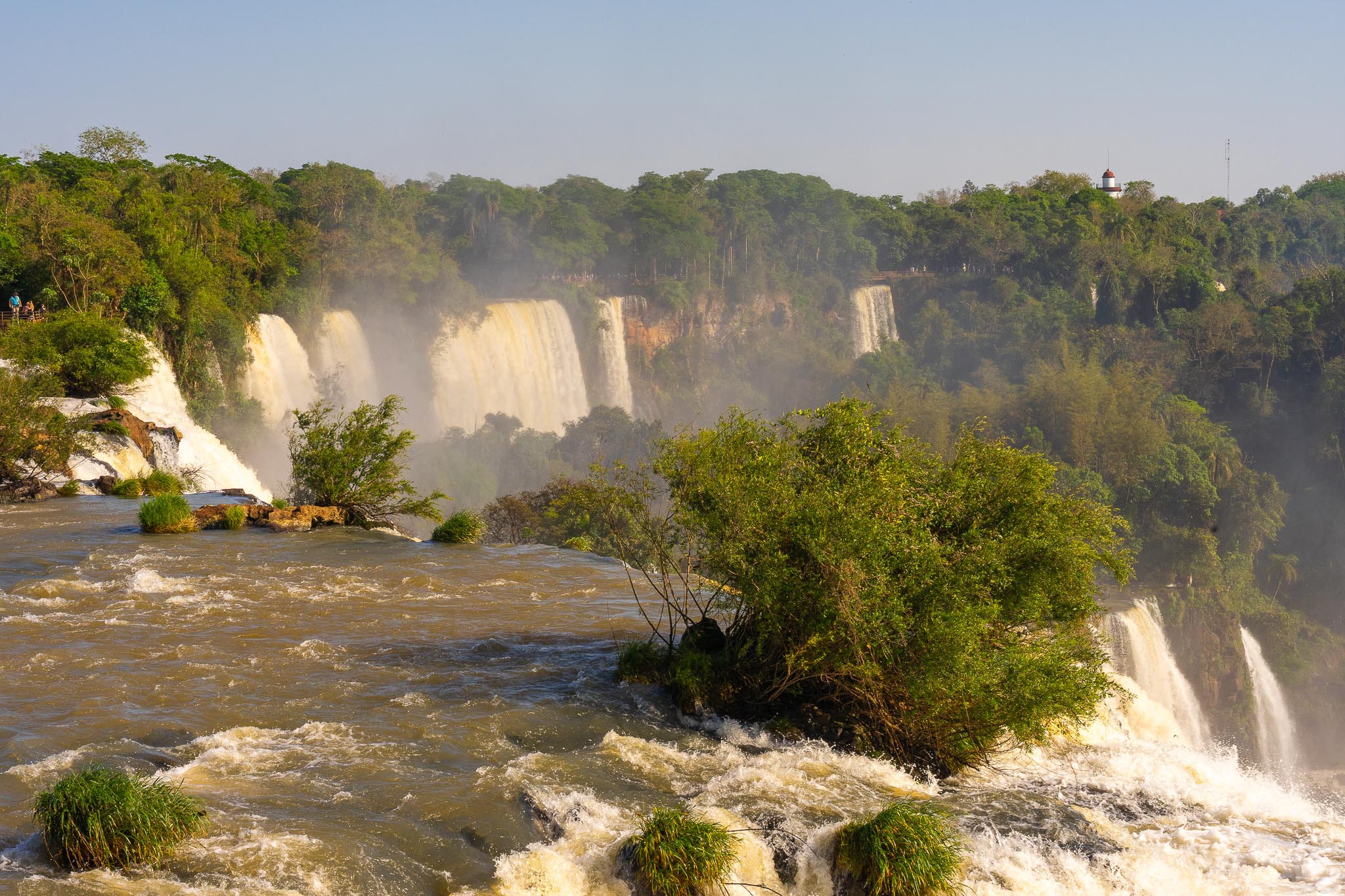
Upper and Lower Circuits
The Upper Circuit looks across the falls from above. Its platforms hold the river channels and cascades in a broad arrangement, allowing the visitor to see the water as a system rather than as a single drop. The height makes the individual falls legible: one channel bends away, another narrows, another disappears into trees before reappearing further along.
The Lower Circuit changes the relationship. Its paths descend and bring the traveller closer to the vertical movement of the water. The view is more enclosed by forest and rock, and the falls occupy the space in front of the body rather than lying below a distant railing. The Lower Circuit is a longer walkway with stairs, while the Upper Circuit is a level route. That difference is practical as well as visual.
The two circuits are not redundant. The Upper Circuit explains the pattern. The Lower Circuit explains the depth. Walking both is the reason Argentina feels like an exploration of the falls rather than a single scenic stop.
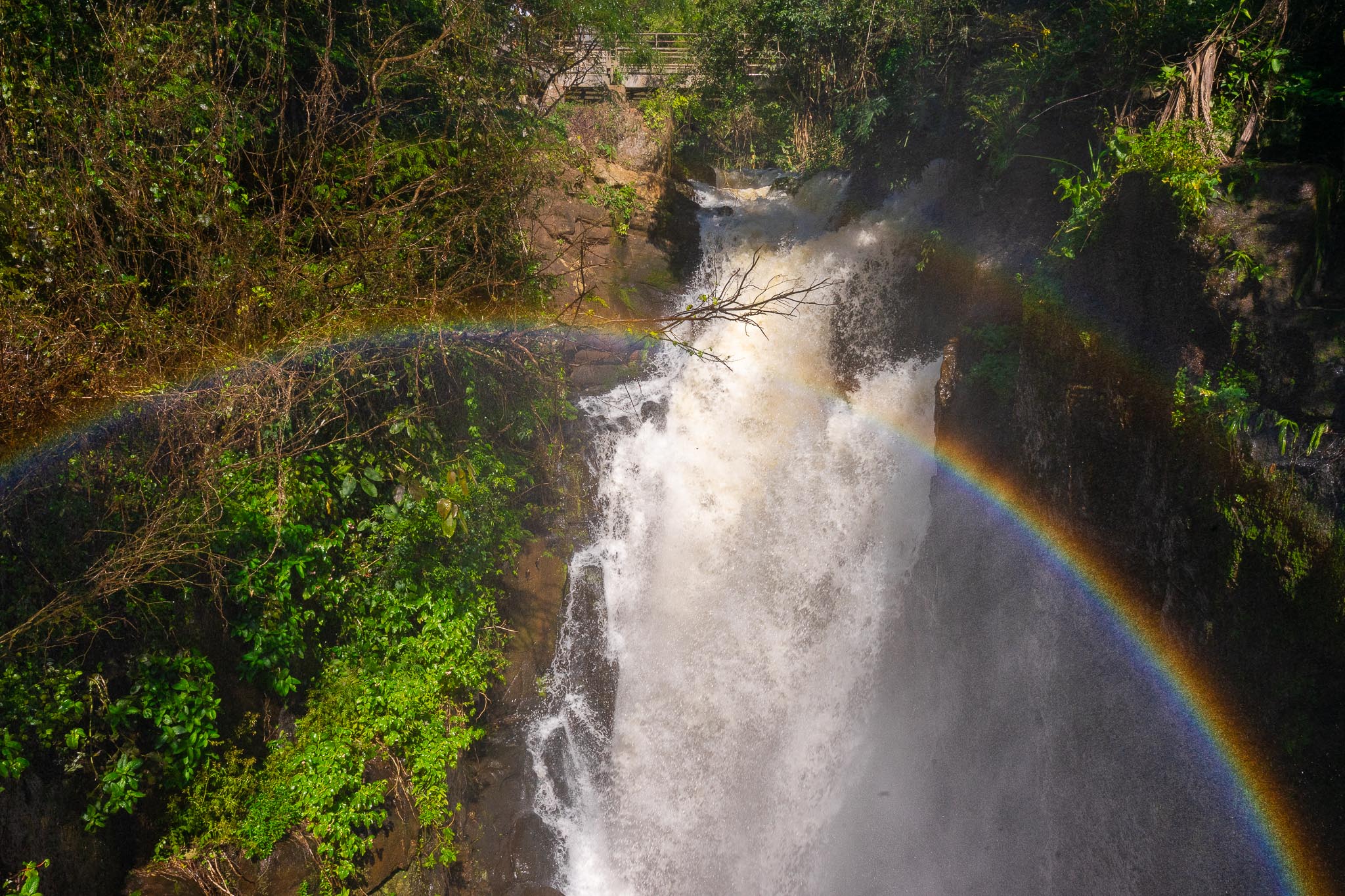
The hummingbird garden
Jardín de los Picaflores is a small coda after the scale of the national park. The day moves from the river system to a garden where the attention narrows to birds and flowers. That change is useful. Iguazú can otherwise become a single sustained note of water, and the garden gives the afternoon a closer subject before dinner.
The stop belongs to the Argentine day without pretending to be part of the national park itself. It is a different kind of encounter: less about the geography of a whole landscape and more about the small life that shares it.
III. Across the Border
The Brazilian day begins with a border crossing. From Puerto Iguazú, the journey passes across the Tancredo Neves bridge towards Foz do Iguaçu before reaching Parque Nacional do Iguaçu. The crossing is not an interruption to be hidden from the itinerary. It is part of the fact that the waterfall system is divided between two countries.
Leave room for immigration and transport on both the outward and return legs. Entry requirements depend on nationality and can change, so check the current requirements for Argentina and Brazil before travel and carry the required passport or other accepted documentation. The Brazilian park day needs a schedule with margin.
The Brazilian park changes the traveller’s position almost immediately. Argentina had taken the visitor along separate circuits and platforms. Brazil begins by preparing a longer view.
IV. The Panorama
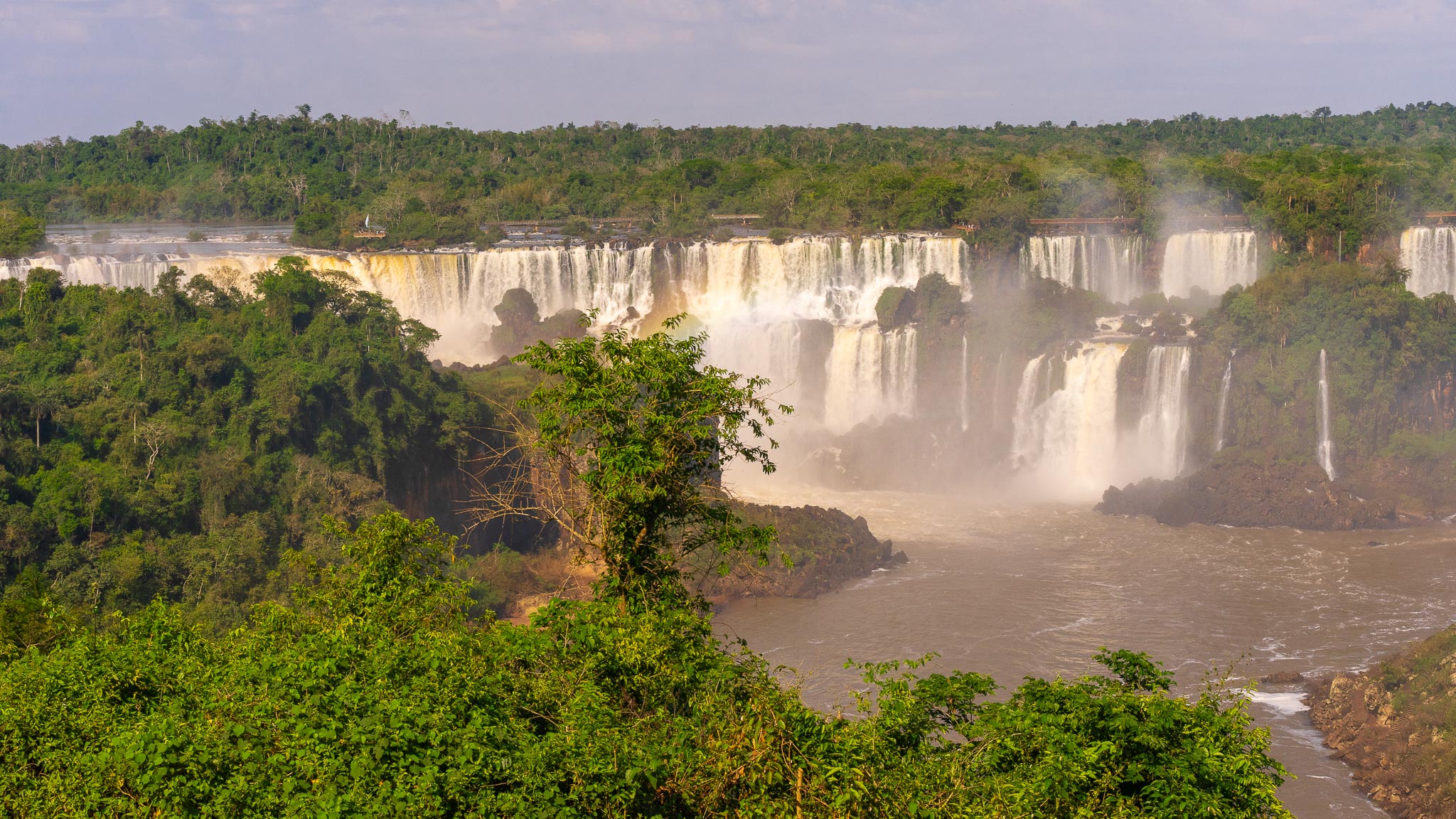
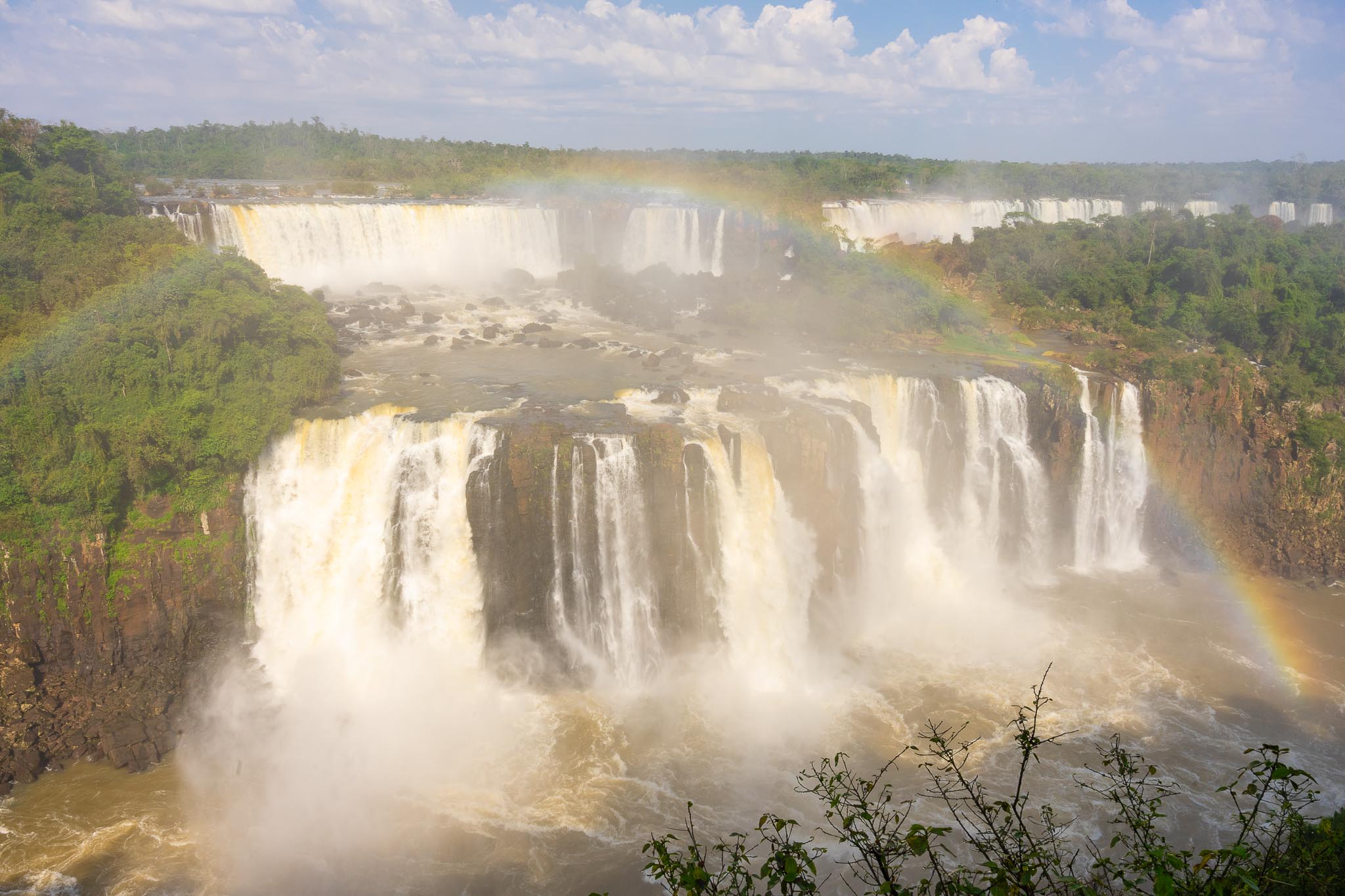
The Brazilian Cataratas trail gives the falls their full width. The Argentine side had made the system legible by dividing it into stages. The Brazilian side gathers those stages across the river, so the eye moves laterally instead of forward along a circuit.
The trail approaches the waterfalls through forest and open viewpoints, with the Argentine cliffs and cascades spread across the opposite bank. The nearer the final viewpoints become, the less useful it is to name each fall. The composition is the point: a broad wall of water, a river channel running towards it and the green mass of the Atlantic Forest holding the horizon together.
This is not a claim that Brazil is better. It is a different kind of seeing. Argentina places the traveller within the structure of the falls. Brazil supplies the sentence that the whole landscape has been building towards.
V. Water, Jungle and Wildlife
Macuco Safari adds a third position to the Brazilian day: not the elevated Argentine circuit and not the distant Brazilian panorama, but the river itself. The experience moves from the jungle to a trail and then to a boat travelling upstream towards the falls. Park admission is separate from the safari ticket.
This is the part of the day to plan for water. Optional lockers, changing rooms and regular departures are available, but conditions and access can change. Waterproof anything that should remain dry, and check the current operator information before booking. The safari belongs in the itinerary because it brings the river into the experience.
The Brazilian day can therefore contain three scales in succession: the wide Cataratas trail, the river-level Macuco Safari and the enclosed aviaries of Parque das Aves. That is a full day, but not a repetitive one.
Parque das Aves
Parque das Aves sits beside the Brazilian park entrance and changes the subject again. It is an Atlantic Forest conservation institution rather than another waterfall viewpoint, with a self-guided paved trail through immersive aviaries and environmental educators along the way. The current park guidance describes a route of roughly two kilometres, a minimum visit of about an hour and an average visit closer to three hours.
That makes it a useful addition after the falls, provided the day has room for it. The park’s toucans, macaws, butterflies and other birds belong to a closer register than the river gorge. The photograph used here keeps the focus on the butterfly and the surrounding aviary.
For a focused account of the park itself, continue to Parque das Aves in Foz do Iguaçu. In this two-day itinerary, it works as the final change of scale before the return across the border.

Argentina or Brazil?
Both, if the schedule allows it. The Argentine side is the stronger choice for a visitor who wants to move through a chain of circuits and see the waterfall system from above, below and towards its central chasm. The Brazilian side is the stronger choice for a visitor who wants the broad composition, then the option of adding a river excursion and wildlife park.
With only one full day, the choice depends on the desired shape of the visit. Argentina gives more movement through the falls. Brazil gives the more immediate panorama and can connect naturally with Macuco Safari and Parque das Aves. Neither side contains the whole experience.
Is two days enough?
Yes. Two full days are the right minimum for a first visit that wants both countries without compressing them into one exhausting cross-border marathon. Keep the arrival evening separate, give Argentina its own day, give Brazil its own day and leave the following day for departure if possible.
The Brazilian day becomes particularly full when Macuco Safari and Parque das Aves are both included. The answer is not to remove the distinction between the parks, but to decide what matters most before arriving. The falls are the fixed centre. The safari and bird park are additions that need their own time.
Where to stay
Puerto Iguazú worked well as the base for this itinerary. It kept the Argentine park day simple, provided an evening town rather than another isolated hotel zone and made the Brazilian crossing possible without changing accommodation between the two days.
Foz do Iguaçu is the natural alternative if the Brazilian side is the main priority or if the onward journey continues from Brazil. For a two-country itinerary beginning with Argentina, Puerto Iguazú keeps the first morning and the arrival evening in the same frame.
Iguazú only fully resolves when the border is crossed. Argentina breaks the falls into paths, platforms and changing distances; Brazil steps back and gives the water its full width. Two days are enough because the second does not repeat the first. It completes it.
The waterfall system remains one body of water, but the journey through it has two national characters: Argentina inside the movement, Brazil across the panorama. That is why the two-day shape works, and why Iguazú belongs as the two-country pivot in the wider South America route before the journey continues to Buenos Aires.