Mendoza begins before the vineyards. Its first claim is made by trees: long streets under mature shade, formal public spaces, monuments set into green ground, and a city that opens gradually towards the foothills. Wine is the reputation that arrives first. The city is the part that makes the reputation incomplete.
The traveller reached Mendoza from Santiago on 23 September 2026, stayed for three nights, and left towards Iguazú on 26 September. The city itself unfolded through Parque General San Martín, Mendoza University, central streets, Cerro de la Gloria and San Vicente Park. Together they make a case for giving Mendoza attention as a city rather than treating it as a base with a booking attached.
For the broader first-visit selection, continue to the best things to do in Mendoza guide. For the full three-day chronology, see the three-day Mendoza itinerary. This page asks a narrower question: what remains when the vineyards are temporarily taken out of the picture?
I. Mendoza Before the Vineyards
The answer begins with space. Central Mendoza is not read only through façades or isolated monuments. The broad streets, mature trees and formal avenues create intervals between the buildings, and those intervals become part of the city’s identity. Shade is not an afterthought here. It is one of the ways the city holds itself together.
That green structure changes the scale of an urban visit. A street corner can lead into a formal park; the park can open towards a monument; the monument can turn the city towards the foothills. The movement is gradual, but it is never empty. Mendoza keeps placing public space between the traveller and the next building, giving the city a rhythm that is different from the compact centre suggested by a wine-base stereotype.
Mendoza University belongs to this civic geography. The university area helps keep the city from collapsing into a chain of tourist stops; it is one of the ordinary urban pieces that makes the more formal spaces intelligible.
The city deserves at least one unhurried day before wine country takes over. Not because the vineyards are secondary, but because Mendoza becomes more distinctive when its city and countryside are allowed to remain two different registers.
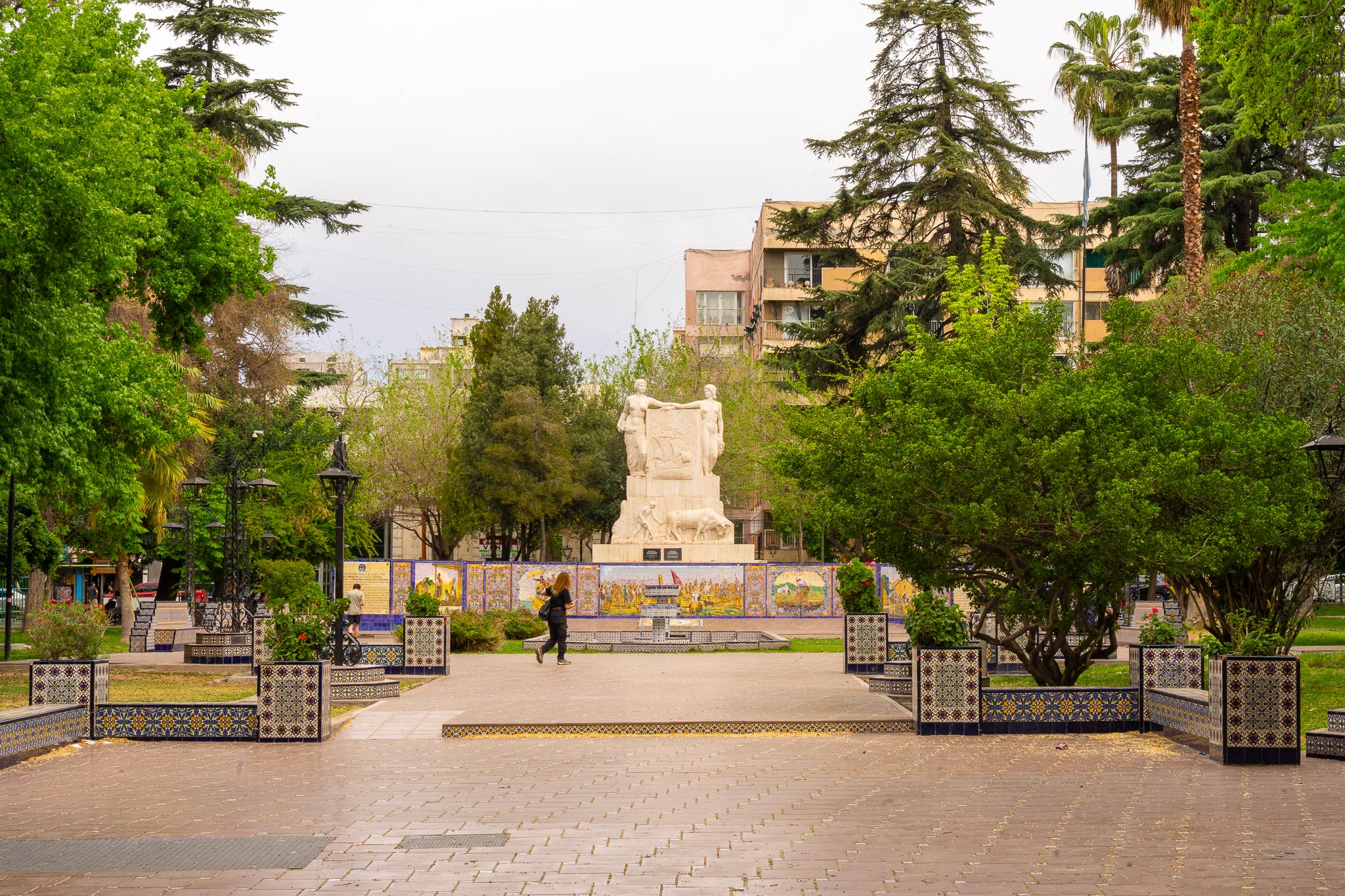
II. Parque General San Martín — The Green City at Scale
Parque General San Martín is the strongest expression of Mendoza’s urban character. It gives the city a public landscape large enough to change the meaning of the streets around it, while its formal paths, trees and monuments keep it connected to the civic life of the city. The park is not a green pause between better-known places. It is one of the places that explains Mendoza.
Its importance is partly historical and partly spatial. The park belongs to the older civic making of Mendoza, and its landscape design gives the city an outward shape: streets do not simply end at the edge of a centre; they lead into a larger arrangement of public ground. The traveller can read the city here through the relationship between planted space, formal movement and the monuments that give the greenery a public purpose.
That scale is what separates the park from a decorative square. The tiled paving, mature canopy and open green structure are not separate impressions. They work together. Buildings recede without disappearing, and the city remains present even when the park becomes the dominant view. Mendoza’s reputation for wine often sends attention beyond the centre, but the park shows that the city has already built a landscape worth travelling through.
The park gives the visit a useful centre of gravity. Central streets and the university area can be read before or after it; the city’s formal, institutional and green sides are close enough to belong to the same day.
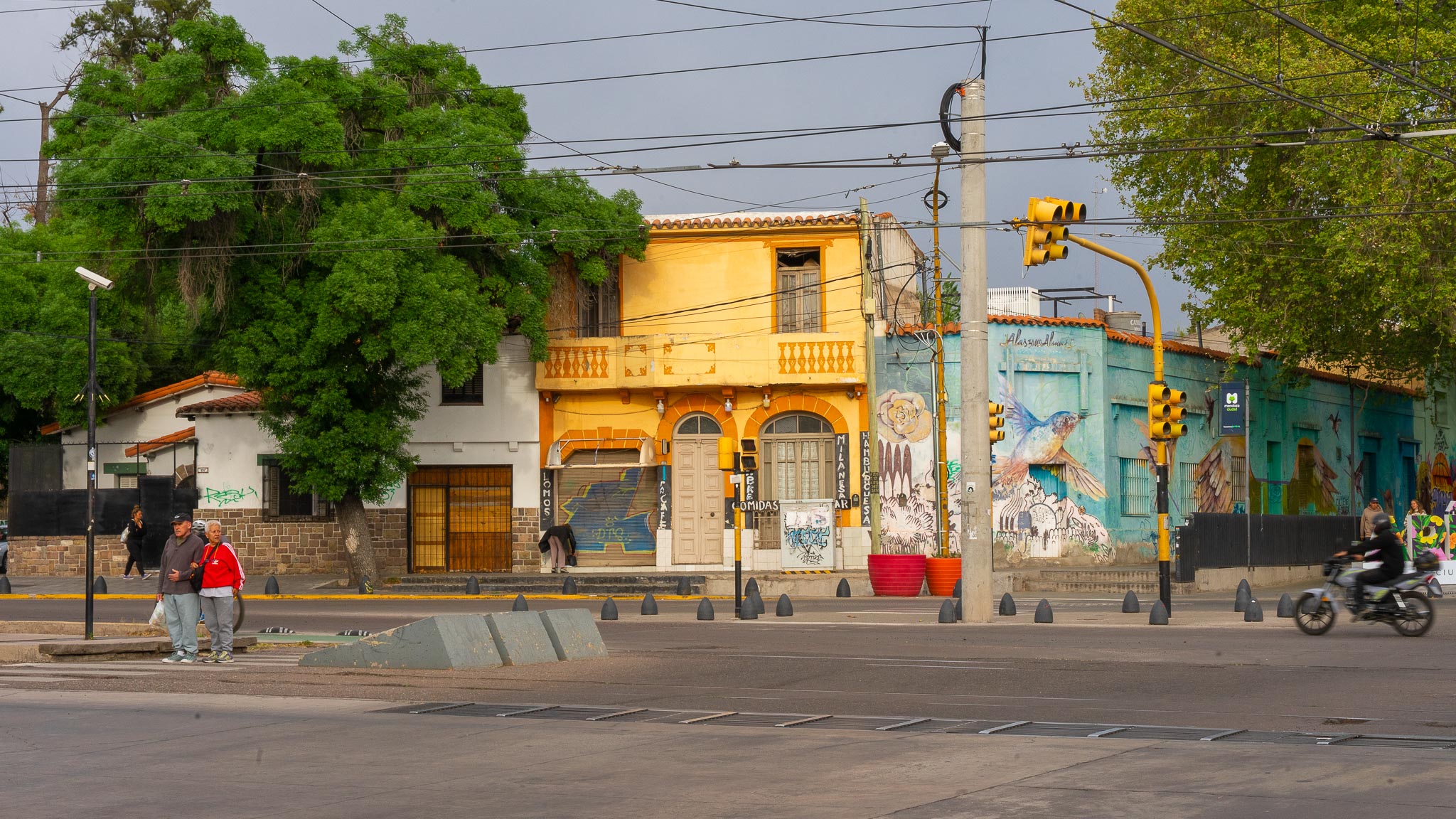
III. Streets, Architecture and Civic Mendoza
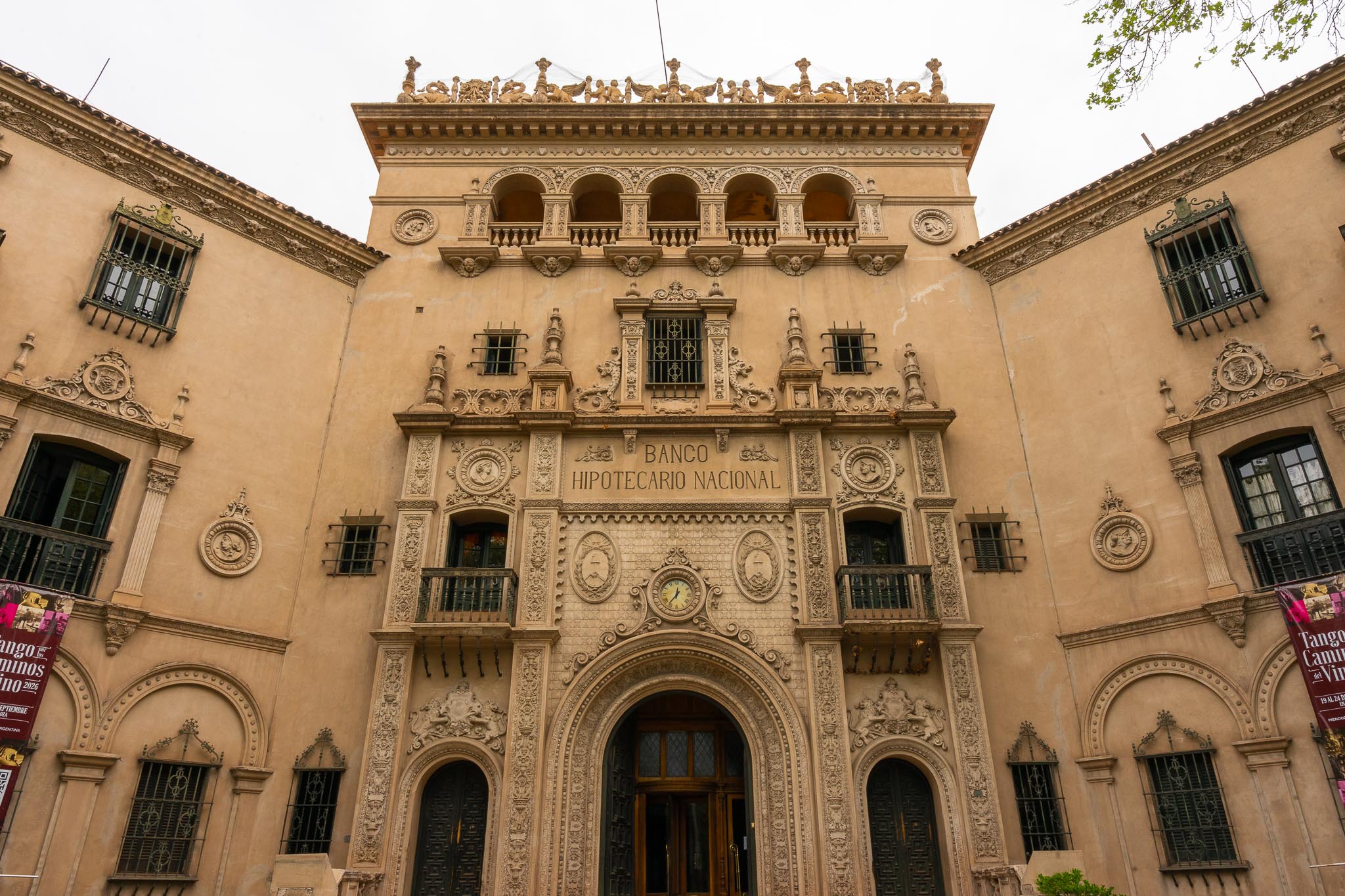
The park is only half the city’s argument. Between the larger green spaces, central Mendoza settles into streets, façades and the ordinary movement of an urban day. The architecture does not need to be turned into a catalogue. Its value lies in the way buildings sit beside generous streets and mature trees, with formal public space repeatedly interrupting the hard line of the block.
That mixture gives Mendoza a civic scale. The city is neither a preserved old quarter nor a collection of isolated modern landmarks. It is a place where institutions, public buildings, university grounds and everyday streets occupy the same broad geography. The traveller moves through a city that remains legible without becoming simple.
The distinction matters because a wine-centred visit can make the centre feel like an interval between transfers. It is not. Central Mendoza provides the setting in which the parks and monuments acquire meaning, and works best when the city day joins its public spaces rather than treating every building as a separate appointment.
IV. Cerro de la Gloria — Where the City Meets History
Cerro de la Gloria changes the subject from civic greenery to national history. The monument on the hill honours the Army of the Andes and the liberating campaign led by General José de San Martín. In Mendoza, that history is not kept at a distance. It is placed on the foothill edge, where the city can be read below and the Andes become part of the setting.
The monument therefore carries two kinds of weight. It commemorates the campaign that shaped independence in the southern continent, while its position changes how the traveller understands Mendoza’s geography. The city is no longer self-contained; it faces the mountains and the crossings beyond them.
This is why Cerro de la Gloria belongs in a city guide rather than only in an excursion list. The visit does not need to become a hiking account, an Aconcagua day or a promise of a particular view. The monument is enough. Its historical subject and its position on the hill join the civic scale of Mendoza to the larger landscape around it.
The approach also gives Parque General San Martín a second meaning. The park is not only the city’s green interior; it leads towards a landmark where public space, memory and the foothills meet. Mendoza’s urban structure begins to point outward.
V. The City at Its Edge
San Vicente Park is the quieter part of this transition. It does not need to carry the article as a headline attraction. Its value is geographical: it helps the traveller understand Mendoza as a city that passes through several kinds of public space before reaching the foothill edge.
Taken together, the central streets, Parque General San Martín, Cerro de la Gloria and San Vicente Park make a continuous reading of Mendoza: civic frame, green width, public history and an opening towards the land beyond.
Can You Visit Mendoza Without Wine?
Yes. Mendoza has enough city, park, history and foothill geography to justify time without a winery day. The traveller can spend a strong visit among streets, institutions, public greenery and the San Martín monument, and still leave with a clear sense of the place.
But skipping wine entirely means skipping one of the region’s defining identities. The better conclusion is not that Mendoza has a city side and a wine side that compete. It is that both deserve their own time. The city should not be treated as the lobby before the wineries, and wine country should not be reduced to an optional detail after the city has been understood.
How Much Time Should You Give the City?
An arrival afternoon plus one full city-and-foothill day gives a strong first reading. In the September 2026 stay, the bus from Santiago left Terminal Sur at around 10:00 am and reached Mendoza at approximately 4:00 pm on 23 September, making that first day partial. The following day gave Cerro de la Gloria and San Vicente Park their own place in the visit.
Two full city-focused days allow a slower version, especially if the parks and central streets are to be treated as more than links between headline attractions. If wine country is included, keep it separate. A full wine day is easier to plan and more useful than trying to compress city, foothills and producers into one continuous schedule.
Before travelling, check current access and transport arrangements for the foothill landmarks and any winery visits. The practical advice is simple: keep the arrival afternoon light, give the city a full day, group Cerro de la Gloria with the city edge, and leave departure morning open.
Mendoza Beyond Wine
Mendoza is worth more than the role of a base before the bodegas. Its trees and formal streets give the city a recognisable shape. Parque General San Martín gives that shape room. Cerro de la Gloria brings civic history to the foothill edge, while San Vicente Park shows the city opening outward.
Wine remains part of Mendoza’s identity, and it should. But it is not the whole sentence. The city stands on its own: green, formal, spacious, historical, and always looking beyond its streets towards the mountains.
But the road is ever onward.