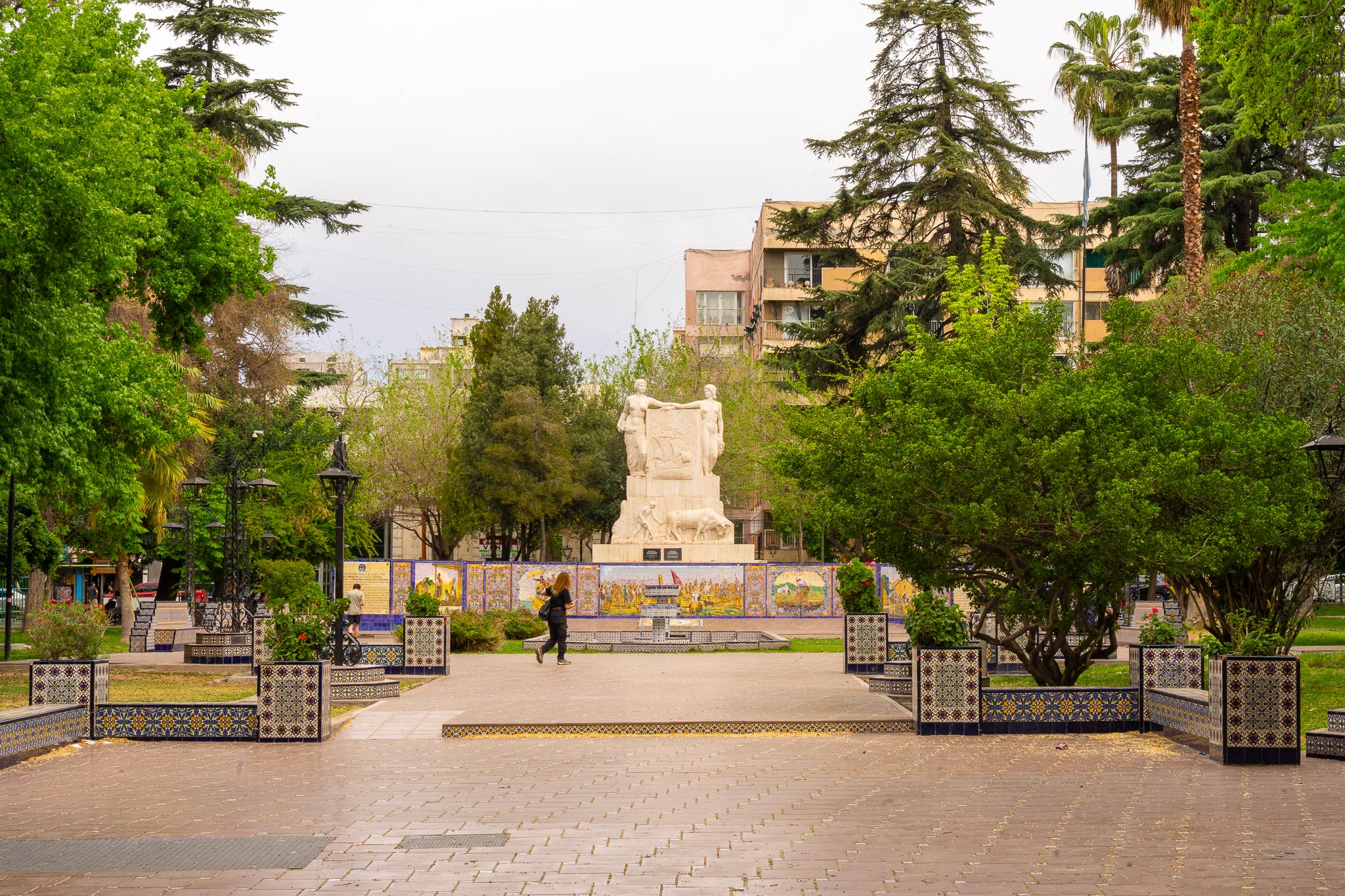
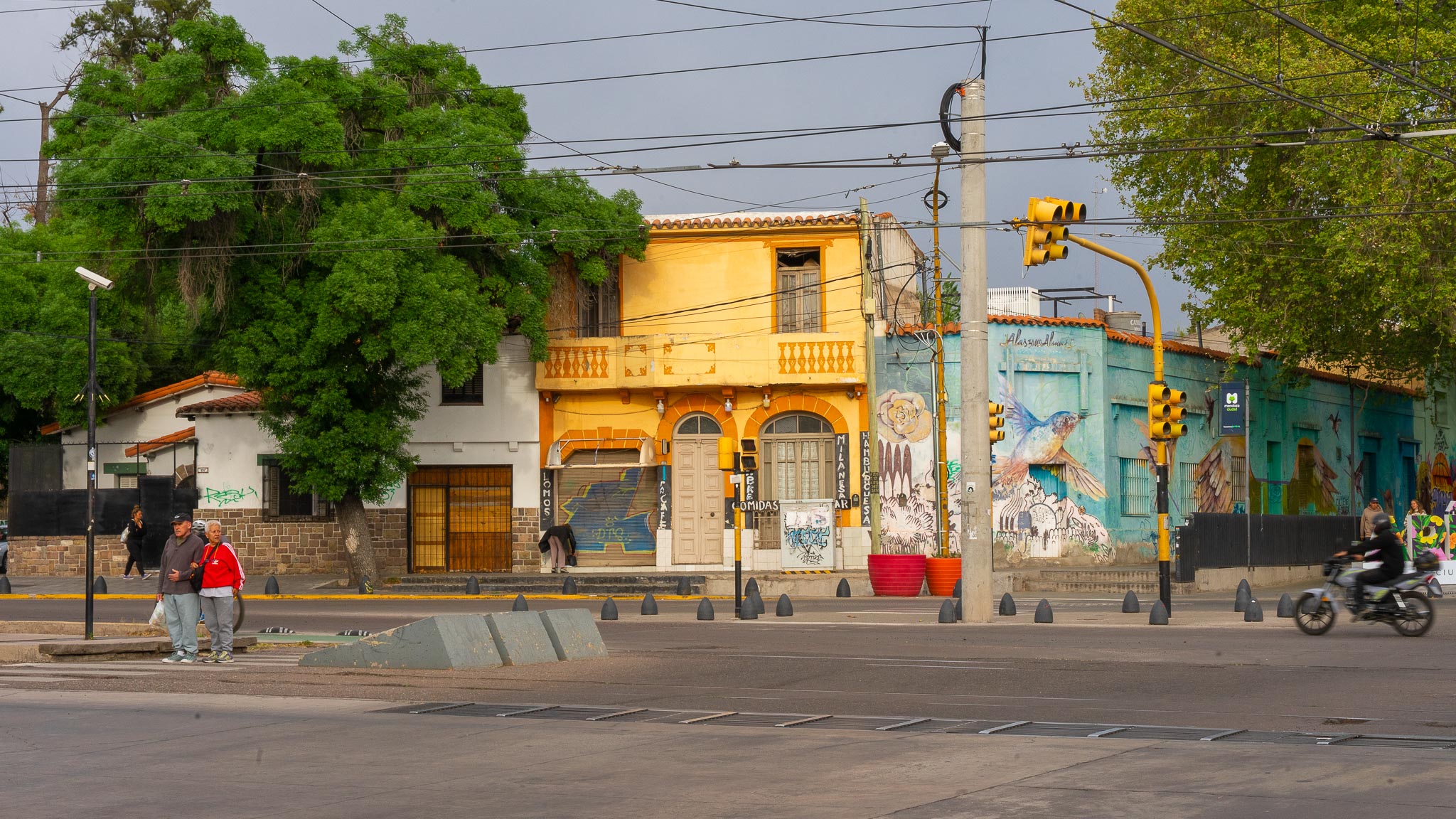
Mendoza is known for Malbec, bodegas and vineyards against the Andes. But the city earns attention before the wine day begins: through formal streets, mature greenery, monuments and the foothill edge beyond them.
Mendoza arrives in the imagination as wine country: Malbec, long rows of vines, bodegas and the Andes waiting beyond them. The city deserves a different first reading. Its formal streets, mature trees, parks and monuments give the visit a shape before any vineyard appears.
The traveller spent three nights in Mendoza between 23 and 26 September 2026, arriving from Santiago before continuing east towards Iguazú. That position on the journey makes the city easy to underestimate. It is a base for wine country, certainly, but it is also a planned urban landscape with its own scale and edge.
The strongest visit gives the two registers separate time: the city first, the vineyards afterwards. For the full dated sequence, continue to the three-day Mendoza itinerary.
Mendoza’s formal greenery establishes the city before the vineyards begin.
Choose your Mendoza
City: Central Mendoza and Parque General San Martín.
City edge: Cerro de la Gloria, San Vicente Park and the foothill geography beyond the centre.
Wine day: A separate day among Mendoza’s named wine-country stops.
Mendoza at a Glance
Best first stop: Central Mendoza for the formal streets, mature trees and the city before the vineyards.
Best green space: Parque General San Martín, where Mendoza’s planned landscape becomes visible at scale.
Best for geography: Cerro de la Gloria and the city edge, where the foothills begin to enter the urban experience.
Best full-day experience: Wine country, kept separate from the city so neither half of Mendoza has to compete with the other.
Four Ways into Mendoza
Central MendozaStreets · Civic life · Urban formThe city before the bodegas. Broad streets, mature trees and public space make the centre worth walking rather than simply passing through.
Parque General San MartínGreen space · Monuments · City scaleMendoza’s strongest urban landscape. The park gives the city room and makes its relationship with trees and formal planning easier to read.
Cerro de la GloriaMonument · Foothills · GeographyThe point where Mendoza begins to meet the land beyond it. Best for understanding the city in relation to the foothills and Andes.
Wine CountryBodegas · Vineyards · Full-day excursionA second register of Mendoza rather than the whole story. Give it its own day instead of squeezing vineyards into the city route.
I.
Walk Central Mendoza
Formal streets, public space and the city before the vineyards
Central Mendoza is where the city makes its own case. Broad streets, mature trees, formal buildings and the movement between them produce a place that feels planned around public space rather than arranged only for passing through. The university area belongs to this wider reading of the centre: another part of the city’s civic life, not a separate attraction to be collected.
This is the Mendoza that disappears when the city is treated as a transfer point for wineries. The streets connect the architecture, parks and monuments into one urban experience. Leave room for that connective tissue. The city is not merely what happens between the bodegas.
Mendoza’s streets make the city feel planned around shade, distance and public movement.
II.
Spend Time in Parque General San Martín
The green structure that gives Mendoza room
Parque General San Martín is the strongest city recommendation because it makes Mendoza’s green character visible at scale. The park is not a brief interruption in the urban fabric; it gives the city a wider public landscape of trees, formal routes and monuments. The streets of central Mendoza begin to make more sense once the park is understood as part of the same design rather than as an optional patch of greenery.
The park changes the rhythm of the visit without requiring the city to disappear. Architecture gives way to landscape, then returns. That movement is one of Mendoza’s defining pleasures: the city keeps its formal shape while making room for trees, open ground and the monuments that lead the eye towards the edge beyond.
III.
Cerro de la Gloria and the City Edge
A monument, a supporting park and the city meeting the foothills
Cerro de la Gloria changes the geographical scale of Mendoza. The monument and its foothill setting pull the visit away from the level streets and towards the land that surrounds the city. The Andes are no longer a distant idea behind the urban plan; the edge of that landscape enters the day directly.
Its importance is therefore both civic and geographical. Cerro de la Gloria is not simply another high point to add to a list of views. It is where Mendoza’s built order meets the larger terrain beyond it, and where the city’s parks, monuments and foothills begin to read as one continuous setting.
San Vicente Park belongs to the same wider movement as Cerro de la Gloria: away from the formal centre and towards the city’s outer geography. It earns a place here not as a standalone attraction with a separate checklist, but as part of the way Mendoza opens beyond its central streets.
Together, the monument and park show Mendoza opening beyond its central streets, with green public space and the land beyond the city forming part of the destination.
IV.
Give Wine Country Its Own Day
The vineyards as a second register of Mendoza
Wine country deserves its own day because it is a different register of Mendoza, not because it makes the city incidental. The day included Carmelo Patti, Bodega Viamonte, Cecchin, Pasrai, Vistandes and Bodega Esencia 1870. These producers give the wine-country side of the stay a clear shape without needing to be turned into a ranking.
The useful distinction is simple. Give the vineyards time to be vineyards, and give the city time to be a city. Mendoza works best when the two experiences are allowed to stand beside one another rather than compete for the whole visit.
📍 Mendoza — Things to Do
🧭 City + wine country
Shortest route to a great first visit
One day — Walk central Mendoza, spend time in Parque General San Martín and add Cerro de la Gloria if the day still has room.
Two days — Keep one day for the city, park and foothill edge, then give the second entirely to wine country.
Three days — Follow the complete Mendoza itinerary, with enough time for both registers to breathe rather than compressing them together.
If you only choose three things — Central Mendoza, Parque General San Martín and one full wine-country day.
What each part of Mendoza does best
City character: Central Mendoza.
Green space: Parque General San Martín.
Landscape and geography: Cerro de la Gloria.
Wine: Mendoza’s vineyard country.
Watch-outs
Do not reduce Mendoza to wine. The city itself deserves time before the vineyard day begins.
Keep the wine day separate. Bodegas and vineyards work better as a full excursion than as fragments attached to a city route.
The city edge needs transport planning. Cerro de la Gloria and San Vicente Park sit outside the easiest central walking pattern.
Leave room between stops. Mendoza works better when the city, parks and wine country are allowed to feel distinct rather than stacked into one oversized day.
What Deserves Priority
With one day: begin in central Mendoza, spend time in Parque General San Martín and add Cerro de la Gloria if the practical arrangements suit the day.
With two days: keep one day for the city, parks and foothill edge, then give the second to wine country. San Vicente Park fits into the wider city-edge day rather than needing a separate full-day plan.
With three days: follow the complete Mendoza itinerary for the dated sequence, then use the extra time to let the city and wine country breathe at their own pace.
Practical guidance
Check current access, transport and opening arrangements before travelling, particularly when building the city-and-edge day around Cerro de la Gloria and San Vicente Park.
For the wider journey, Mendoza sits between Santiago and the onward route towards Iguazú. The 24 Days in South America itinerary places the city within that larger crossing, while Mendoza Beyond Wine stays with the parks, streets and monuments that make the city worth the pause.
A City and a Wine Country
Mendoza works because the city and the vineyards do not need to compete. The trees, parks, formal streets, monument and foothill edge earn their own day; the bodegas then become a second register rather than the only reason to arrive.
The city deserves the pause before the road continues east.
What are the best things to do in Mendoza beyond wine?
Start with central Mendoza, Parque General San Martín and Cerro de la Gloria. Together they show the planned city, its public landscape and the foothill edge before a separate wine-country day changes the setting.
How many days do you need in Mendoza?
One day can cover the centre, park and Cerro de la Gloria in a focused sequence. Two city-focused days allow more time for San Vicente Park and the university area, while a third day can belong to wine country or another excursion.
Can Mendoza be worthwhile without visiting wineries?
Yes. The city has a distinct identity in its streets, tree-lined public spaces, parks and foothill landmarks, so the wineries do not need to carry the whole visit.
What is the best area to stay in Mendoza?
A central base is the most useful for this guide because it keeps the streets, parks and civic spaces within reach and makes the city easier to read on foot. Choose a location that also makes the separate wine day or onward transport practical.
Should wine country be combined with Mendoza city?
It is usually clearer to give wine country its own day. Trying to combine bodegas with the city parks and Cerro de la Gloria makes both halves denser and leaves less time for the city that exists beyond the vineyards.