Barranco and Miraflores belong to the same Lima day but not to the same kind of movement. Barranco keeps the traveller close to walls, gardens, bridges and museums. Miraflores opens the city above cliffs and towards the Pacific. Between them, the day changes scale without changing city.
That contrast is the reason to combine them. Barranco is read at street level, through low-rise architecture, public space, painted walls and the descent of the Bajada de Baños. Miraflores turns outward along Love Park, the Malecón and the hard edge where Lima meets the sea.
There is no need to force every metre between the districts into one continuous walk. Walk Barranco properly, move to Miraflores when it helps the day, then walk the coast. The result is a mixed neighbourhood-and-coast experience rather than a route whose value depends on a single uninterrupted line.
For the complete Lima sequence, continue to the three-day Lima itinerary. The wider Lima guide places Barranco and Miraflores beside the Historic Centre, archaeology and museums.
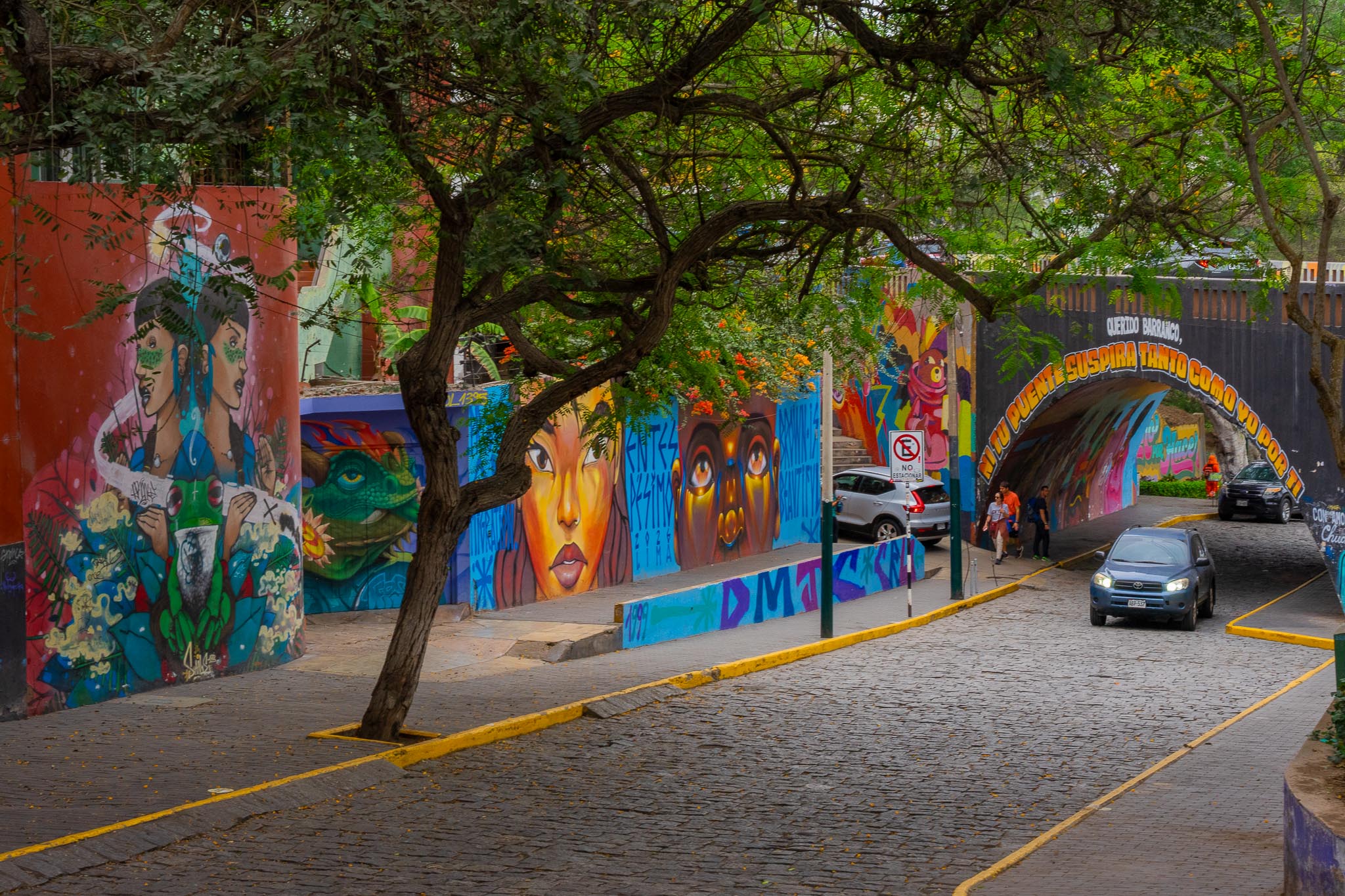
I. Barranco at street level
Barranco grew as a seaside retreat for Lima, especially as nineteenth-century development turned the district into a place of summer houses, baths and gardens beyond the formal centre. That past still shapes the way it is encountered. The neighbourhood is close to the coast, but its first impression is made by streets, walls, bridges and houses rather than by a single ocean view.
The district’s history also includes rupture. Barranco suffered damage during the War of the Pacific, then developed through the twentieth century into the low-rise, cultural neighbourhood it is now known for. The surviving houses and public spaces sit beside newer work, murals and everyday movement. It is a district whose character comes from layers rather than uniformity.
Start with the Bridge of Sighs and the surrounding streets, but do not make the bridge carry the whole visit. The Puente de los Suspiros links the neighbourhood’s public spaces to the descent towards the coast. Its name belongs to Barranco’s local legends, but its more useful role is spatial: it gives the walk a threshold between the streets above and the Bajada de Baños below.
The Bajada de Baños makes Barranco coherent on foot. The descent draws the traveller through the district towards the coast, while the streets around it keep the walk connected to gardens, façades and painted walls. This is where Barranco feels most itself—not at one viewpoint, but in the movement between levels and corners.
II. Barranco’s streets, art and architecture
Barranco rewards a slower pace because the neighbourhood’s cultural stops are folded into its urban fabric. Street art appears alongside older houses and newer buildings. Public parks open small spaces between the streets. The route can move from the Bridge of Sighs to a museum, then back outside without losing the sense of being in one district.
That mixture is more useful than calling Barranco simply bohemian. The neighbourhood’s appeal comes from the relationship between its architecture and its cultural life. Older houses give the streets a scale different from Miraflores; murals and galleries keep the district in the present; the coast remains close enough to shape the direction of the walk.
Do not rush through Barranco to reach the Pacific. Give the district several hours, and choose one museum if the collection matters to the day. Museo Pedro de Osma is the strongest established museum anchor here: it occupies an early twentieth-century eclectic mansion and brings together paintings, sculpture, silverware and furniture from the sixteenth to nineteenth centuries. The building and the collection belong together, making the visit an extension of Barranco’s architectural history rather than a separate indoor stop.
MATE, the Museo Mario Testino, appears in older Lima itineraries, but its current visitor status and programme should be checked separately before planning around it. It is not treated here as a guaranteed open attraction. That leaves the neighbourhood itself and Museo Pedro de Osma as the reliable shape of the day.
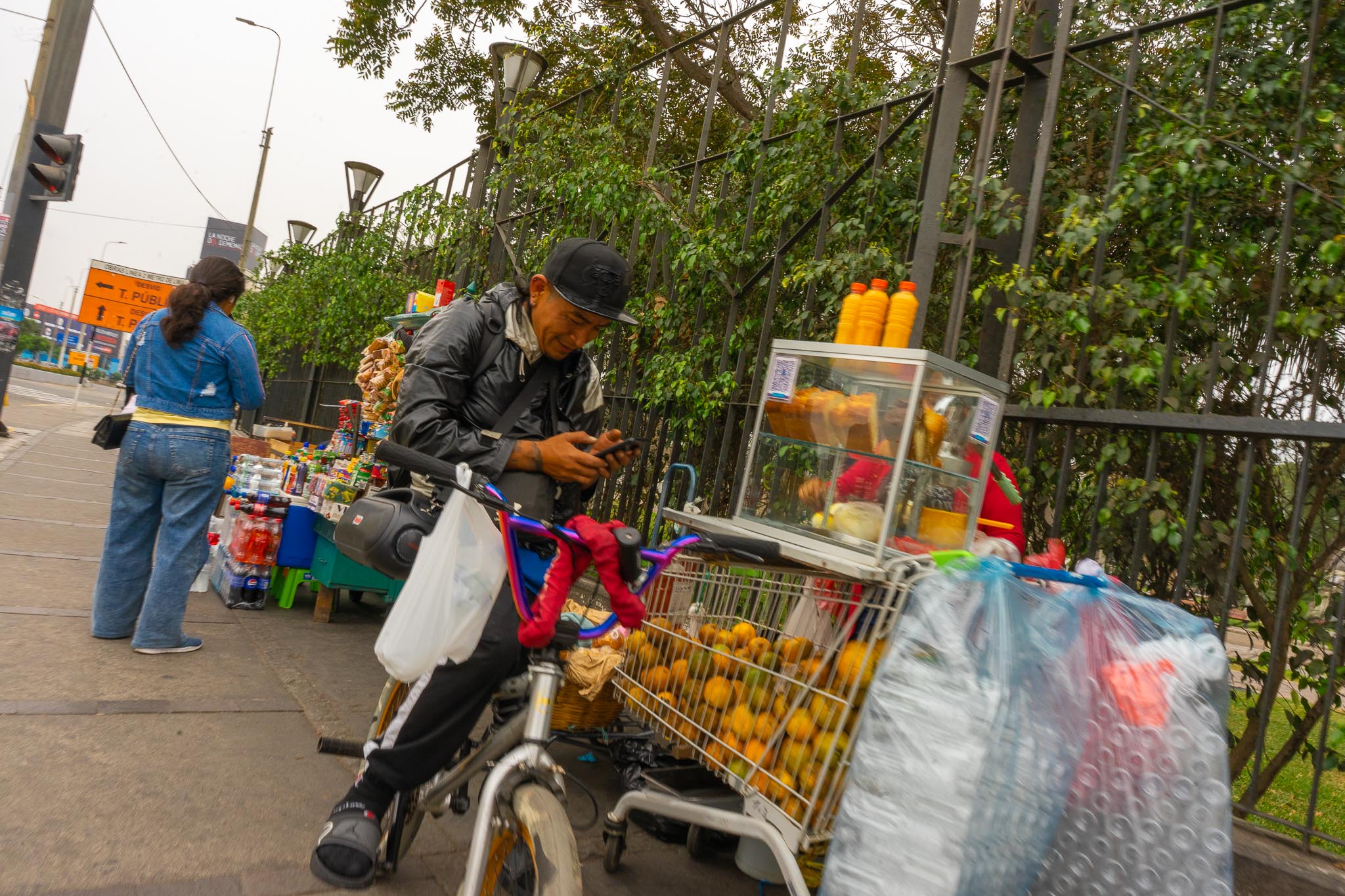
III. When Lima opens to the Pacific
Miraflores begins as a change in direction. Barranco is close, enclosed and textured by its streets. Miraflores leads towards the cliffs, where parks and paths run above the Pacific. The city’s urban grid reaches a hard edge and then opens into sky and ocean.
Parque del Amor is a natural first stop on the Miraflores coast. The park sits beside the Villena Rey bridge on Malecón Cisneros, with the sculpture El Beso by Víctor Delfín at its centre and mosaic walls carrying poems and phrases about love. It is concise enough to visit as part of the larger coastal walk rather than treating it as a destination separate from the Malecón.
From there, the Malecón provides the main experience. The cliff-top parks change the relationship between city and sea: roads and buildings remain behind, while the Pacific occupies the open side of the walk. This is not a beach recommendation. Miraflores is valuable here because it gives Lima a broad coastal edge after Barranco has kept the traveller among walls, gardens and cultural stops.
The walk along the coast can be as short or as long as the day allows. The important section is the change of scale. Barranco makes the city feel close enough to read through individual buildings and streets. Miraflores lets the same city recede into a line of cliffs, parks and ocean.
The Malecón also gives the day a different relationship with public space. Barranco’s gardens and streets are enclosed by the district around them; Miraflores’ coastal parks are held open by the drop towards the water. The city is still present in the road, towers and pedestrians behind the path, but the view has no comparable wall at its edge. That is the physical reason the two districts feel so different even when they share the same afternoon.
IV. Why the two districts work together
Barranco and Miraflores are not interchangeable neighbourhoods, and that is precisely why they fit together. A day spent only in Barranco would give Lima a close, cultural and architectural register. A day spent only along the Miraflores coast would give it openness and Pacific scale. Together they let the city change in front of the traveller.
The transition does not need to be dramatic. Walk Barranco from the Bridge of Sighs through the Bajada de Baños and its surrounding streets. Choose a museum if the collection adds something to the day. Then use a taxi, rideshare or other practical transfer if that makes the move to Miraflores easier. Once there, return to walking along Love Park and the Malecón.
That is a better plan than making the entire day depend on a named continuous walk. The districts are linked by direction and geography, not only by pavement. The day works because the movement between them changes what Lima is showing.
Can you walk from Barranco to Miraflores?
Parts of the connection can be walked, but there is no reason to make the whole day depend on walking every metre between the districts. Barranco itself rewards walking. The Miraflores coast rewards walking. The transfer between them can be handled in whatever way best protects the time available for both neighbourhoods.
If a continuous coastal route suits the day, use it in sections rather than treating it as a test. Otherwise, move between districts and begin walking again at the coast. This keeps the article useful without promising a single route that every visitor should copy.
How much time do you need?
Allow most of a day if combining Barranco and Miraflores properly. Three to four hours gives Barranco enough room for the Bridge of Sighs, Bajada de Baños, neighbourhood streets and one museum. After a transfer and a break, two to three hours around Love Park and the Malecón gives Miraflores time to become more than a quick coastal photograph.
The balance can change. Visitors more interested in architecture and art may spend longer in Barranco. Visitors drawn to open views may shorten the museum time and give the Malecón the afternoon. The mistake is not choosing the wrong ratio; it is compressing both districts into a checklist.
Huaca Pucllana is a natural later addition if time remains. It adds archaeological Lima to a day that has already covered neighbourhood and coast, but it should not replace the time needed for Barranco and Miraflores themselves. The focused Huaca Pucllana guide and the three-day Lima itinerary cover that next layer.
Barranco first, Pacific after
Barranco and Miraflores belong together because they do not feel alike. One keeps the traveller close to walls, gardens, bridges and museums; the other opens the city above cliffs and ocean. Barranco supplies the neighbourhood scale. Miraflores supplies the Pacific edge.
The day works because Lima changes scale without changing city. Its streets do not disappear when the coast arrives; they become the line behind the cliffs. The neighbourhood and the Malecón remain connected by the movement between them, even when that movement is not one continuous walk.
For the wider Lima journey through the Historic Centre, archaeology and museums, continue to the complete three-day Lima itinerary.
But the road is ever onward.