Lima is not one attraction or one district. The Historic Centre gathers churches, civic buildings and plazas into the city’s colonial and political heart. Barranco turns the streets towards art, low-rise houses and public space. Miraflores reaches the Pacific along cliffs and coastal parks. Archaeological sites rise inside modern districts, while museums hold cultures that existed long before the Spanish capital.
The best things to do in Lima are therefore connected by contrast rather than by one efficient sightseeing loop. A church can lead to a square, a neighbourhood can open onto the ocean, and a modern apartment district can contain the remains of a much older city. The pleasure is in watching those versions occupy the same map.
For the full chronology, use the three-day Lima itinerary. This guide stays with the experiences that explain Lima most clearly on a first visit.
Explore Lima’s Historic Centre
Colonial streets, civic power and the religious heart of the capital
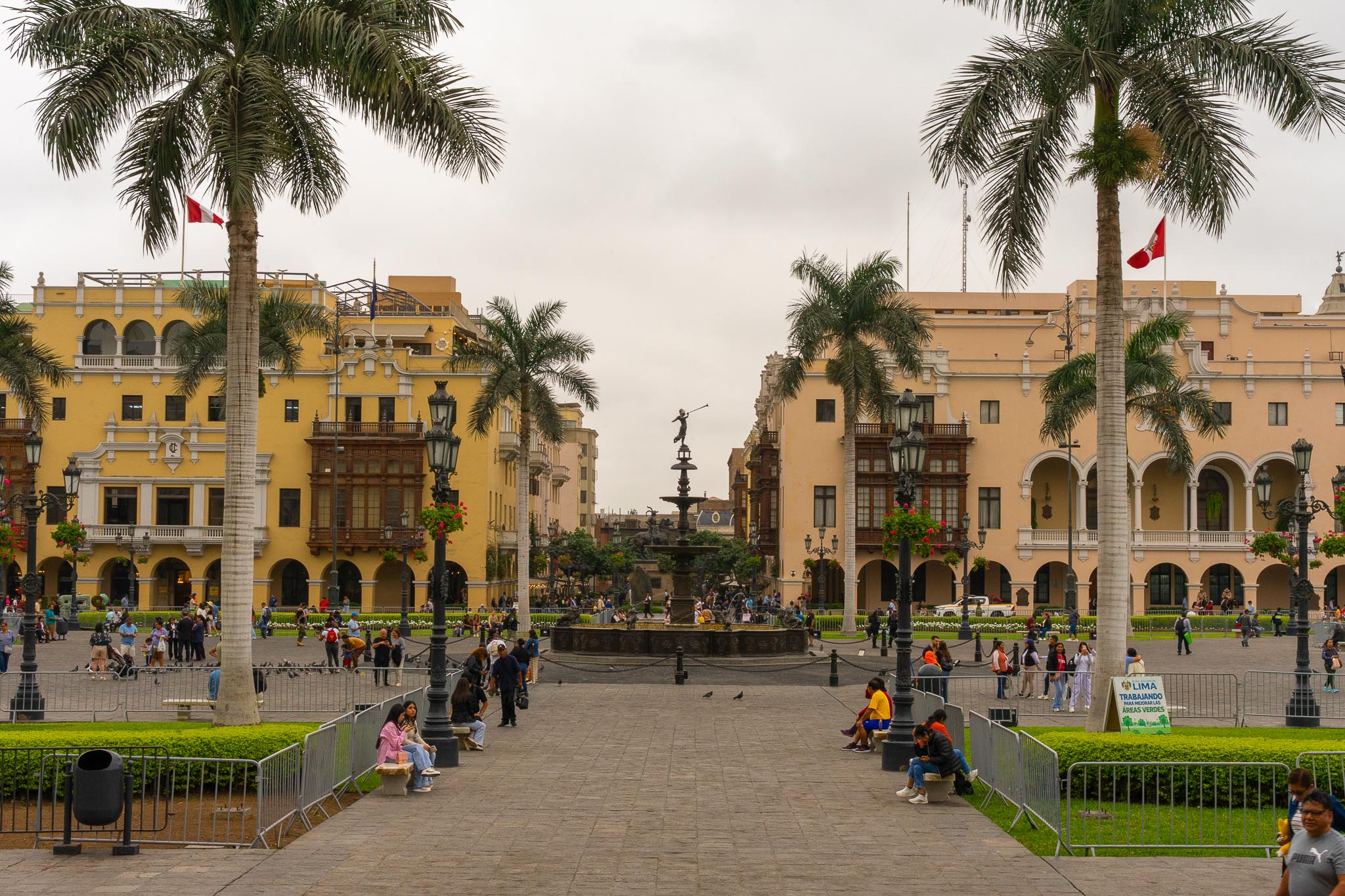
The Historic Centre is the natural beginning because Lima’s public history is concentrated here. Plaza Mayor gathers the Cathedral, the Government Palace, the Archbishop’s Palace and the surrounding civic buildings into one formal space. The square is not merely a backdrop for façades. It explains how Lima was established as the political and religious centre of Spanish South America.
The surrounding walk adds different forms of authority. The Basilica and Convent of San Francisco brings the city’s religious history into the route; Santo Domingo extends that history through another major complex; Las Nazarenas keeps devotion present in a more intimate urban setting. Municipal buildings and government walls return the walk to the modern capital.
The point is not to count churches. It is to see how the colonial city was organised around public squares, religious institutions and administrative power. The dedicated Historic Centre and San Francisco guide follows that central walk in more detail.
Spend Time in Barranco
A neighbourhood where streets, art, houses and museums accumulate
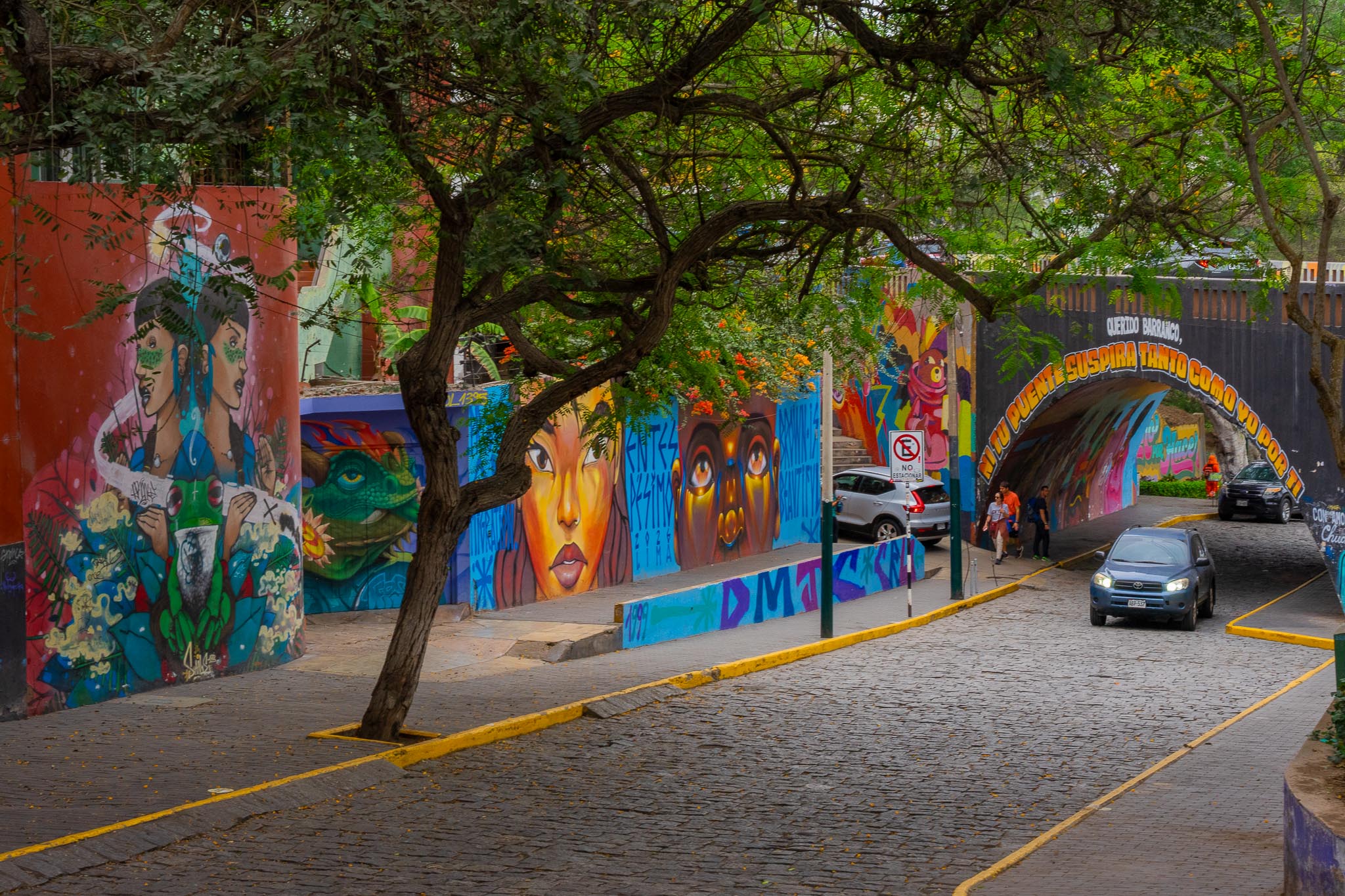
Barranco rewards walking because its character is spread across a cluster of small transitions. The Bridge of Sighs leads towards the Bajada de Baños; the route passes public gardens, painted walls and low-rise architecture before reaching museums such as MATE and Museo Pedro de Osma. Nothing needs to announce itself as the single reason to come. Barranco works through the accumulation of the walk.
The neighbourhood also changes the pace of Lima. The Historic Centre is shaped by civic and religious institutions. Barranco is read through the relationship between houses, streets, galleries and the descent towards the coast. Its museums are stronger when they remain part of that neighbourhood rather than replacing it.
Give Barranco time to be a district, not a short stop at the Bridge of Sighs. The Barranco to Miraflores guide continues the coastal movement without pretending the two neighbourhoods are identical.
Walk the Miraflores Coast
Cliffs, parks and the Pacific edge of the city
Miraflores changes Lima from a dense urban experience into a city visibly suspended above the Pacific. The Malecón runs along the cliffs through parks and open viewpoints, while Love Park gives the coastal walk a recognisable centre. The scale changes quickly: apartments, traffic and commercial streets remain close behind, but the land ends dramatically ahead.
This is not primarily a beach recommendation. The coast matters because it shows how Lima meets the ocean. From the cliffs, the Pacific is not a distant strip beyond the city but one of its defining edges. Barranco approaches the coast through neighbourhood streets and a descent; Miraflores holds the city above it in a longer line of parks and paths.
Leave room to walk rather than treating the Malecón as a viewpoint to tick off between transfers. The coast is one of the experiences that gives Lima its geography.
Visit Huaca Pucllana
Pre-Hispanic Lima rising inside modern Miraflores
Huaca Pucllana is one of Lima’s strongest juxtapositions. A large adobe ceremonial centre of the Lima culture, built roughly between 450 and 650 CE, rises inside modern Miraflores. Apartment buildings, traffic and restaurants surround a structure made from thousands of hand-formed bricks and organised around platforms, plazas and enclosures.
The site is important because it refuses the idea that archaeology belongs outside the contemporary city. Pucllana is not a remote ruin that needs a separate historical frame. It is part of the district’s present geography. The Lima culture built here centuries before the Spanish foundation of Lima; later occupation, research and conservation have kept that earlier city in view.
The Huaca Pucllana guide stays with the site itself. On a first visit, place it after the Miraflores coast if the day can hold both the modern Pacific edge and the older ground beneath the district.
See Huaca Huallamarca
Another archaeological layer beneath San Isidro’s modern district
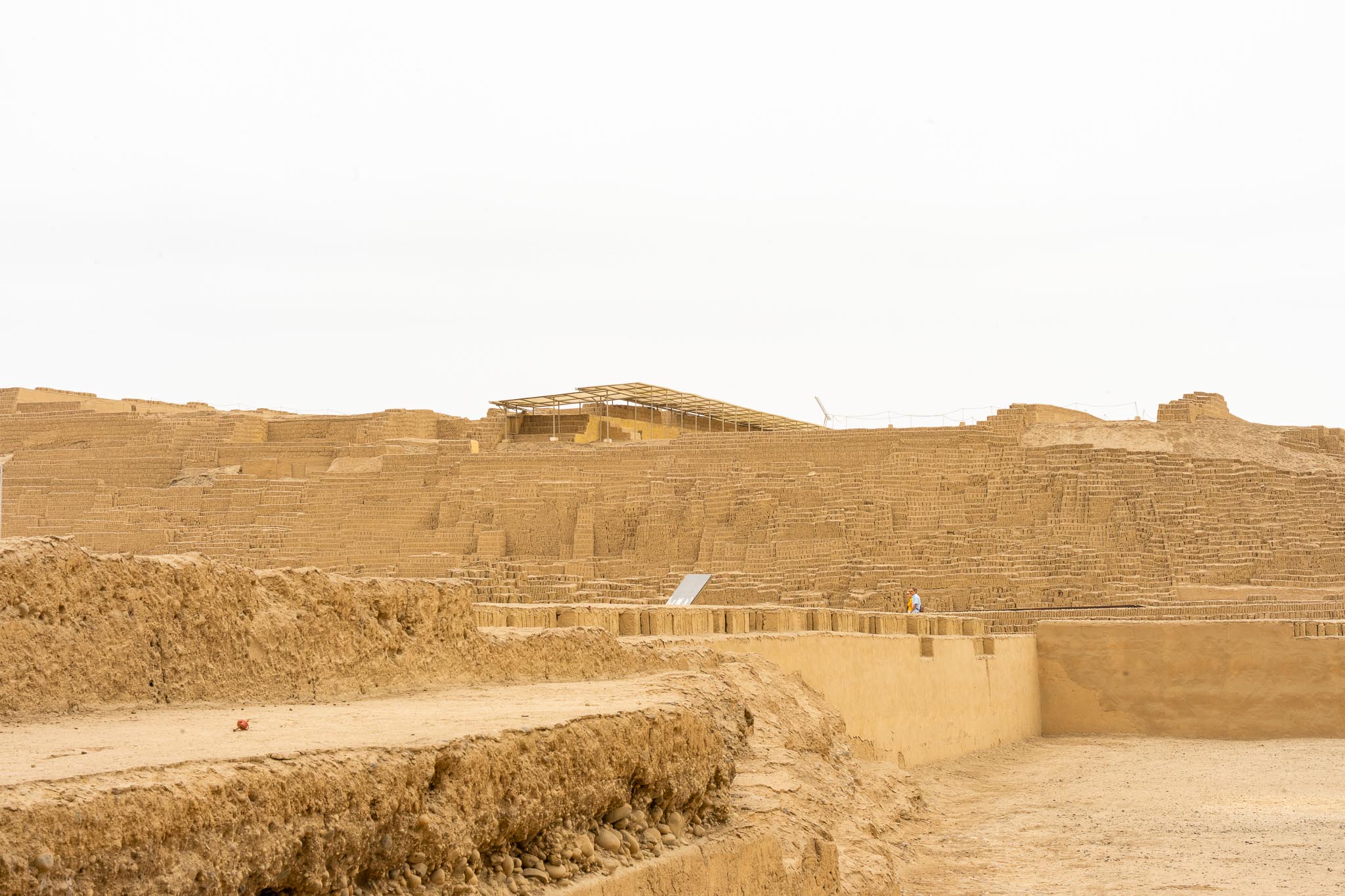
Huaca Huallamarca makes the archaeological story wider. In San Isidro, the site stands among one of Lima’s modern districts, where offices, apartment buildings and broad roads make the older structure easy to overlook. The archaeological mound is associated with successive occupations and later funerary use by cultures including Lima, Ichma and Chancay.
Seeing Huallamarca after Pucllana changes the meaning of the first site. Pucllana is not an isolated survival inside Miraflores. Pre-Hispanic Lima sits beneath several modern districts, and each huaca gives a different edge to the same historical fact. The city has been rebuilt over older cities without fully erasing them.
Visit Museo Larco
Archaeological fragments arranged into a history of ancient Peru
Museo Larco is where the archaeological day becomes chronological. Founded by Rafael Larco Hoyle in 1926, the museum brings together a large collection of pre-Columbian objects, including ceramics, textiles, metals and works from cultures across ancient Peru. Its strength is not one famous gallery. It is the way objects are arranged so that fragments begin to form a sequence.
Larco’s ceramics are especially useful after seeing the huacas. At Pucllana and Huallamarca, the past appears as architecture in the middle of the city. In the museum, vessels and other objects show the societies that made and used those spaces. The collection reaches beyond the Inca, giving the older history of Peru more depth than a short visit to the best-known imperial sites can provide.
The museum’s gold and silver collections, textiles and erotic ceramics add different registers without turning the visit into a catalogue. Museo Larco earns its place because it gives chronology to the archaeological ground already encountered outside.
Spend Time in Lima’s Museums
MALI and the central collections that widen the city’s chronology
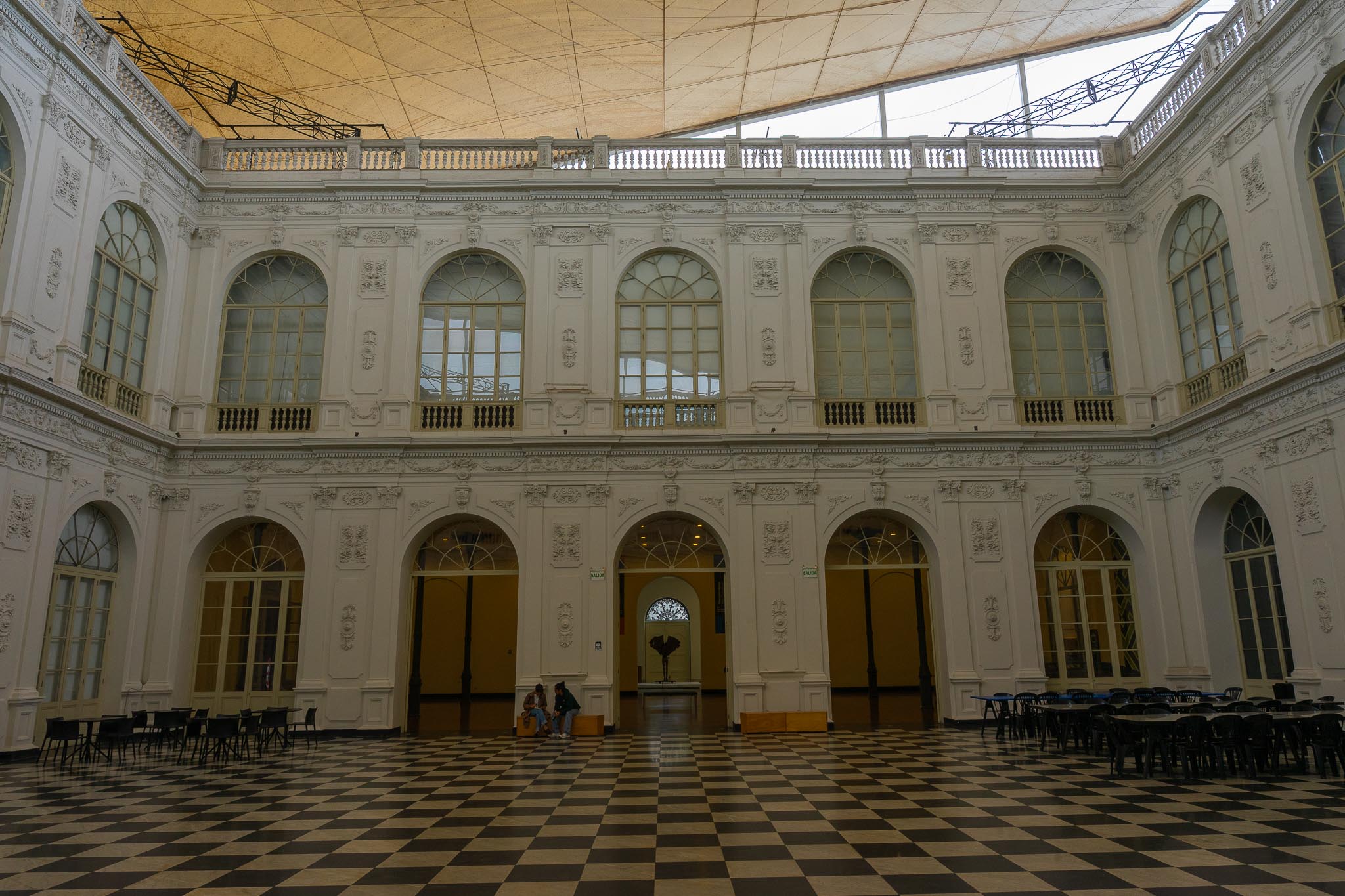
Museum time matters in Lima because the city’s outdoor layers are too large to explain on their own. MALI, in the Palacio de la Exposición, provides the broadest frame: its collections move through pre-Columbian, colonial, republican and modern art. After the Historic Centre and the huacas, that range gives the city’s changes a longer chronology.
The Museo de Minerales Andrés del Castillo offers a different material emphasis, while the parks and civic spaces around central Lima keep the day connected to the streets. Choose the collection that most interests you rather than trying to make every museum carry equal weight. Indoor time is useful here not as shelter from the city, but as a way of understanding what the buildings and archaeological sites outside have already begun to show.
Walk the City Between the Landmarks
The transitions where Lima’s different versions meet
Lima’s transitions deserve their own place in the itinerary. Colonial streets open onto Plaza Mayor. Barranco’s low-rise streets descend towards the coast. Miraflores changes from apartments and commerce to cliffs and parks. Huaca Pucllana sits beside modern roads and buildings; museums return the visitor to the city after the archaeological sites.
None of this needs to become a single continuous walking route. The city is too spread out for that claim to be useful. What matters is the movement between registers: the ordinary streets, short transfers, public parks and neighbourhood edges that keep the headline attractions from becoming isolated scenes.
Allow time for those spaces. Lima is not only the Plaza Mayor, the Bridge of Sighs, the Malecón or the huacas. The city between them is where the layers stop behaving like separate attractions and begin to belong to one place.
Shortest route to a great first visit
What each part of Lima does best
Watch-outs
What to prioritise with one, two or three days
With one day: choose the Historic Centre plus either Barranco and the coast or Barranco and the archaeology, depending on pace. Historic Lima, neighbourhood Lima and the Pacific edge make a rich but ambitious day; there is no need to force every museum and huaca into it.
With two days: give the first day to the Historic Centre. Use the second for Barranco, Miraflores and Huaca Pucllana, with Museo Larco as the stronger addition when archaeology matters more than another coastal stop. Huaca Huallamarca can extend that archaeological thread.
With three days: follow the complete Lima itinerary, which separates the central museum day from the Barranco, Miraflores and archaeological route instead of treating the city as one compressed list.
The city beneath the city
Lima does not resolve itself into one image. The colonial centre, Barranco’s streets, the Pacific cliffs and the huacas belong to different centuries, but they occupy the same city. Museo Larco and MALI give those layers chronology; ordinary streets and public parks keep them connected to the present.
The pleasure of Lima is discovering how often one version survives beside another. A modern district can carry an older city beneath it. A road can open from civic stone to ocean. A museum can turn a ruin into a history that continues beyond the walls. The three-day route is the natural next step when those layers need to become a journey.
But the road is ever onward.