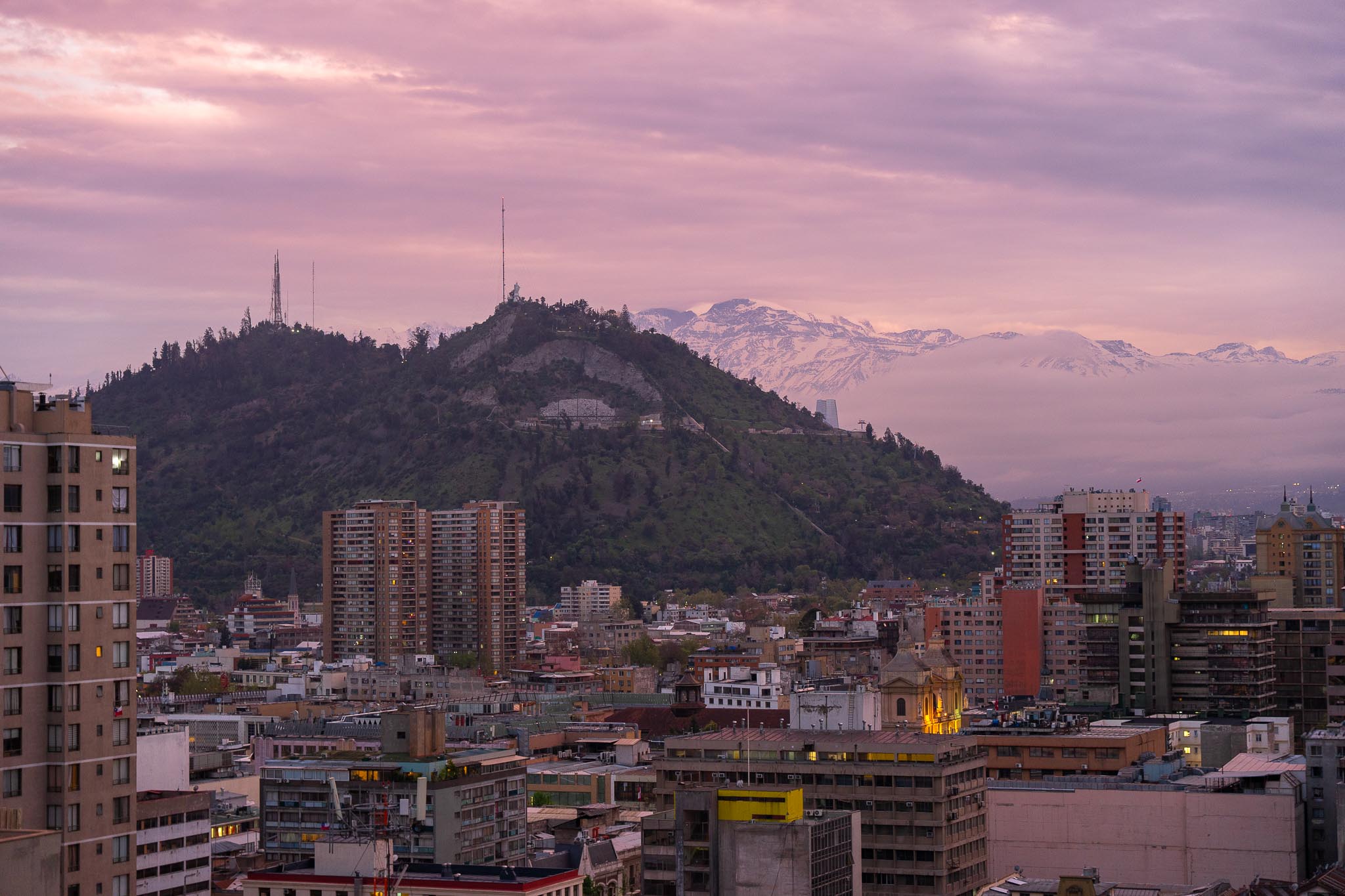
Santiago changes character as the traveller moves through it: civic buildings become working markets, museums open into parks, neighbourhoods carry the city’s memory, and the hills turn the whole route into geography.
Santiago becomes clearer through its contrasts. The formal centre gives way to the market, the museums open into the parks, older neighbourhood streets lead away from civic buildings, and the hills return the whole city in one view. A first visit works best when those parts are allowed to stand beside one another.
Begin near La Moneda and the Metropolitan Cathedral, where public buildings, central streets and the Mapocho edge establish Santiago’s civic face. Then cross towards Vega Central for the working city, and move through the museums, Parque Forestal and Yungay before choosing a view from San Cristóbal, Santa Lucía or Sky Costanera.
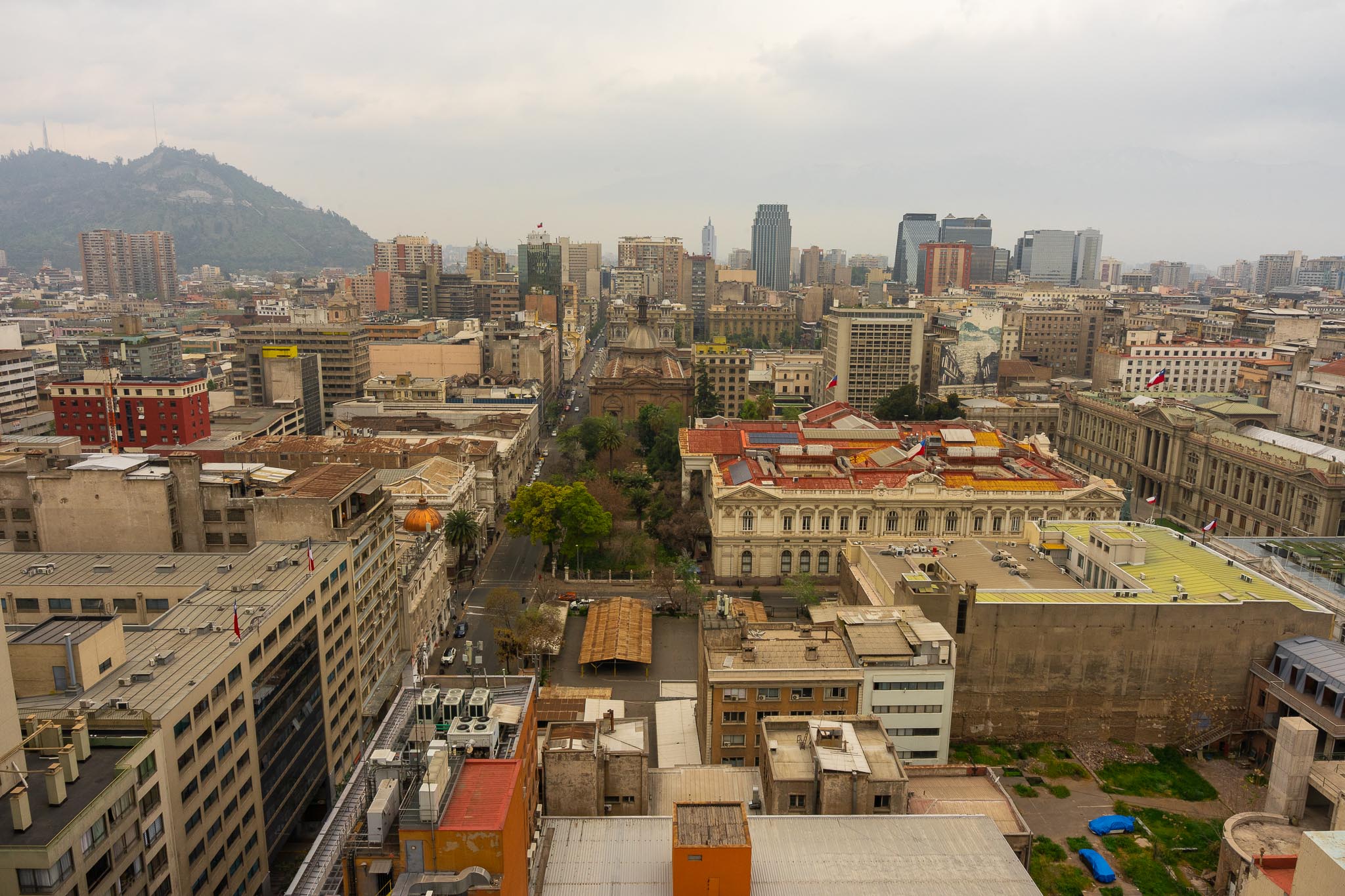
Santiago’s centre, hills and mountain edge in one view.
Choose your Santiago
With one day, stay central. La Moneda, the Metropolitan Cathedral, the main streets and Vega Central make a compact introduction, with one museum if time allows. With two days, add the museum-and-park route and one viewpoint. With four days, follow the complete itinerary through Yungay, the Sound Museum, the remaining viewpoints and the onward bus to Mendoza.
Access, opening hours, fares and transport arrangements change. Check those details before setting out, particularly when building several stops into one day.
Santiago at a Glance
Best first stop: The civic centre around La Moneda, the Metropolitan Cathedral and the central streets.
For the working city: Cross towards Vega Central, where Santiago shifts from monuments to markets and everyday movement.
For culture: Pair one or two museums with Parque Forestal rather than trying to collect every institution in a single day.
For the view: Choose San Cristóbal for hills and mountains, Santa Lucía for the central city, or Sky Costanera for the broadest skyline.
Five Ways into the City
Civic CentreLa Moneda · Cathedral · Estación MapochoSantiago at its most formal: government, religion, public space and the historic centre. The best place to begin a first visit.
Vega CentralMarkets · Produce · Working SantiagoThe city at street level. Less monumental, more immediate, and the clearest contrast with the formal centre nearby.
MuseumsPre-Columbian Art · Fine Arts · Sound MuseumThree very different collections. Choose one or two rather than turning the day into a museum checklist.
Parks & NeighbourhoodsParque Forestal · YungayThe quieter urban layer between institutions and residential streets. Best explored as part of a wider walking route.
ViewpointsSan Cristóbal · Santa Lucía · Sky CostaneraThree different readings of Santiago: mountain geography, central-city scale and the modern skyline.
I.
Begin with the civic centre
La Moneda, the Cathedral, Estación Mapocho and Santiago’s public face
The historic centre gives the visit its first outline. La Moneda, the Metropolitan Cathedral, the central streets and Estación Mapocho sit within a route that moves between government, religion, public space and the city’s older transport edge. The pleasure is not in collecting façades. It is in watching Santiago change from one institution to the next.
La Moneda Cultural Center belongs to this opening sequence, while the Cathedral anchors the central streets with a different kind of public memory. Estación Mapocho widens the route towards the river and the market districts. Together they make a better first introduction than a single landmark viewed in isolation.
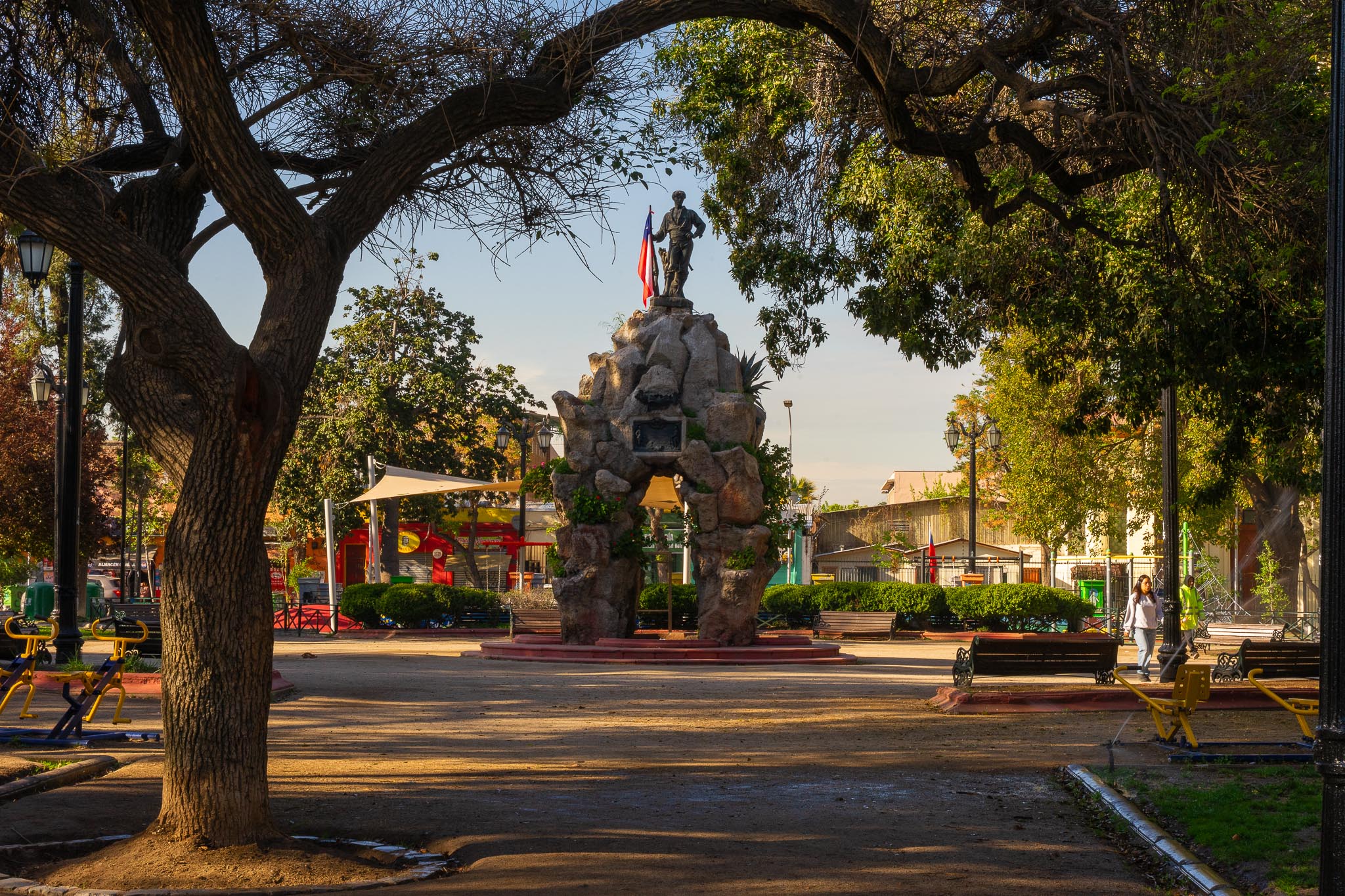
A central Santiago civic scene, where formal buildings and public space meet.
II.
Follow the working city
Vega Central and the movement of stalls, produce and people
Vega Central changes the texture of the day. After the civic centre’s stone and formal lines, the market brings the visit down to stalls, produce and movement. It is one of the clearest moments when Santiago stops presenting itself as a set of monumental places and becomes a city being used.
The market works best alongside the central city, then the museums and parks. No particular purchase or dish needs to carry the visit. Vega matters because it shows Santiago being used, close to the institutions and public spaces that give the centre its more formal character.
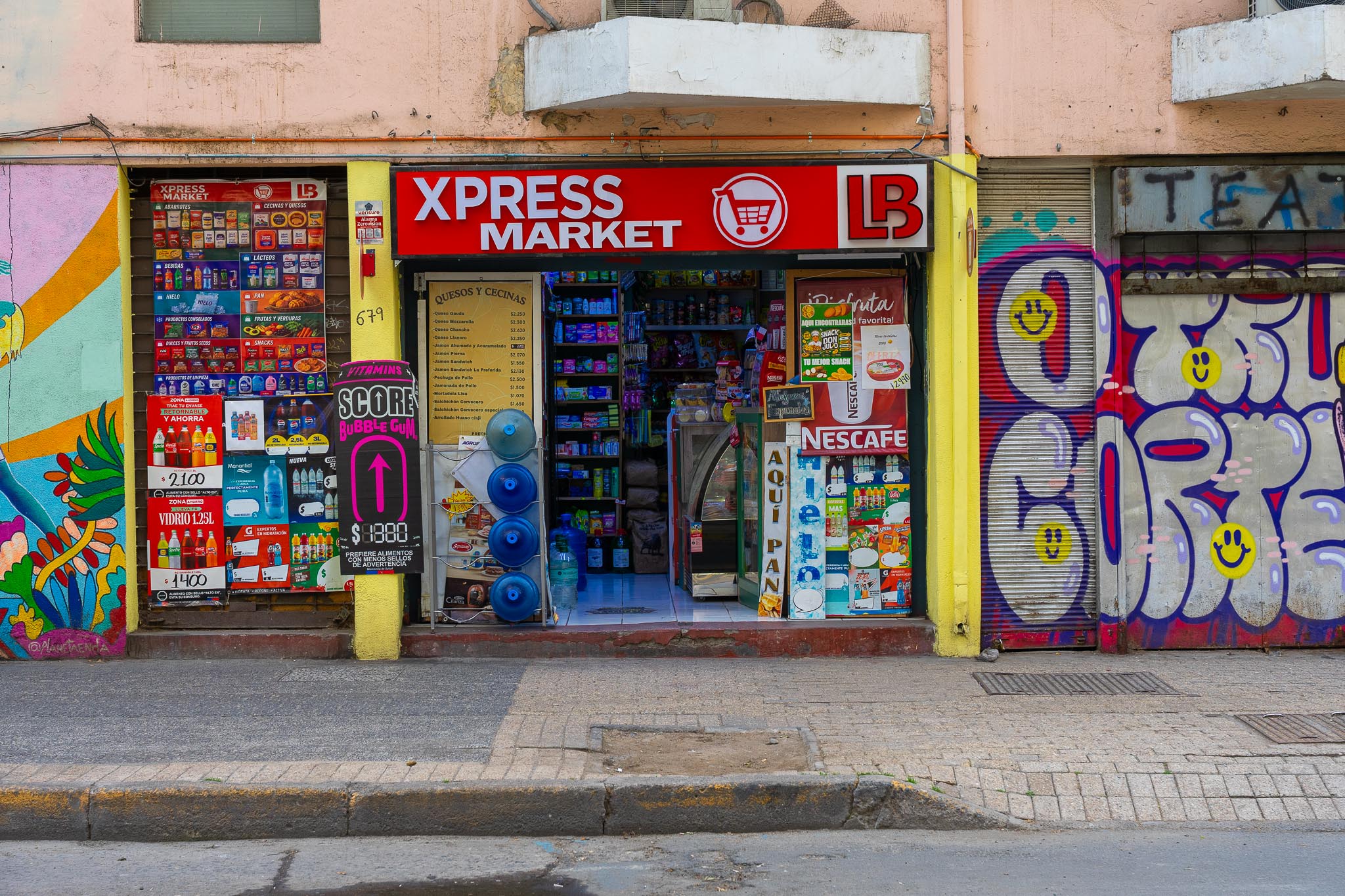
A market-side street in Santiago, away from the formal centre.
III.
Enter the museum city
Pre-Columbian Art, Fine Arts and the Sound Museum
Santiago’s museums give the journey an interior life. The Chilean Museum of Pre-Columbian Art reaches back before the Spanish period; the National Museum of Fine Arts returns the route to the city’s cultural centre; the Sound Museum carries it into a more specialised collection. They are different visits, but together they prevent the city from becoming only streets, markets and views.
Choose the collection that most interests you, leave room for Parque Forestal and check current access before going. The museums work best as part of the surrounding streets and park, with enough time to see them as part of the city rather than as isolated stops.
IV.
Walk into parks and neighbourhoods
Parque Forestal, Yungay and the less monumental side of the city
Parque Forestal changes the pace of the museum route. It gives the day a place to continue on foot, with the cultural institutions no longer treated as isolated appointments. The park sits between the city’s formal buildings and the neighbourhoods that carry the day into a different urban texture.
Yungay extends that movement beyond the formal centre. The Sound Museum and Cementerio General can extend the day here, where Santiago becomes less monumental. Walk this part of the city as an extension of a day that already has shape, rather than turning it into a broad claim about its barrios.
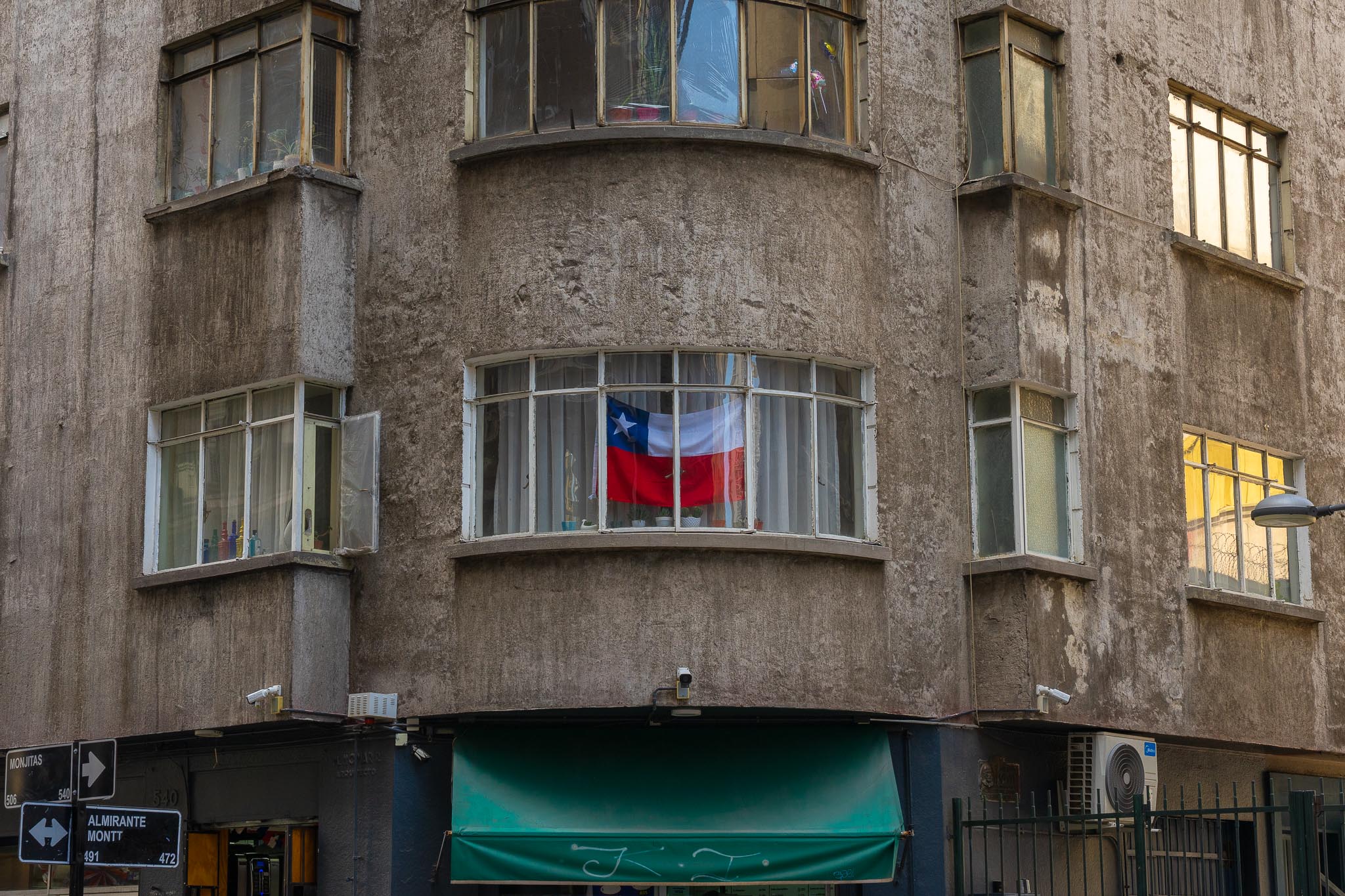
An older Santiago facade on the cultural and neighbourhood side of the route.
V.
See Santiago from above
San Cristóbal, Santa Lucía and Sky Costanera
The viewpoints are not interchangeable. San Cristóbal brings the hills and the mountain edge into the frame. Santa Lucía keeps the view close to the central city. Sky Costanera turns the perspective towards the built skyline. Each one answers a different question about where Santiago sits and how it spreads.
One is enough for a short visit; two make the contrast clearer. The separateSantiago Viewpoints guide compares them directly.
Santiago’s wooded hills against the mountain edge.
📍 Santiago — Things to Do
🧭 First visit · Five perspectives
Shortest route to a great first visit
One day — Historic centre, Vega Central and one viewpoint. Begin with La Moneda and the Cathedral, cross into the market district, then finish above the city.
Two days — Add the museum-and-park route. Choose the Pre-Columbian Art Museum or Fine Arts, walk Parque Forestal, then spend more time around the central neighbourhoods.
Three days — Add Yungay and the Sound Museum, with enough room to slow the route down rather than stacking more central attractions.
Four days — Follow the full Santiago itinerary, using the extra time for the remaining viewpoints and neighbourhood stops.
If you only choose three things — The civic centre, Vega Central and one viewpoint. Together they show Santiago at street level, institutional scale and from above.
What each part of Santiago does best
History and civic Santiago: La Moneda, Metropolitan Cathedral and the historic centre.
Markets and everyday city: Vega Central and the streets around the Mapocho edge.
Museums and culture: Pre-Columbian Art Museum, Fine Arts and the Sound Museum.
Views and geography: San Cristóbal, Santa Lucía and Sky Costanera.
Watch-outs
Do not turn the museums into a checklist. One or two strong collections will make a better day than racing through every institution on the page.
The viewpoints are alternatives, not duplicates. San Cristóbal gives the strongest sense of Santiago against the mountains, Santa Lucía keeps the city close, and Sky Costanera gives the broadest urban panorama.
Santiago works in clusters. Walk within the centre, market district and park corridors, then use transport when the route jumps between wider parts of the city.
Keep current access in mind. Museum hours, funicular or cable-car operations and viewpoint access can change, so check live information before building a tight schedule.
What deserves priority
With one day: stay near the centre. Combine La Moneda, the Metropolitan Cathedral and the central streets with Vega Central, then choose one museum if time allows. The day will contain civic Santiago, the working market and a first cultural layer without trying to cross the whole city.
With two days: add Parque Forestal and the museum route, then choose one viewpoint. San Cristóbal suits the hill-and-mountain perspective; Santa Lucía keeps the view central; Sky Costanera gives the broadest built-up skyline.
With four days: use the complete Santiago itineraryfor the full sequence through Yungay, the Sound Museum, the remaining stops and the departure to Mendoza.
Where Santiago Comes Together
Santiago holds these contrasts together: public institutions beside working streets, museum interiors opening towards parks, older neighbourhoods leading away from the centre, and hills that make the city’s geography visible.
One day can cover the civic centre, Vega Central and one viewpoint. Three or four days make the contrast between markets, museums, parks, neighbourhoods and elevated views easier to enjoy without turning every stop into a race.
What should you do first in Santiago?
Begin around La Moneda, the Metropolitan Cathedral and the central streets. That civic route gives the city its formal starting point before the day moves towards Vega Central, museums, parks or the viewpoints.
Which Santiago viewpoint is best?
San Cristóbal gives the clearest sense of the basin and mountain geography, Santa Lucía keeps the historic centre close, and Sky Costanera shows the broadest built skyline. They are different perspectives rather than interchangeable versions of the same view.
How should you combine Santiago museums?
Choose one or two collections that genuinely interest you and leave room for the surrounding streets or Parque Forestal. The museums work better as part of a district-based day than as a checklist of isolated interiors.
Is Vega Central worth visiting?
Yes, especially if the aim is to see Santiago beyond its civic buildings. The market changes the scale of the day from monuments and institutions to produce, movement and the working city nearby.