South America · Chile · Santiago · September 2026

Santiago Viewpoints:
San Cristóbal, Santa Lucía and Sky Costanera

Three ways of reading the city from above.

3Viewpoints
4Nights
SepVisited
1City

Santiago looks different depending on how far above street level the traveller stands. San Cristóbal Hill places the city inside its basin and mountain setting. Santa Lucía Hill keeps the centre close. Sky Costanera turns Santiago into a continuous field of blocks, towers and distance.

These are not three versions of the same panorama. They answer different questions about the city, and the best choice depends on whether the priority is geography, the historic centre or urban scale.

The three viewpoints belonged to the September 2026 Santiago stay. For the wider city sequence, continue to the four-day Santiago itinerary. The best things to do in Santiago guide places these views beside the civic centre, Vega Central, museums, parks and neighbourhoods.
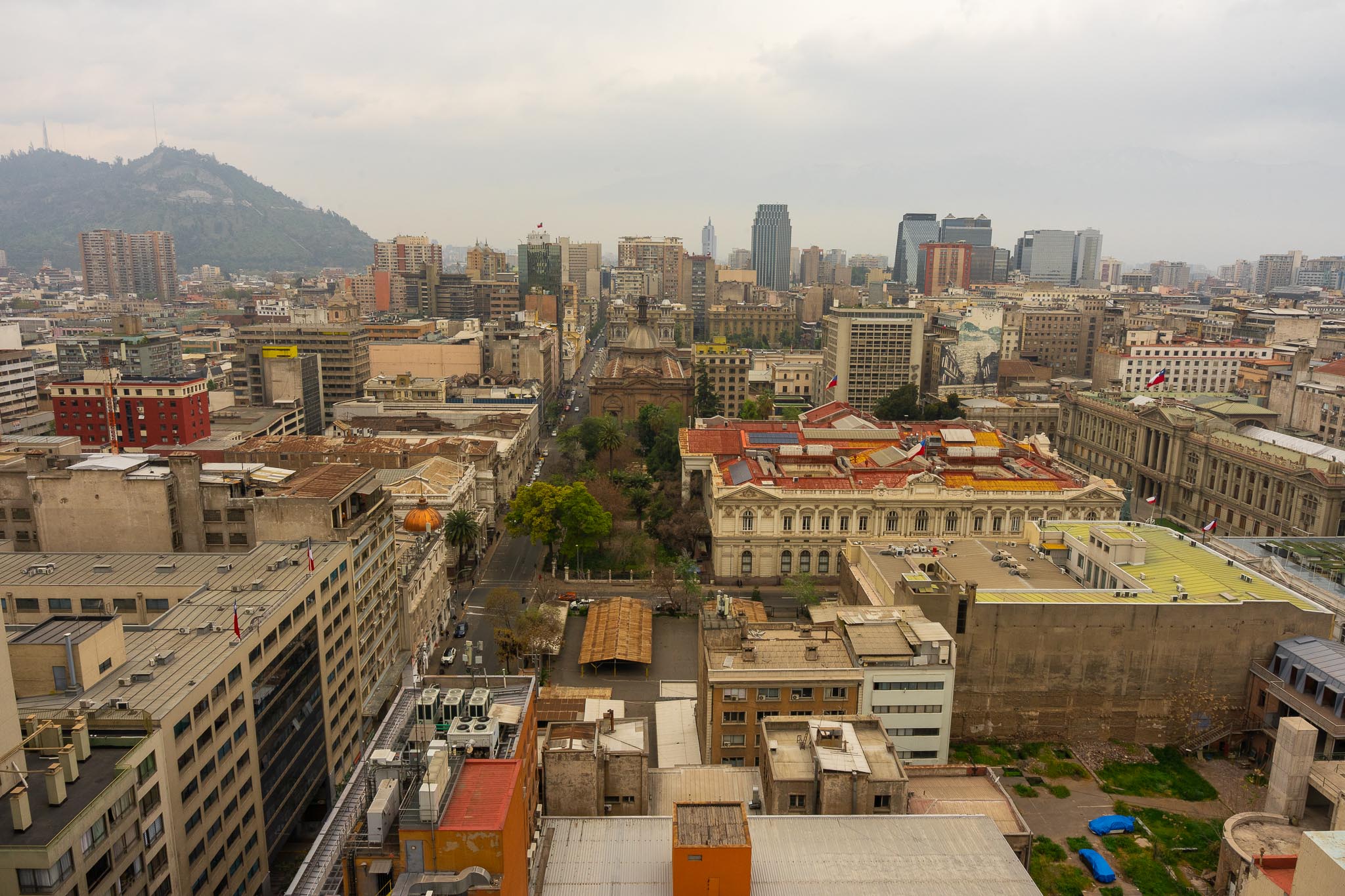
Santiago skyline with the mountains beyond the city.
Santiago’s centre, hills and mountain edge in one view.

I. San Cristóbal Hill — Santiago Against the Mountains

San Cristóbal is the broadest geographical reading of Santiago. The hill belongs to the city, but the view reaches beyond its streets towards the basin and the Andes. From here, the urban centre is no longer the whole subject; it becomes one part of a larger landscape.

Its position within Parque Metropolitano matters to the comparison. San Cristóbal is a landscape viewpoint first, with the hills and mountain edge shaping the way Santiago is understood. Choose it when the question is not simply what the city looks like, but where the city sits.
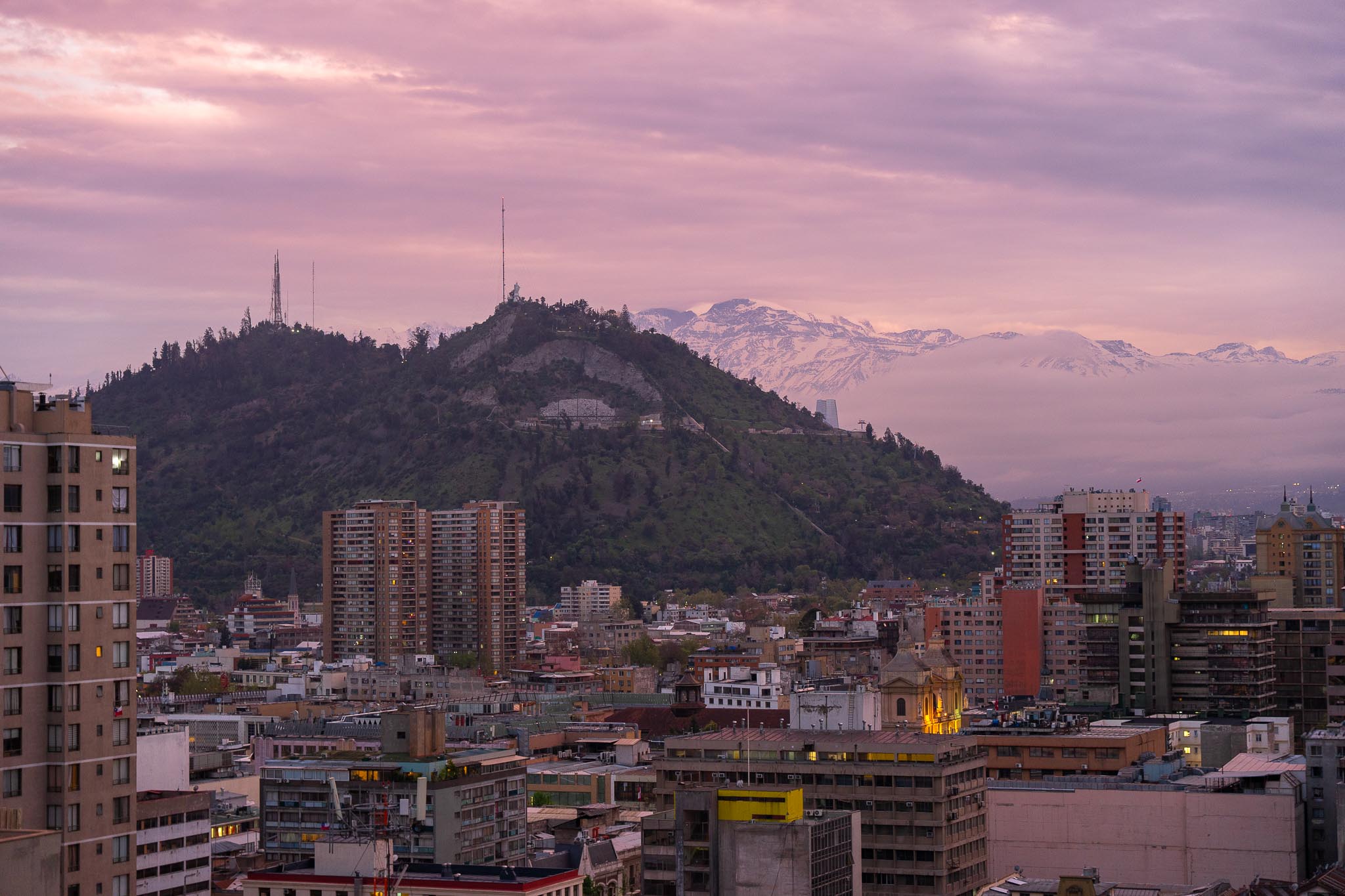
Santiago’s wooded hills and skyline beneath a pink evening sky.
Santiago’s wooded hills against the mountain edge.

II. Santa Lucía Hill — The Centre from Above

Santa Lucía changes the scale without leaving the central city. It is a hill within the historic centre, so the streets, civic buildings and nearby parks remain close to the view. San Cristóbal places Santiago in its basin; Santa Lucía keeps the traveller inside the city’s older civic geography.

That makes it the natural choice when time is limited or when the day already belongs to central Santiago. It adds elevation without turning the view into a separate landscape excursion. The hill is part of the city’s public space rather than a distant frame around it.

III. Sky Costanera — The Scale of the City

Sky Costanera takes the comparison upwards through Santiago’s modern skyline. The view is less about one hill or historic centre than about the continuous city below: blocks, avenues, towers and the mountain edge held in the same field.

This is the choice for urban scale. The high built perspective makes Santiago’s extent easier to read than either hill can, while the Andes remain present beyond the city. It complements San Cristóbal rather than replacing it: one explains the landscape around Santiago, the other the size of the city within it.
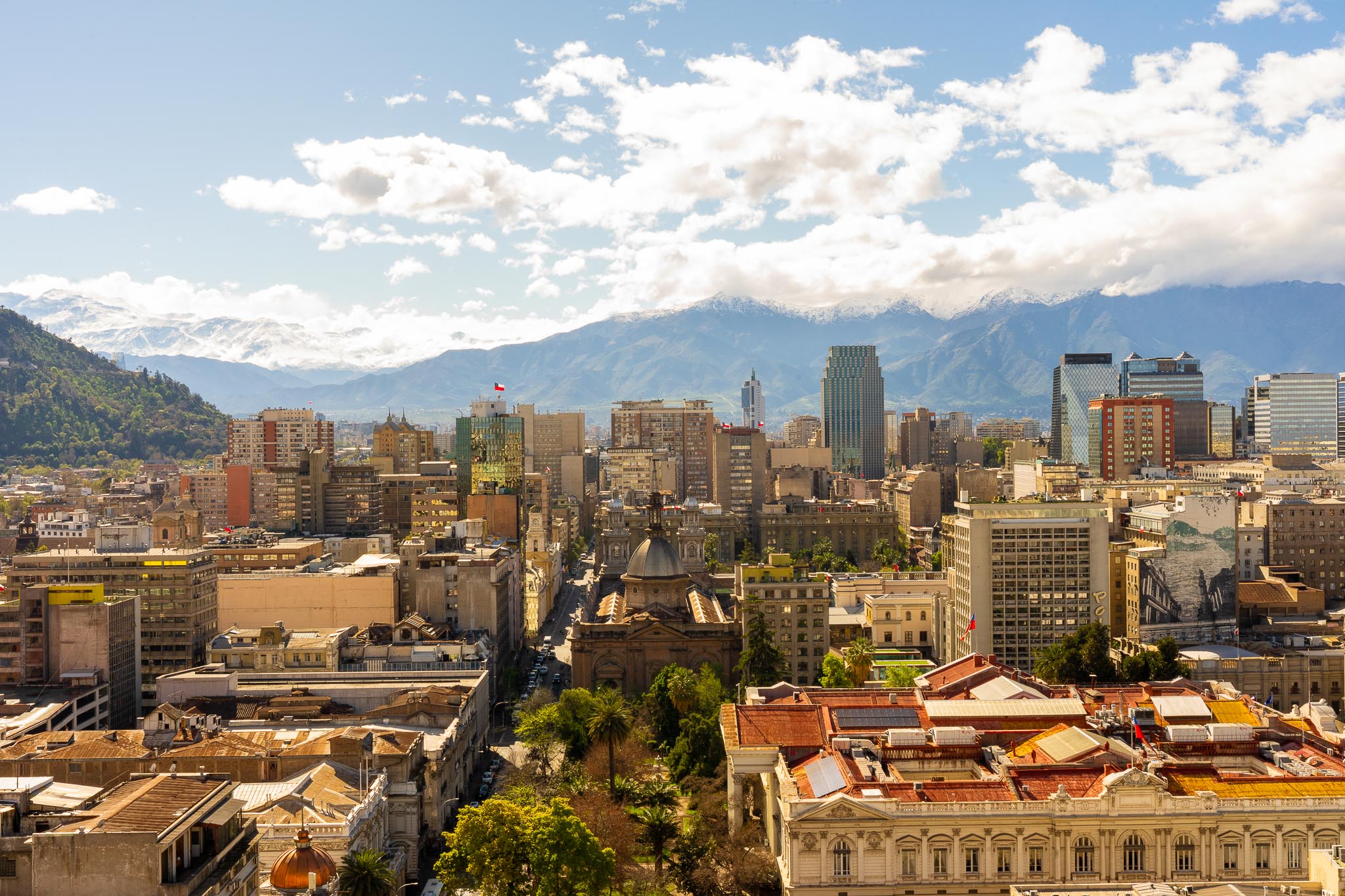
Santiago’s skyline and mountain edge beneath a bright sky.
Santiago’s built skyline set against the mountain edge.

Practical planning

Check current opening hours, ticket requirements and access before setting out. Sky Costanera requires particular attention to current entry arrangements. San Cristóbal needs more transport planning than Santa Lucía, while Santa Lucía fits naturally into a day around the historic centre.

Visibility matters for all three. The strongest choice depends on what the day needs: mountain geography, central Santiago or the full urban grid. For the wider South America journey, continue to the 24 Days in South America itinerary.

A City Seen from Three Heights

Santiago cannot be reduced to one skyline. San Cristóbal gives the city an edge; Santa Lucía keeps the centre close; Sky Costanera turns the built city into scale. Together they show how the same place changes when the traveller changes elevation.

But the road is ever onward.

The Three Viewpoints at a Glance
Best for geography: San Cristóbal Hill, with Santiago set inside its basin and mountain edge.
Best for the centre: Santa Lucía Hill, where the historic streets and civic buildings stay close.
Best for urban scale: Sky Costanera, where the built city becomes a continuous field of blocks and towers.
For a short visit: Choose one viewpoint; add a second only when the contrast is worth the extra movement.
Side by Side
San Cristóbal HillLandscape and geographySantiago against its hills and the Andes. Choose it when the question is where the city sits.
Santa Lucía HillA central-city viewA closer urban perspective within the historic centre. Choose it when the day already belongs to central Santiago.
Sky CostaneraUrban scaleThe built grid beneath the mountain edge. Choose it for the broadest reading of the city’s extent.
📍 Santiago — Viewpoints
🧭 Three perspectives

Shortest route to a decision

One viewpoint — Choose San Cristóbal for the clearest geographic sense of Santiago, Santa Lucía for the central city, or Sky Costanera for the broadest built panorama.
Two viewpoints — Pair San Cristóbal and Sky Costanera when the contrast between landscape and urban scale matters most.
A central-city day — Choose Santa Lucía when the historic centre and civic buildings already shape the route.

What each view does best

San Cristóbal Hill: the basin, hills and Andes beyond the city.
Santa Lucía Hill: the historic centre and central streets kept close to the frame.
Sky Costanera: the continuous built grid and Santiago’s urban extent.

Watch-outs

The viewpoints are alternatives, not duplicates. Each one answers a different question about Santiago rather than repeating the same panorama.
Plan the movement. San Cristóbal needs more transport planning than Santa Lucía, while Santa Lucía fits naturally into a historic-centre day.
Check current access. Museum hours, funicular or cable-car operations, viewpoint access and Sky Costanera entry arrangements can change.
Frequently Asked Questions
Which Santiago viewpoint is best for a first visit?
San Cristóbal is the strongest first choice when the main question is where Santiago sits against its hills and the Andes. Santa Lucía suits a central-city day, while Sky Costanera gives the widest urban panorama.
Can you visit all three Santiago viewpoints in one day?
It is possible to arrange them across a full sightseeing day, but they work better when treated as distinct perspectives rather than three identical stops. Plan the movement between them and check current access before fixing the sequence.
Is San Cristóbal or Santa Lucía better?
San Cristóbal provides the larger geographic reading, with the city set against its mountain edge. Santa Lucía is more compact and central, making it the better fit when the historic centre already anchors the day.
Is Sky Costanera worth adding?
Sky Costanera is useful when the desired view is the scale of the built city rather than the immediate historic centre or foothills. It complements rather than replaces San Cristóbal or Santa Lucía.
What should you check before visiting Santiago viewpoints?
Check current opening hours, ticketing and any funicular, cable-car or lift operations before travel. Access arrangements can change, and the three viewpoints do not share one booking or operating system.