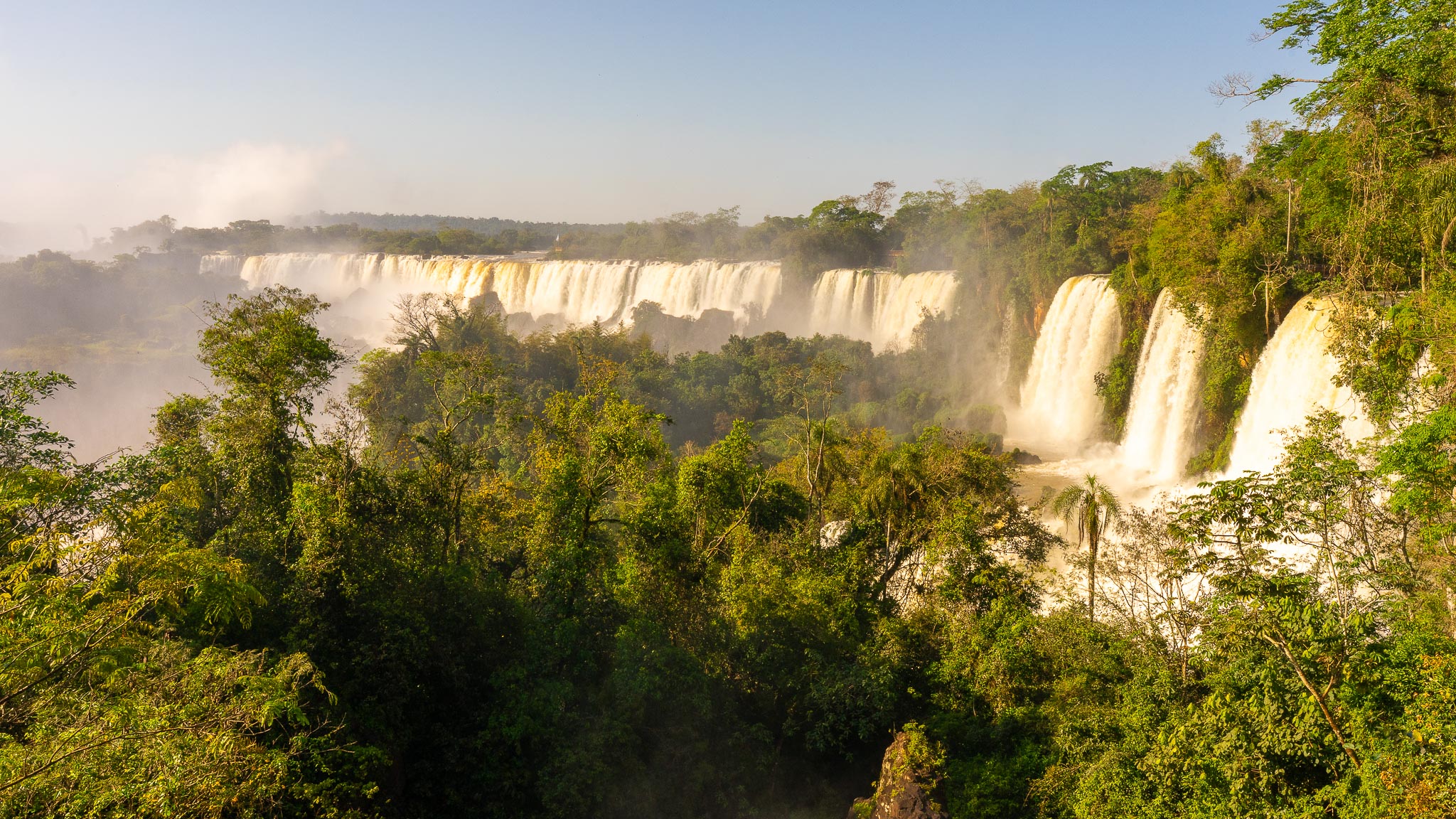
The useful comparison at Iguazú is not “better side” but “different day”. Argentina brings the traveller into the waterfall system through circuits, platforms and changing elevations. Brazil steps back and lets the whole landscape resolve into one broad composition. The same river crosses the border, but the two parks ask the visitor to look at it differently.
The short answer is therefore simple. Argentina is the fuller falls day. Brazil gives the better panorama and the more varied mixed day when Macuco Safari and Parque das Aves are added. With one day, choose the shape of experience that matters most. With two, do both.
For the complete two-country sequence, continue to the Iguazú Falls in 2 Days itinerary. This page is the decision guide: which side suits which traveller, and why neither side replaces the other.
I. The short answer
Choose Argentina if the falls themselves are the reason for the journey. Choose Brazil if the classic wide view matters most, the schedule is tighter or the day needs to combine the falls with a boat excursion and a wildlife park. Choose both if there are two full days.
Argentina generally requires more movement. The Argentine park breaks the visit into Garganta del Diablo, the Upper Circuit and the Lower Circuit, with the Ecological Jungle Train joining the main stations. Brazil gives the falls a more linear visit through the Cataratas trail, then offers Macuco Safari and Parque das Aves close to the same Brazilian park entrance.
That is the decision in one sentence: Argentina is immersion and variety; Brazil is panorama and range.
II. Argentina — inside the waterfall system
The Argentine side makes Iguazú episodic. The river appears, disappears into forest and returns as separate falls, platforms and channels. The visitor moves through the system rather than receiving it as a single picture from across the gorge.
The park’s current information describes the Upper Circuit, Lower Circuit and Garganta del Diablo walkway as distinct experiences, with the Ecological Jungle Train linking Central, Cataratas and Garganta stations. The precise operating pattern can change with water levels and infrastructure notices, but the physical distinction between the circuits is the reason to choose Argentina when the falls are the priority.
Garganta del Diablo
Garganta del Diablo is Argentina’s great central experience. The walkway crosses the upper Iguazú River before reaching the chasm where the water gathers and drops. The approach matters: the traveller follows the river towards the point where its level surface breaks open.
The view is not simply a waterfall seen from a distance. The walkway places the visitor over the river, with water moving beneath the boards and the forest closing the edges of the scene. The chasm gives the Argentine side a centre, and the other circuits explain the landscape around it.
Current access should be checked before travel. High water has affected walkways in the past, and the official park notice is more useful than any fixed assumption about the Garganta route.
Upper Circuit and Lower Circuit
The Upper Circuit is the clearer way to understand the architecture of the falls. Its level walkways look across channels and cascades from above, allowing separate drops to sit within one larger pattern. The view is broad enough to show how the river divides before it falls.
The Lower Circuit changes the height and the relationship. Its paths descend through the forest and bring the traveller closer to the vertical movement of the water. The official park description identifies the circuit as a longer walkway with stairs, while the Upper Circuit is level and more accessible. These are not rival versions of the same trail. The Upper Circuit explains connection; the Lower Circuit explains depth.
Argentina therefore wins for variety of viewpoint. It is the side for visitors who want to walk through a landscape in stages, with the falls changing from one platform to the next.
III. Brazil — the grand panorama
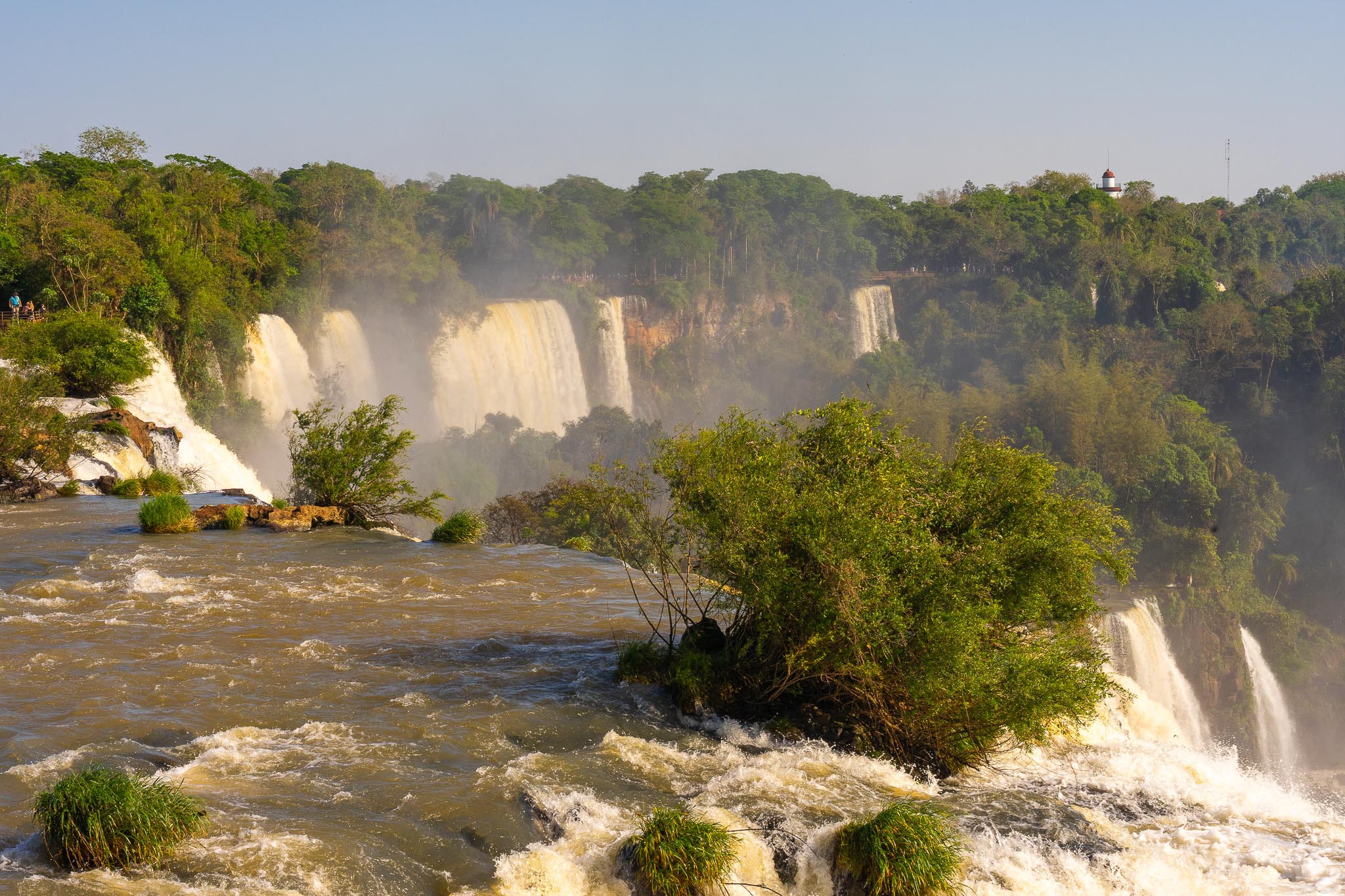
Brazil is where Iguazú resolves into one composition. The Cataratas trail follows the Brazilian side of the gorge and looks across towards the Argentine falls, so the water, forest and river enter the frame together. The visitor is no longer moving from one internal chapter to another. The landscape is laid out across the opposite bank.
This is Brazil’s defining advantage. The broad view is better here. Not because the falls are more powerful on one side of the border, but because the Brazilian position makes their width visible. Argentina gives the traveller the experience of being among the parts. Brazil shows how the parts belong to one system.
The Brazilian falls visit is also more compact when treated as the park alone. That makes the side useful for a shorter schedule, although the day expands quickly when the safari and bird park are added. The park can be the short panoramic half of a day or the centre of a full mixed itinerary.
IV. Which side is better for what?
Which side gets you closer?
Argentina generally gives the more immersive close-range experience. The Garganta walkway crosses the upper river, while the Upper and Lower Circuits approach the falls from different heights and directions. The visitor spends more of the day inside the structure of the park.
Brazil also reaches the water at its final viewpoints, but proximity is not its main argument. Its strength is the wider field: the falls opposite, the river below and the forest tying the whole scene together. Choose Argentina for changing closeness; choose Brazil for the view that explains the scale.
Which side has the better views?
Brazil for the grand overall view. Argentina for variety.
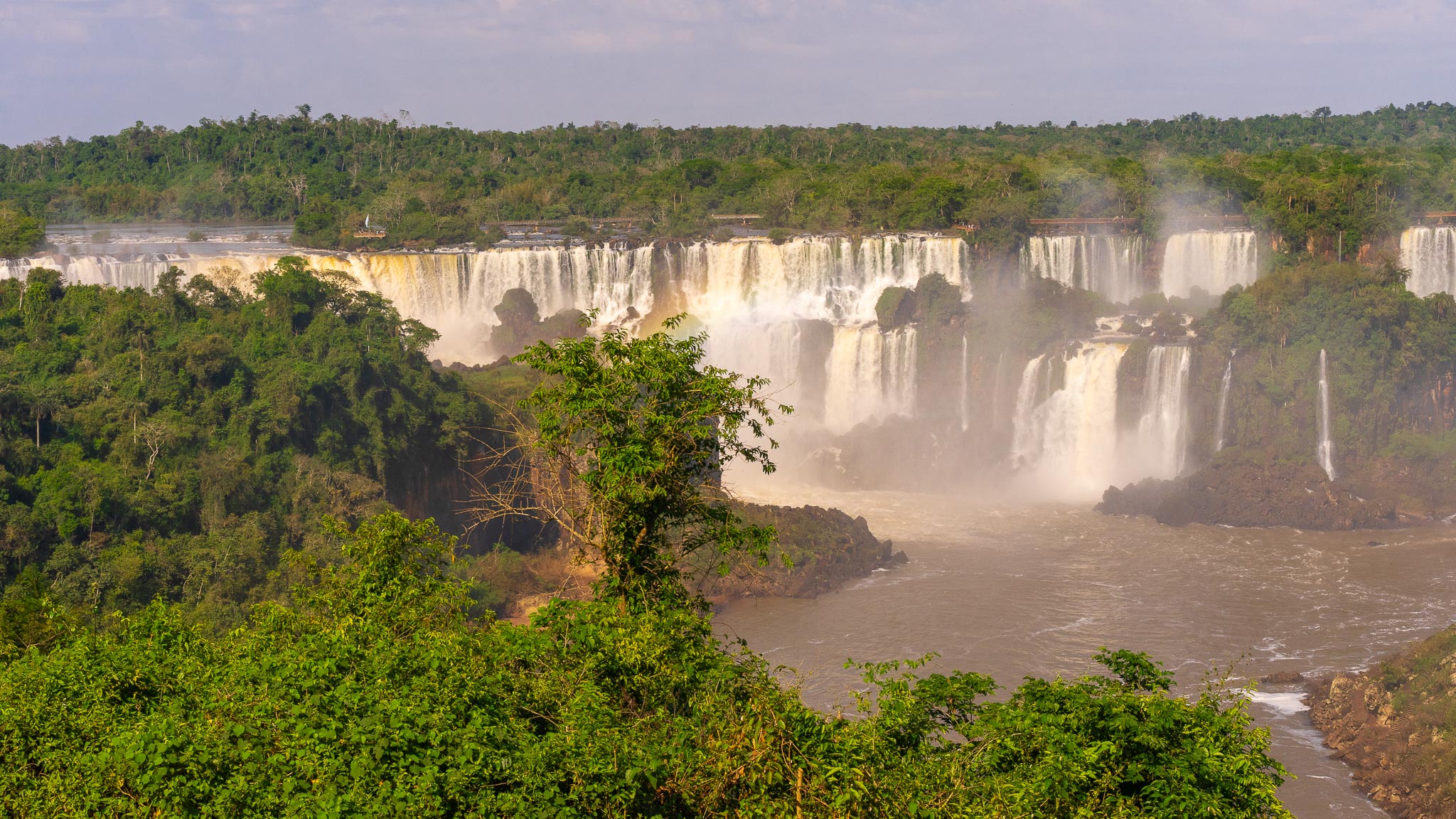
The Brazilian trail gives the classic landscape photograph because the falls spread across the opposite side of the gorge. Argentina supplies more kinds of view: river channels from above, lower forest paths, walkways across the upper water and the central chasm at Garganta del Diablo.
The distinction is useful because it prevents the two parks from being judged by the same standard. A wide panorama cannot replace a day spent moving through the falls, and a chain of close views cannot replace the moment when the entire system fits across the horizon.
Which side is better for photography?
Brazil wins for the single wide image. Argentina wins for a varied set of images.
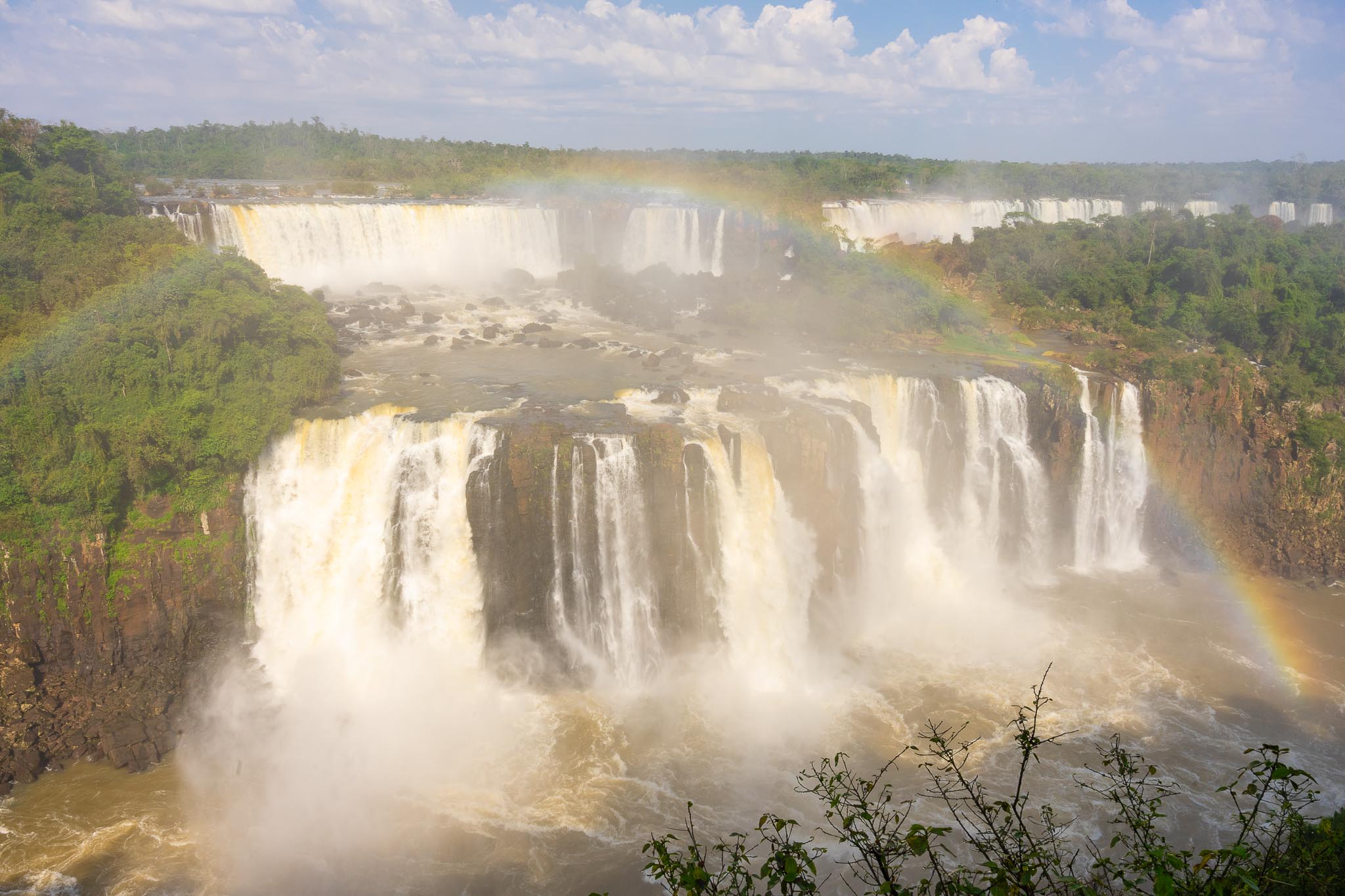
On the Argentine side, photography changes with the path: platforms, water, forest, walkways and different elevations. On the Brazilian side, the strongest photographs are broader and more composed, with the opposite bank carrying the waterfall line. The final Brazilian viewpoints are especially useful for showing the relationship between river and falls rather than isolating one drop.
If wildlife matters, Brazil extends the photographic range further through Parque das Aves. The bird park is a separate conservation attraction beside the Brazilian entrance, not another falls viewpoint, but it gives the day birds, aviaries and a closer scale after the water.

Which side takes longer?
Argentina usually takes most of a day because the experience is divided among Garganta del Diablo, the Upper Circuit and the Lower Circuit, with movement between stations. Brazil can be a shorter falls visit when the Cataratas trail is the only attraction, but it becomes a full day when Macuco Safari and Parque das Aves are included.
The current Parque das Aves guidance gives a minimum visit of about an hour and an average visit closer to three hours. Macuco Safari’s current operator describes a jungle, trail and boat experience, with park entry purchased separately. These are not minor additions to a Brazilian morning; they change the shape of the day.
Which side involves more walking?
Argentina requires more movement overall. The official park descriptions give the Upper Circuit as a level walk and the Lower Circuit as a longer path with stairs, while the Garganta walkway crosses the upper river. The Ecological Jungle Train helps connect the stations, but it does not turn the Argentine day into a single short loop.
Brazil’s falls experience is more linear. Walking increases if Macuco Safari and Parque das Aves are added, but the waterfall comparison itself remains more concentrated. Choose Argentina when the walking through the park is part of the attraction; choose Brazil when the falls need to fit into a wider day.
V. If you only have one day
Choose Argentina if this is the only chance to experience Iguazú and the falls themselves matter most. It offers more circuits, more changes of elevation and more time inside the waterfall system. Garganta del Diablo gives the day a centre, while the Upper and Lower Circuits make the landscape unfold around it.
Choose Brazil if the panorama is the priority, the schedule is tight, the base is Foz do Iguaçu or the day needs to include Macuco Safari and Parque das Aves. Brazil is the more compact falls visit and the easier side to combine with other attractions near the park entrance.
If the only question is which side is better, the answer is Argentina for a fuller falls day and Brazil for a stronger single panorama. That is a real distinction, not a compromise.
VI. If you have two days
Do both. Give Argentina one full day and Brazil one full day, with the border crossing treated as part of the Brazilian schedule rather than an invisible transfer between attractions.
Puerto Iguazú is the straightforward base for an Argentina-first arrangement. It keeps the Argentine park close and makes the Brazilian day a deliberate crossing. Foz do Iguaçu is the natural alternative when Brazil is the main priority or the onward journey continues through Brazil.
For the complete arrangement, use the two-day Iguazú Falls itinerary: arrival in Puerto Iguazú, Argentina on the first full day, Brazil on the second and departure afterwards where possible.
Border planning
The Brazil day carries more logistical friction if the base is Puerto Iguazú because the itinerary crosses the Tancredo Neves bridge and returns later. Leave margin for immigration, transport and the possibility that the crossing takes longer than expected.
Check current entry requirements for both countries before travel. Requirements vary by nationality and date; carry the passport or other accepted travel documentation required for the crossing, and consult official government guidance rather than relying on a general travel summary. Argentina’s Iguazú border centre and Brazil’s official visa guidance are the right places to start.
The border does not split Iguazú into a good side and a lesser one. It changes the distance. Argentina brings the traveller into the waterfall system until the falls become a sequence of paths, drops and changing levels. Brazil steps back far enough for the whole thing to become one landscape.
With one day, choose the experience. With two, choose neither. Cross the border.
But the road is ever onward.