Buenos Aires arrived late in a long route through the continent. After Iguazú, the traveller had five nights in Argentina’s capital, based in Palermo. The neighbourhood became the starting point for a city that revealed itself in layers rather than all at once.
Five nights do not finish Buenos Aires. They are enough to let the city change shape several times: an arrival afternoon in the historic centre, a dense cultural day through the Obelisk, Teatro Colón and Recoleta, a day that moves from San Telmo’s market streets to Puerto Madero’s docks, a deliberate interruption across the Río de la Plata, and a final full day that runs from La Boca’s football-and-port identity back through San Telmo and into Palermo’s parks.
That is the structure of this itinerary. The best things to do in Buenos Aires guide decides what deserves attention; this page decides what belongs together. The city is too large to treat every day as one heroic walk, but its districts are close enough in character to make a sequence out of the contrasts.
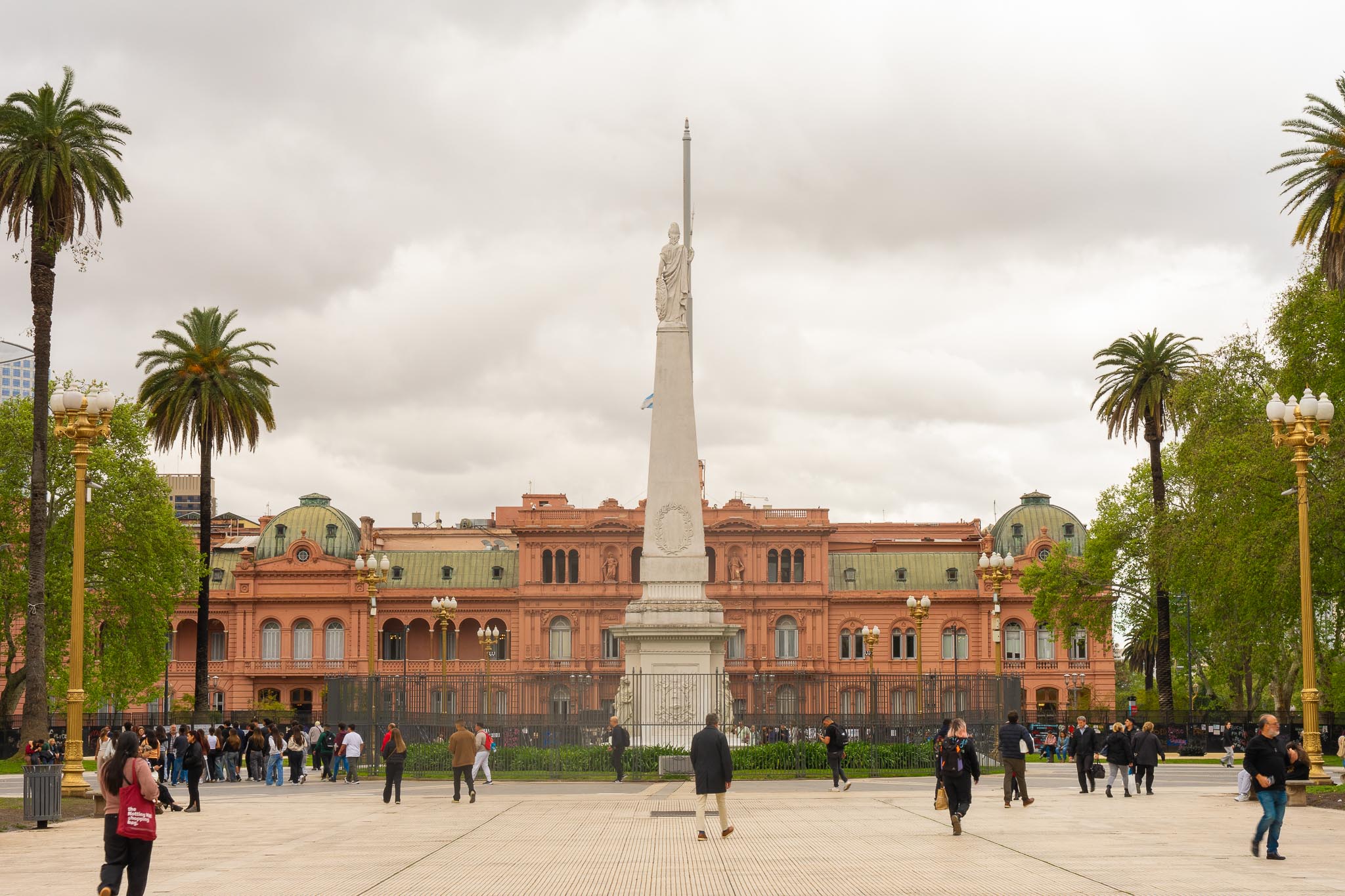
29 September — Arrival and Plaza de Mayo
The traveller arrived from Iguazú, dropped the bags in Palermo and used the remaining afternoon for the civic centre. This is the right kind of first movement after the waterfalls: not another attempt to collect the city, but a walk into the institutions that explain how Buenos Aires understands itself.
The Metropolitan Cathedral came first, followed by the Casa Rosada and Plaza de Mayo, the Cabildo and the Block of the Lights Historical-Cultural Complex. Plaza de Mayo is the oldest public square in Buenos Aires and the place where the May Revolution of 1810 is most legible in the city’s physical arrangement. The Casa Rosada occupies the site of the old fort and remains the seat of the national government; the Cathedral and Cabildo keep religious and colonial civic history within the same frame.
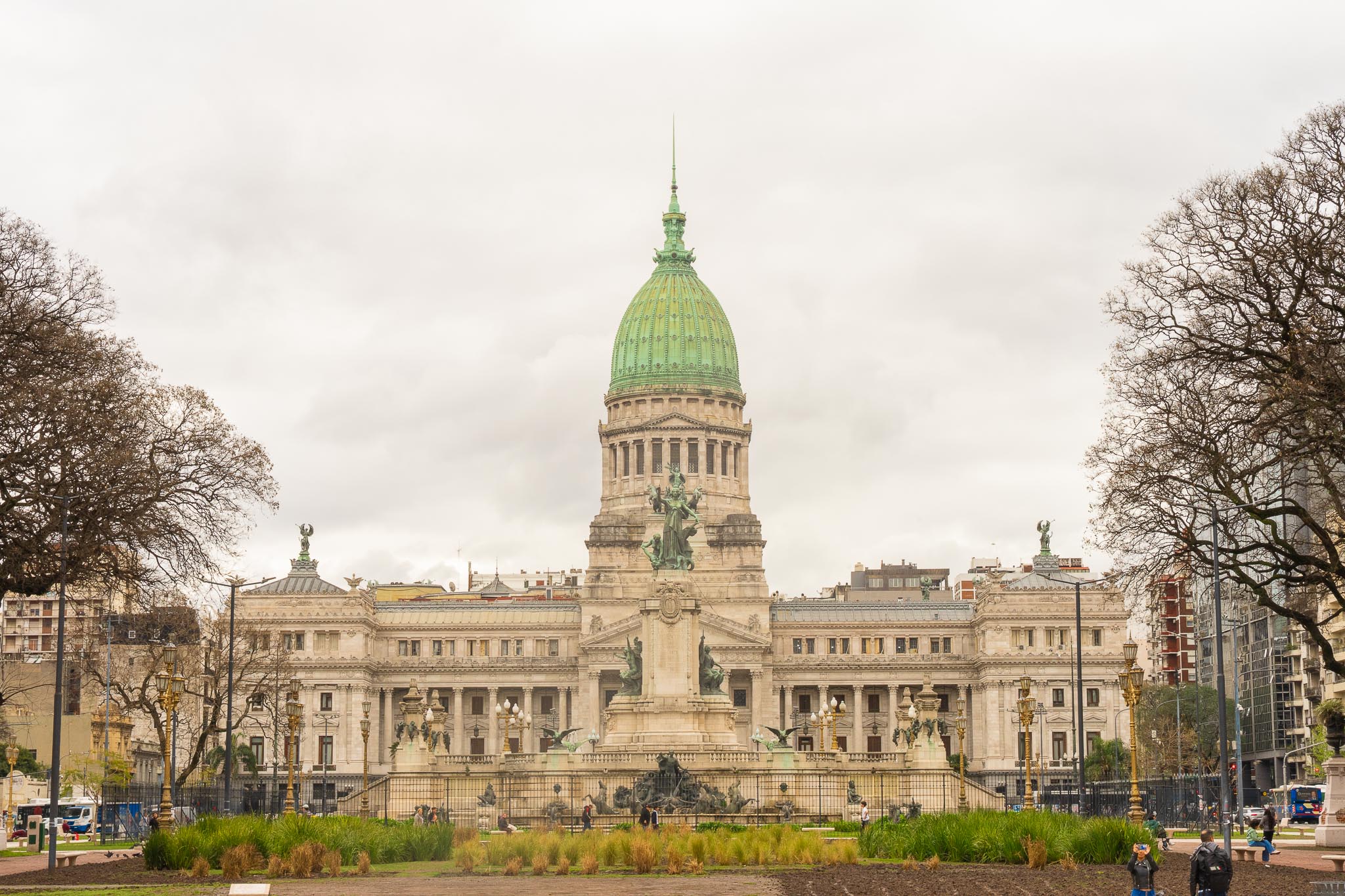
The route then extended along Avenida de Mayo towards Plaza del Congreso and the National Museum of Fine Arts before dinner at Parrilla Peña. The movement mattered more than the number of stops. Buenos Aires began with public space, government and civic memory, then widened towards the avenues and institutions of the modern capital.
The Plaza de Mayo and historic Buenos Aires guide gives this first afternoon its own treatment. Within the five-day structure, it works as an arrival chapter: central, walkable and substantial without asking the traveller to understand the whole city on the first evening.
Dinner followed at Parrilla Peña before the itinerary opened into a longer cultural day. The city had started with its public face; it ended at the table, ready for the museums and northern neighbourhoods ahead.
30 September — Central Buenos Aires, Recoleta and Palermo
The first full day was the most ambitious. It began in the centre with the Obelisk, Palacio San Martín, the Museo del Agua y de la Historia Sanitaria and Teatro Colón, then moved through El Ateneo and Palacio Barolo before heading north into Recoleta.
The morning is best understood as a progression from urban scale to cultural interior. The Obelisk was inaugurated in 1936 at the meeting of Avenida Corrientes and Avenida 9 de Julio, a modern monument raised to mark the fourth centenary of Buenos Aires’ first foundation. It is a landmark to see rather than a place that needs an entire morning. From there, the day can narrow into Teatro Colón, whose current building opened in 1908 and whose opera, ballet and concert life still gives the city one of its essential cultural institutions.
El Ateneo Grand Splendid changes the tone again. The former Teatro Grand Splendid survives as a bookstore whose balconies, stage and decorative shell still behave like a theatre. After the government buildings and grand cultural rooms, books make the route more intimate. Palacio Barolo adds another architectural detour, a building whose symbolism and vertical movement belong to the city’s early twentieth-century ambitions.
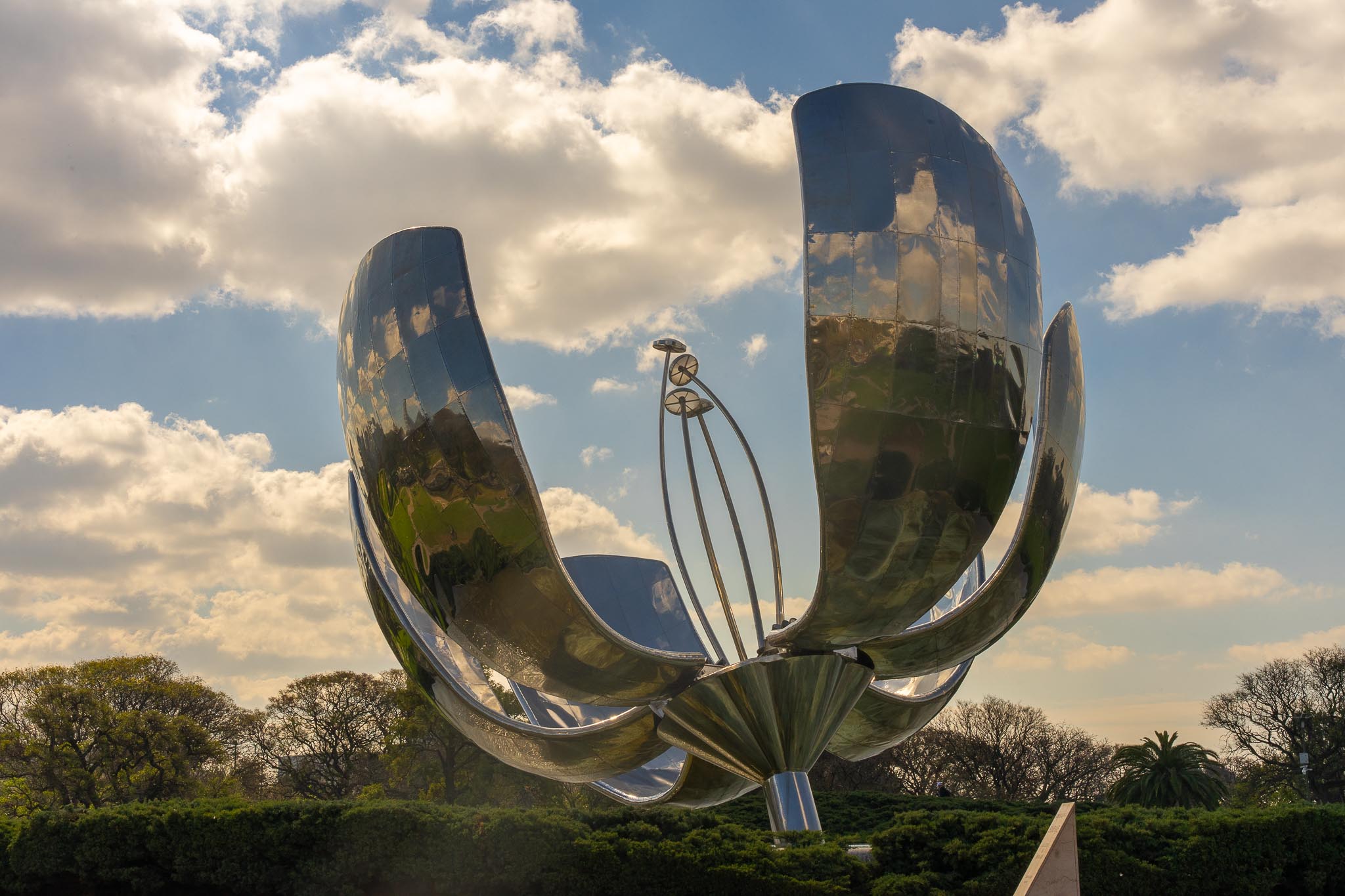
The afternoon moved into Recoleta Cemetery, Floralis Genérica, the Museo Nacional de Arte Decorativo and MALBA. Recoleta is strongest when the cemetery is not treated as an isolated famous stop. The museums, public sculpture and grander northern streets make the district a cultural day rather than a single address. Museo Nacional de Bellas Artes, Museo Nacional de Arte Decorativo and MALBA offer different kinds of collection; one or two are enough.
This is a full day. Trying to deeply visit every museum listed above would turn the itinerary into a race. Choose the collection that most interests you, keep Teatro Colón and El Ateneo as the central cultural anchors, and let Recoleta provide the second half of the day. Dinner at El Preferido de Palermo gives the evening a nearby base rather than another cross-city transfer.
1 October — San Telmo and Puerto Madero
The next full day changed the city’s level. San Telmo begins at street height: Mercado de San Telmo, Museo Moderno, Defensa, Plaza Dorrego and the older buildings of the historic south. Puerto Madero opens into water, towers and redeveloped docks. Together they form one of the strongest pairings in the itinerary because the day moves from inherited city to constructed city.
Mercado de San Telmo is the natural beginning. Its iron structure, food stalls, cafés, antiques and everyday shopping make it a place to walk through rather than simply photograph. The surrounding streets carry the district’s older history, while Plaza Dorrego gives the neighbourhood a social centre and, on Sundays, the setting for the antiques fair.
Museo Moderno adds contemporary art before the route turns towards Puerto Madero. The change is not abrupt, but it is visible. The older market streets give way to the former docklands, converted warehouses, modern towers and the Puente de la Mujer. Silos Puerto Madero and the waterfront make the redevelopment itself part of the day’s subject, while the Amalia Lacroze de Fortabat Art Collection supplies a more deliberate cultural stop.
Galerías Pacífico, Palacio Libertad and Basílica del Santísimo Sacramento can extend the day back towards the central city, but they should be treated as optional additions rather than compulsory final boxes. Dinner was at Fogón Asado after a day that had crossed several architectural registers.
2 October — Colonia del Sacramento as a deliberate interruption
The fourth day left Buenos Aires entirely. Colonia del Sacramento, across the Río de la Plata in Uruguay, is one of the classic day trips from the capital: an old quarter, waterfront streets and a smaller scale after several dense city days.
The practical hinge is the ferry from Buenos Aires to Colonia. Operators including Colonia Express and Buquebus publish current schedules and check-in requirements; check the chosen service close to travel and allow time for the terminal and border formalities.
Colonia works here because it breaks the accumulation of Buenos Aires without pretending to be another neighbourhood. After the centre, Recoleta, San Telmo and Puerto Madero, the day across the river changes the scale again. This itinerary keeps the day as an optional extension from Buenos Aires; check the current ferry operator, crossing requirements and practical details separately before travel.
If Buenos Aires itself is the priority, skip Colonia. The day can be used for a slower museum route, a longer Palermo walk, another Recoleta collection or a tango evening. Colonia is a good interruption, not an obligation.
3 October — La Boca, San Telmo and Palermo
The final full day was the most neighbourhood-driven. It began in La Boca with Caminito, Pasaje Garibaldi, the Puente Transbordador, Fundación Proa and Estadio Alberto J. Armando, La Bombonera. The order moved through port history, immigrant architecture, contemporary art and football before returning north through San Telmo and Palermo.
La Boca’s painted corrugated façades are the most recognisable expression of a district shaped by the port and by Genoese immigration. Caminito is theatrical, but the surrounding places give the day more depth. Fundación Proa brings a contemporary art institution into the old port geography, while the Puente Transbordador keeps the industrial edge visible.
La Bombonera belongs here because Boca Juniors is inseparable from La Boca’s identity. The stadium is not merely a football venue placed in a neighbourhood; the club’s colours, history and supporters are part of the district’s public character. Even without a match, La Bombonera makes Boca Juniors’ place in the neighbourhood impossible to miss.
From La Boca, the route returned through the San Telmo Fair and then Palermo. The fair provided a middle movement between the theatrical south and the open parks, while Plaza Serrano marked Palermo’s more contemporary side. The final stretch ran through El Rosedal, the Planetario Galileo Galilei and Paseo de la Infanta.
Palermo was the release at the end of the itinerary. El Rosedal and Parque Tres de Febrero give the city room for gardens and longer walks; the Planetarium places a distinctive modern building inside that parkland. The day began with football and port history and ended with trees, open space and a lighter urban scale.
4 October — Departure morning
The final morning was departure. Leave enough time for the airport transfer, check which airport and terminal the current ticket uses, and allow for live traffic conditions. There is no need to add another Buenos Aires attraction to the final morning.
Why Palermo worked as a base
The stay was based in Palermo, which made the northern city days easy to begin and gave the evenings a different rhythm from the historic centre. Restaurants and cafés were close at hand, the parks were within the wider district, and the neighbourhood provided a useful return point after long days in Recoleta, San Telmo, Puerto Madero and La Boca.
Palermo also made the itinerary less monumental. The traveller could leave the civic centre behind without leaving Buenos Aires behind, then begin again the next morning from a neighbourhood of streets, food and parks. That contrast is one reason the base worked: the city’s grandest institutions were destinations, not the permanent background of every evening.
Is five days enough?
Yes, for a first visit. No, for exhausting the city.
Five nights give enough time for the historic centre, Teatro Colón and El Ateneo, Recoleta, selected museums, San Telmo, Puerto Madero, La Boca, Palermo and one optional Colonia day. They give the traveller enough changes of character to understand the city’s shape.
The qualification matters. Colonia costs an entire Buenos Aires day. If the city itself is the priority, keep that day in Buenos Aires and use it for deeper museums, a longer Palermo route, more time in Recoleta or tango. If the Río de la Plata is part of the appeal, Colonia is a worthwhile interruption precisely because it changes the scale of the stay.
The itinerary is therefore five days in the broader trip sense: arrival afternoon, four full days including Colonia, and departure morning. A traveller with five full sightseeing days should keep the same structure but turn the Colonia day into a fifth Buenos Aires day.
Five nights did not finish Buenos Aires. They gave the city enough time to change shape. The traveller entered through civic squares and theatres, crossed into museum districts and markets, left the country for a day, returned to football streets, and finished among the parks of Palermo. The point was not completion. It was accumulation.
For attraction selection, continue to the best things to do in Buenos Aires guide. For a slower district comparison, use the Buenos Aires neighbourhoods guide. The wider journey continues in the 24 Days in South America itinerary.