La Paz has two markets that should not be confused with each other. The Witches’ Market begins close to the formal centre, where Plaza Murillo and the Basilica of San Francisco have already introduced the city’s civic and colonial faces. Mercado Rodríguez belongs to another La Paz: produce, vendors, deliveries and the daily work of feeding a city.
The first is tied to Aymara belief and ritual objects. The second is tied to ordinary commerce. One asks the traveller to think about what a city believes; the other shows how it lives. Together they make the word “market” much more precise.
The two stops also fit naturally into the three-day La Paz itinerary. The Witches’ Market follows Plaza Murillo on the first day, before Mi Teleférico carries the journey above the streets. Mercado Rodríguez comes after the museums on the second day, before the cable cars and Hernando Siles Stadium. The three-day La Paz itinerary covers the whole route; this is the closer reading of its two market days.
I. The Market of Ritual
The Witches’ Market is usually associated with Calle Linares and the surrounding streets near San Francisco. It is easy to reduce the place to its most photographed objects, but that makes the market smaller than it is. The street is part of the historic centre, part tourist walk and part working cultural landscape, with ritual goods, medicinal plants, amulets, alpaca textiles and souvenirs sharing the same dense commercial space.
The dried llama foetuses are the image most often carried away from La Paz. Their meaning is not a piece of theatrical folklore. They belong to offerings made to Pachamama, the Andean Mother Earth, alongside ingredients such as coca leaves, sweets, grains and other objects whose meaning depends on the person and the purpose of the offering. Some offerings are connected with homes, buildings, protection, health or prosperity. The market sells objects that sit inside those traditions; it does not turn the traditions into a performance for the visitor.
That distinction matters. Aymara cosmology has not been left outside the modern city. It exists alongside Catholic churches, government buildings, souvenir shops and the cable-car network. La Paz’s central streets make that coexistence visible without resolving it into one tidy belief system. A traveller can move from the formal Catholic architecture of San Francisco into a street selling offerings for Pachamama and remain within the same city, not cross from “history” into a staged attraction.
The word yatiri refers to an Aymara ritual specialist. The market is associated with such specialists, but a visitor should not assume that every stall is a place for consultation or that a ritual is something to request for the sake of the experience. These are living practices with their own setting and meaning. The respectful position is to look carefully, ask before photographing people or ritual goods, and avoid treating an offering as a prop.
The market’s relationship with tourism is part of its present character. Calle Linares carries alpaca goods, instruments, carved figures and objects bought as souvenirs as well as ritual items used by local people. That mixture is not a reason to dismiss it as inauthentic. Markets change because cities change. The useful question is what kinds of exchange are taking place at the same time: cultural memory, belief, craft, domestic need and visitor curiosity, all compressed into a few central streets.
The Witches’ Market therefore works best early in a La Paz stay, when the traveller is still learning how the city places different histories beside one another. On the first day, it follows Plaza Murillo and leads towards Mi Teleférico. The sequence moves from civic authority to market belief and then above the roofs, where the cable-car network reveals the slopes holding the whole city together.
II. The Market of Everyday Life
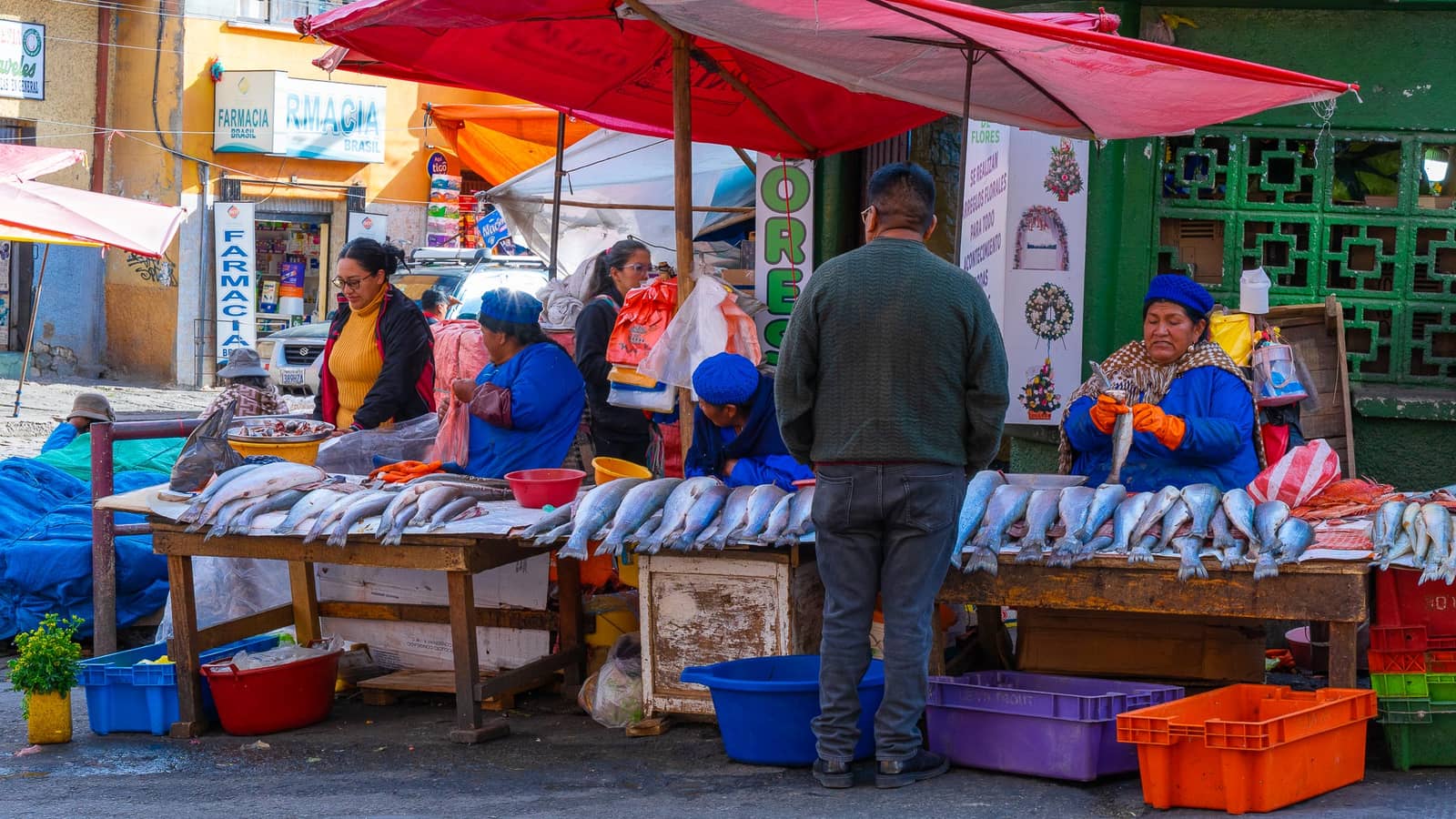
Mercado Rodríguez changes the question. It is less about what La Paz believes than about how La Paz feeds itself. The market belongs to the ordinary economy of the city: produce, food supplies, vendors, shoppers, deliveries and the repeated work of buying what a household needs.
This is why it belongs after the museums. The second day of the wider itinerary moves through collections and religious buildings before returning to the street. The museums ask the traveller to look at objects as art, history and cultural inheritance. Mercado Rodríguez puts objects back into circulation. Produce is not displayed for interpretation; it is handled, weighed, moved and sold.
The market extends beyond a single interior or a clean visitor boundary. Its character is in the surrounding movement as much as in any one stall: shoppers crossing, goods arriving, vendors calling to one another and the street continuing around the places where people stop to buy. It is a working market inside a working city, and it rewards attention to the patterns of use rather than a search for one perfect photograph.
Current municipal material describes Mercado Rodríguez as one of La Paz’s emblematic food markets and places its future in the hands of the people who work there every day. That is the right way to approach it. The market is not an attraction that happens to sell food. It is a place of employment, supply and neighbourhood trust that visitors are allowed to pass through.
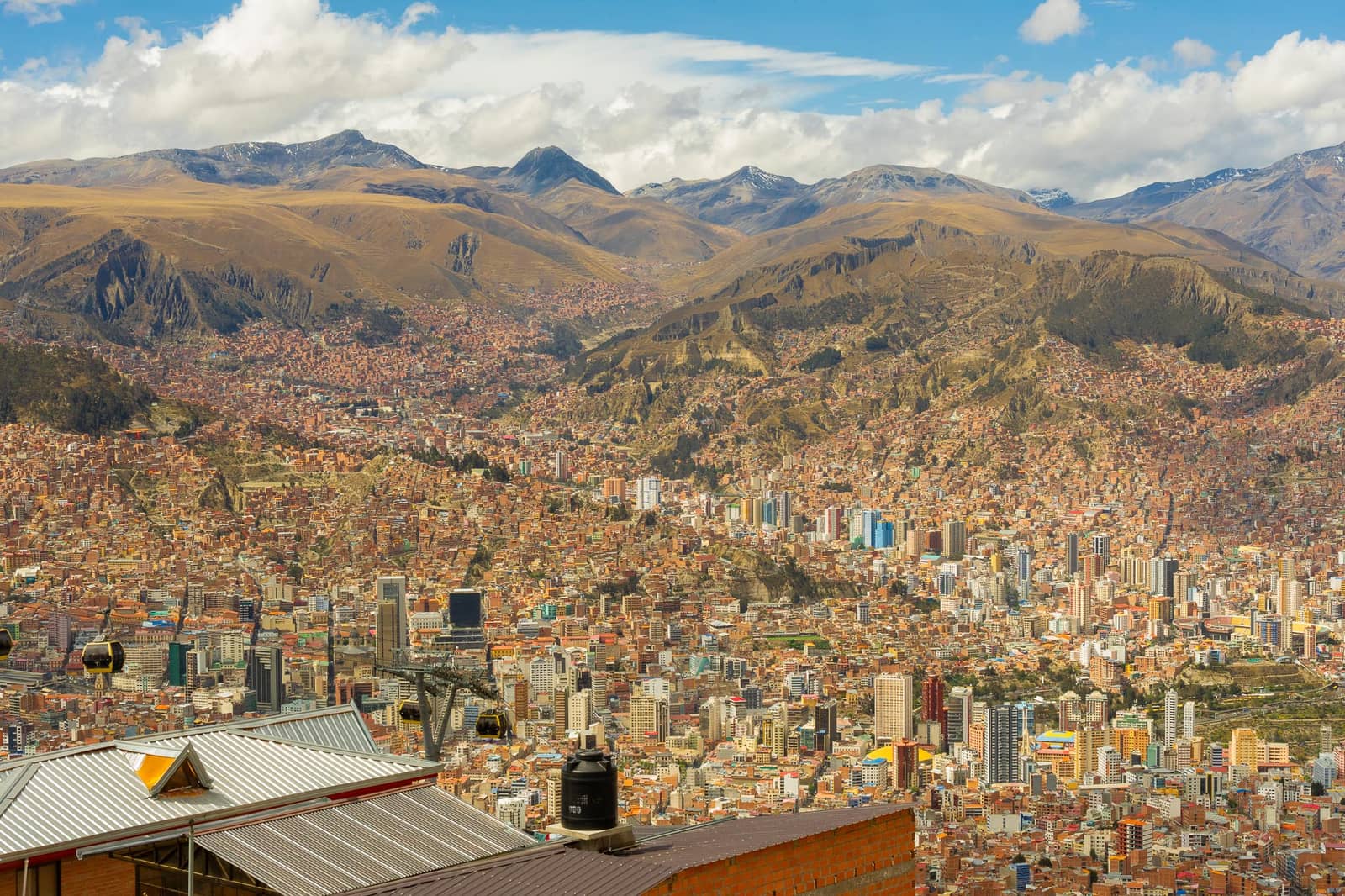
Mercado Rodríguez is not a substitute for the Witches’ Market, and it should not be made to carry the same cultural argument. Its value is precisely its ordinariness. After the museums, it returns the traveller to the city’s domestic scale: food, work, price, supply and movement. From there the afternoon can rise again through Mi Teleférico before the stadium precinct.
III. Two Markets, Two La Pazes
The strongest comparison is not better or worse but symbolic and practical.
The Witches’ Market is the market of ritual context. It is visually distinctive and closely tied to the way Aymara traditions remain present in the central city. Its objects point beyond themselves, towards offerings, protection, reciprocity and the relationship between people and the land. It is the market most likely to give a first-time visitor a new vocabulary for La Paz, provided it is approached with respect rather than curiosity alone.
Mercado Rodríguez is the market of everyday life. It is a produce and food market, shaped by vendors and shoppers rather than by the visitor’s search for cultural symbols. It shows La Paz as a city that must feed itself every day, with all the repetition and practical intelligence that implies.
If time allows, visit both. They are close enough to fit into a three-day stay, but different enough that the second does not feel like a repetition of the first. If there is time for only one, choose the Witches’ Market for Andean cultural context and the first impression of La Paz’s identity; choose Mercado Rodríguez for ordinary commerce, produce and a stronger sense of the city at work.
How the Markets Fit the Itinerary
Day One — Plaza Murillo to the Witches’ Market
Begin at Plaza Murillo, where government, cathedral and formal public space establish the civic centre. Walk towards the Witches’ Market through the dense historic streets, then continue to Mi Teleférico and Mirador Killi Killi. The day moves from the city’s official face to its ritual-commercial face, then above both.
The three-day La Paz itinerary gives the full sequence. The market does not need a separate day; it is strongest as a transition between the square and the cable cars.
Day Two — Museums to Mercado Rodríguez
Keep Mercado Rodríguez after the museum sequence and before the afternoon cable-car movement. The order matters. A morning at San Francisco and the museums makes the market feel like a return from cultural display to daily use. From there, the route can continue towards Hernando Siles Stadium.
Day Three — Leave the Markets Alone
The third day belongs to Valle de la Luna and the landscape outside the dense urban bowl. Do not move either market into that morning simply because there is space on a map. Their meaning comes from their relationship with the central city and the two days that establish it.
Practical Planning
Visit the Witches’ Market with the historic centre
Pair it with Plaza Murillo, San Francisco and the surrounding central streets. It works as part of a walking day rather than as an isolated excursion.
Use Mercado Rodríguez after the museums
The market is most useful when it follows the cultural morning. It provides a change from galleries and religious architecture without asking the traveller to leave central La Paz.
Carry small cash
Keep small denominations accessible for ordinary market purchases, while leaving valuables secure and avoiding the need to open a large wallet in the middle of a crowded commercial street.
Photograph respectfully
Ask before photographing people, ritual goods or a stall that is clearly part of someone’s work. The Witches’ Market is not a set, and Mercado Rodríguez is not a performance. A camera should not turn either market into one.
Check current trading patterns
Do not rely on a fixed opening-hour promise for either market. Trading patterns can vary by day, season and local conditions; check close to travel and visit during the daytime rather than building the itinerary around a late arrival.
The Two Markets
The Witches’ Market explains something about what La Paz believes. Mercado Rodríguez explains something about how La Paz lives. One places ritual objects, Aymara identity and the continuing presence of Pachamama inside the historic centre. The other places produce, vendors and domestic economy in the same city’s daily motion.
Between them, the traveller sees the city change register without losing its shape: Plaza Murillo, the market street, the museum, the produce stall, the cable car rising over the roofs. La Paz is not made legible by choosing one market over the other. It is made legible by understanding why they are different.
The markets are a deeper companion to the three-day La Paz itinerary, and the city’s vertical movement continues in the Mi Teleférico guide.
But the road is ever onward.