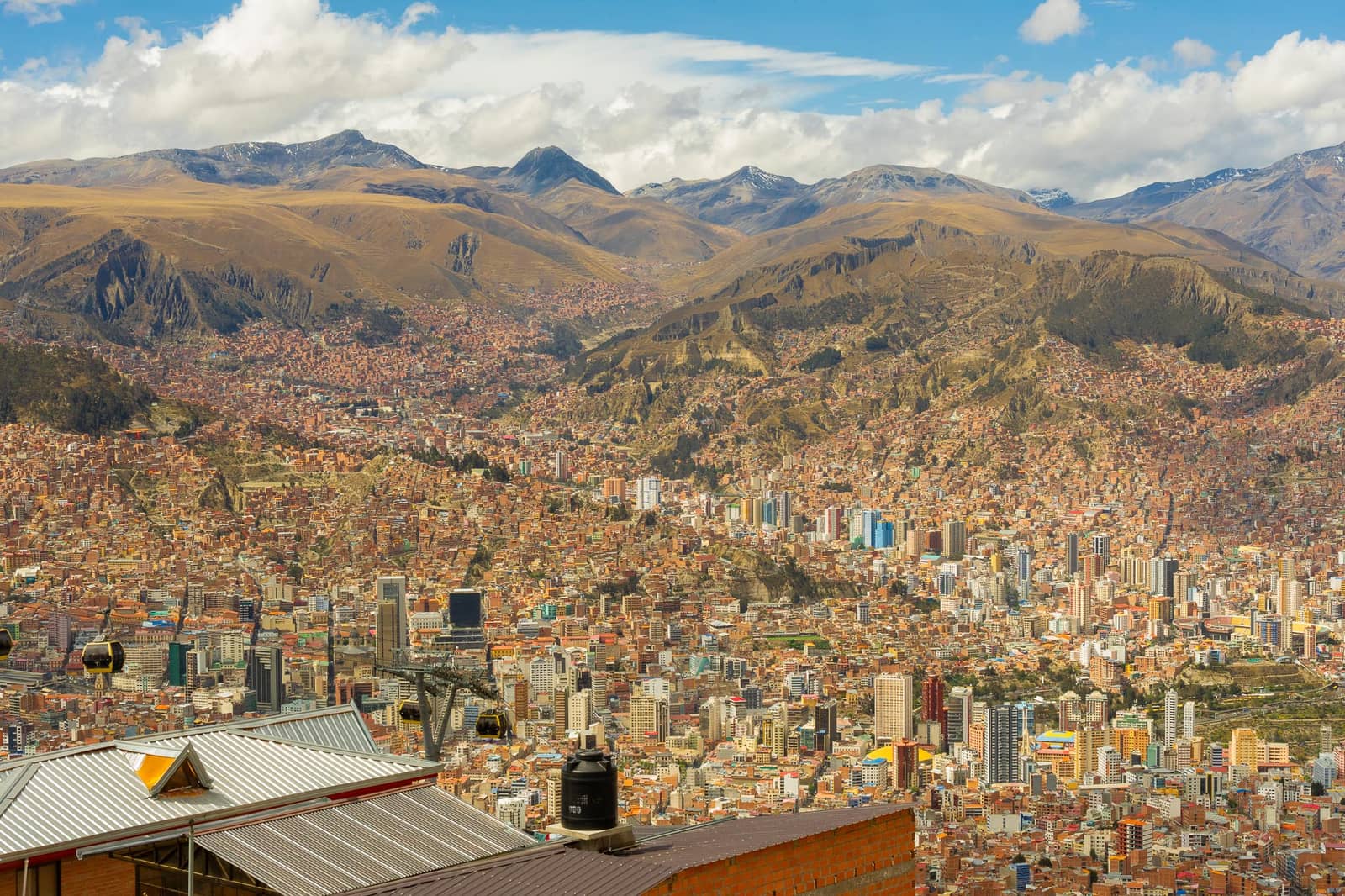
La Paz is difficult to understand from street level. The centre gathers plazas, churches, museums and markets into a dense urban bowl, while brick neighbourhoods climb the slopes above it and cable cars cross over roofs on their way between districts. Look across the basin and the city seems to have been built in layers, each one continuing above the last.
Three days are enough to make that shape legible. The first begins with the civic centre and works through the Witches’ Market to a cable-car view over the roofs. The second places museums and a working market between further journeys above the streets. The third leaves the dense bowl for the eroded formations of Valle de la Luna. La Paz does not give up all its depth in three days. It gives the traveller a way to read it.
The Cusco-to-La Paz bus account covers the crossing; this itinerary starts at the La Paz terminal and follows the city through three nights.
Day One — The City in the Bowl
The Transzela bus arrived at the La Paz terminal at about 1:00pm on 16 September 2026. No recovery day was needed. After the accommodation handoff, the afternoon began at Plaza Murillo and ended above the streets at Mirador Killi Killi.
Plaza Murillo
Plaza Murillo is the right first room in La Paz because it presents the city in its most formal register. Government buildings, the Cathedral Basilica of Our Lady of Peace and the Presidential Palace gather around the square, while the high-rise walls and steep slopes beyond keep the wider city in view. The plaza is civic space, political stage and orientation point at once.
Its name recalls Pedro Domingo Murillo, one of the leaders associated with the 1809 uprising against Spanish rule. That history gives the square a weight beyond its architecture, but the power of the place is also physical. The formal façades sit inside a city that immediately refuses to remain flat. Above the rooftops, the hills continue; behind the institutions, La Paz keeps climbing.
The traveller begins here before the city breaks into smaller streets. Plaza Murillo supplies the centre as an idea: government, religion and public space gathered into one square. The next stop changes the register completely.
Witches’ Market
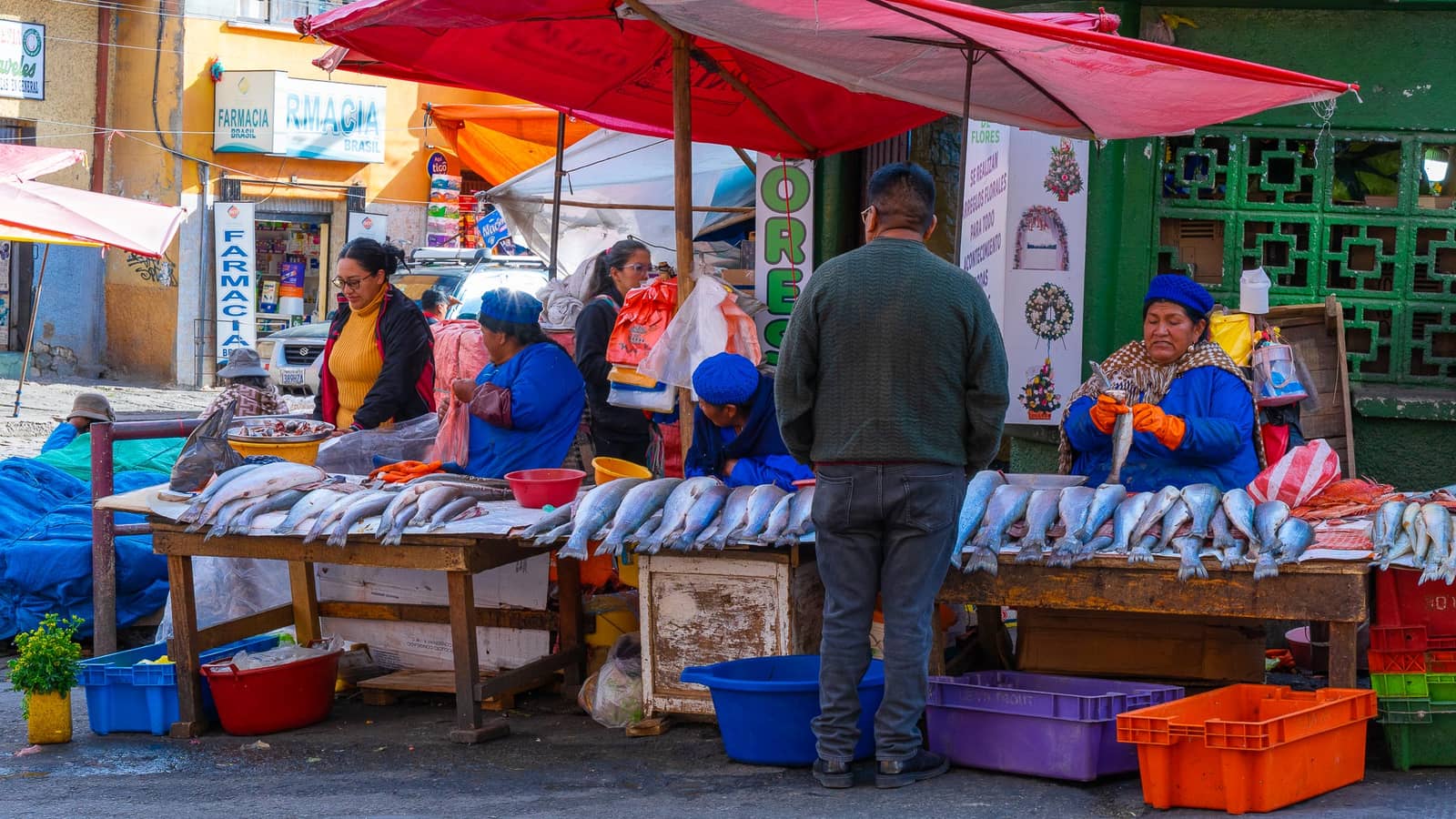
The Witches’ Market is not a museum of Andean belief placed behind glass. It is a working commercial street where ritual objects, household goods and the visual language of Aymara traditions sit alongside the ordinary business of the city. The market’s llama foetuses and offerings associated with Pachamama are familiar images of La Paz, but the street is more useful when read as part of living practice rather than as a spectacle arranged for visitors.
The transition from Plaza Murillo to the market is one of the first reasons to spend time walking La Paz. The civic centre speaks in stone, flags and formal entrances; the market speaks through shelves, shopfronts and objects whose meanings belong to a different history. Both are central to the city, but they do not ask the traveller to look at it in the same way.
The dedicated La Paz markets guide follows this part of the city more closely. For the three-day itinerary, the market works as the hinge between the square and the cable-car network.
Mi Teleférico and Mirador Killi Killi
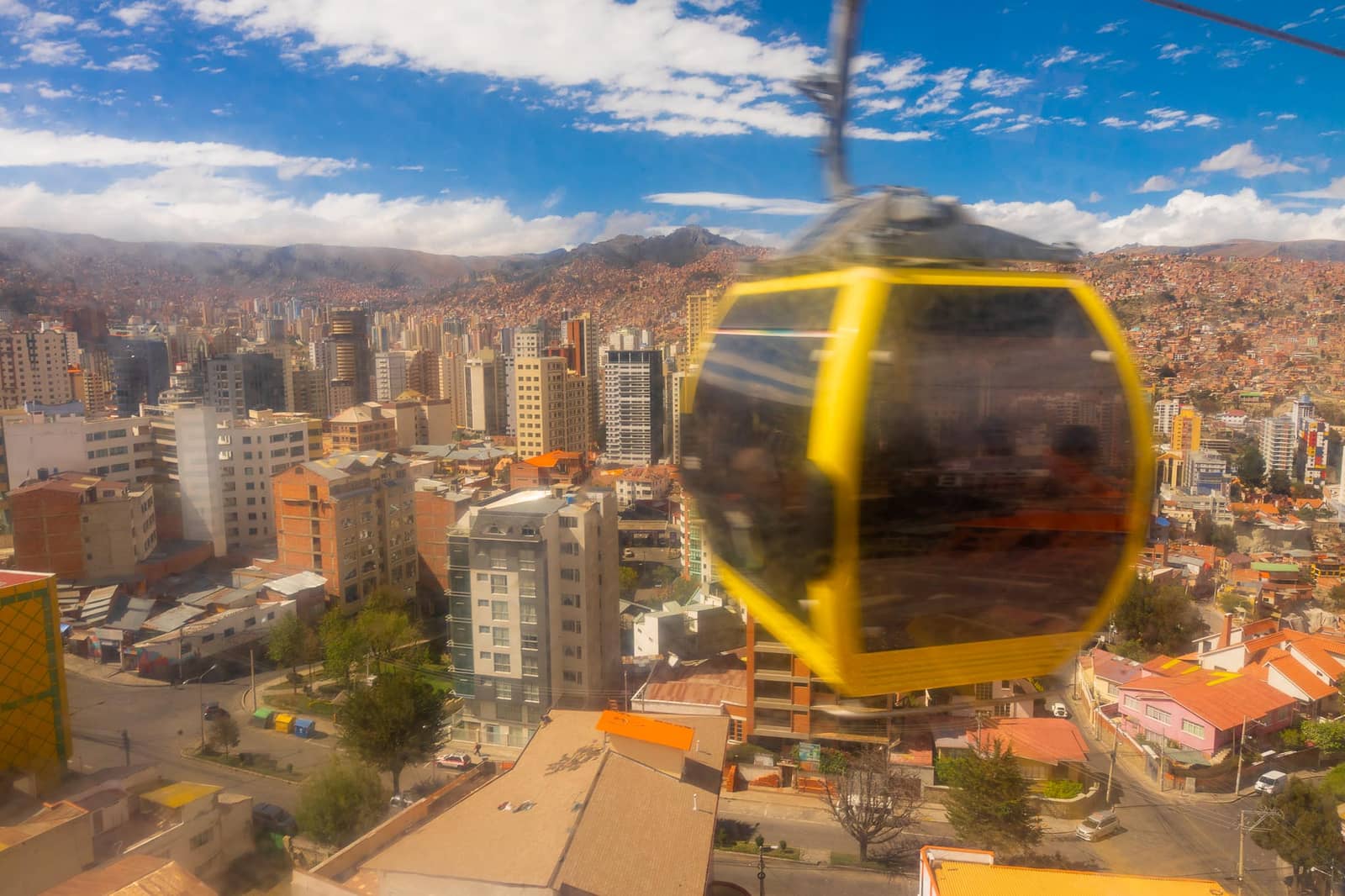
Mi Teleférico changes the scale of the afternoon. From the cabin, the city is no longer a sequence of streets joined at ground level. Roofs, walls, roads and slopes arrange themselves into a continuous settlement, and the basin becomes visible as a structure rather than a backdrop.
That is why the cable cars belong in the itinerary as transport, not merely as a sightseeing ride. They carry people between districts and give the traveller a view of how La Paz is actually built. Houses continue up the hillsides; roads bend around contours; the dense centre becomes one part of a much larger vertical city. The Mi Teleférico in La Paz guide treats the network as an experience in its own right.
The day then ends at Mirador Killi Killi, where the city can be read from outside the streets that first contained it. The sequence has an argument without needing to announce one: formal centre, working market, movement above the roofs, then a panorama that gathers the layers together. The evening stop was at YATI Restaurant café bar before the traveller returned to the accommodation.
Day Two — Museums, Markets and the City Above
The second day stays closer to the centre but goes further into what the city carries. It begins around Sucre Square and moves through museums, religious architecture and the material histories of the Andes before returning to street commerce and the cable cars.
The museums should not be treated as five equal boxes to tick. A stronger morning gives the largest attention to the collections that explain La Paz’s overlapping histories, then lets the smaller stops extend the same reading.
The Coca Museum provides an entry into a plant whose place in Andean society is older and more complicated than its later reputation in European and North American drug policy. The Basilica of San Francisco brings the colonial city into the same morning: its façade and interior belong to the Catholic architecture imposed on, and adapted within, an Andean world.
The National Museum of Ethnography and Folklore is the most useful place to widen that history again. Its collections treat clothing, ritual, objects and community life as material culture rather than background decoration. The National Art Museum and the Pre-Columbian Precious Metals Museum then add other registers, from colonial and republican art to the technical and ceremonial importance of metalwork before Spanish rule.
The museums offer several ways of describing the country: coca and belief, church and colonial power, textiles and ritual, painting and metal. The streets between them matter as much as the order of the collections. The morning remains a walk through La Paz, not an indoor corridor detached from it.
Mercado Rodríguez
Mercado Rodríguez brings the day back to street level. After the museums, the market replaces formal display with movement: produce, stalls, deliveries and the constant exchange that makes a city function between its monuments. It is a place to see La Paz as a working urban centre rather than only as the setting for its history.
The museums preserve and interpret; Mercado Rodríguez distributes and supplies. Their proximity makes the second day stronger because the city keeps changing register without changing subject.
Back above the streets
Further cable-car movement restores the wider geography after the close work of the museums and market. The cabins do not erase the city below; they show how its parts fit together. The same slopes that looked like a distant wall from Plaza Murillo become streets, roofs and neighbourhoods arranged at different heights.
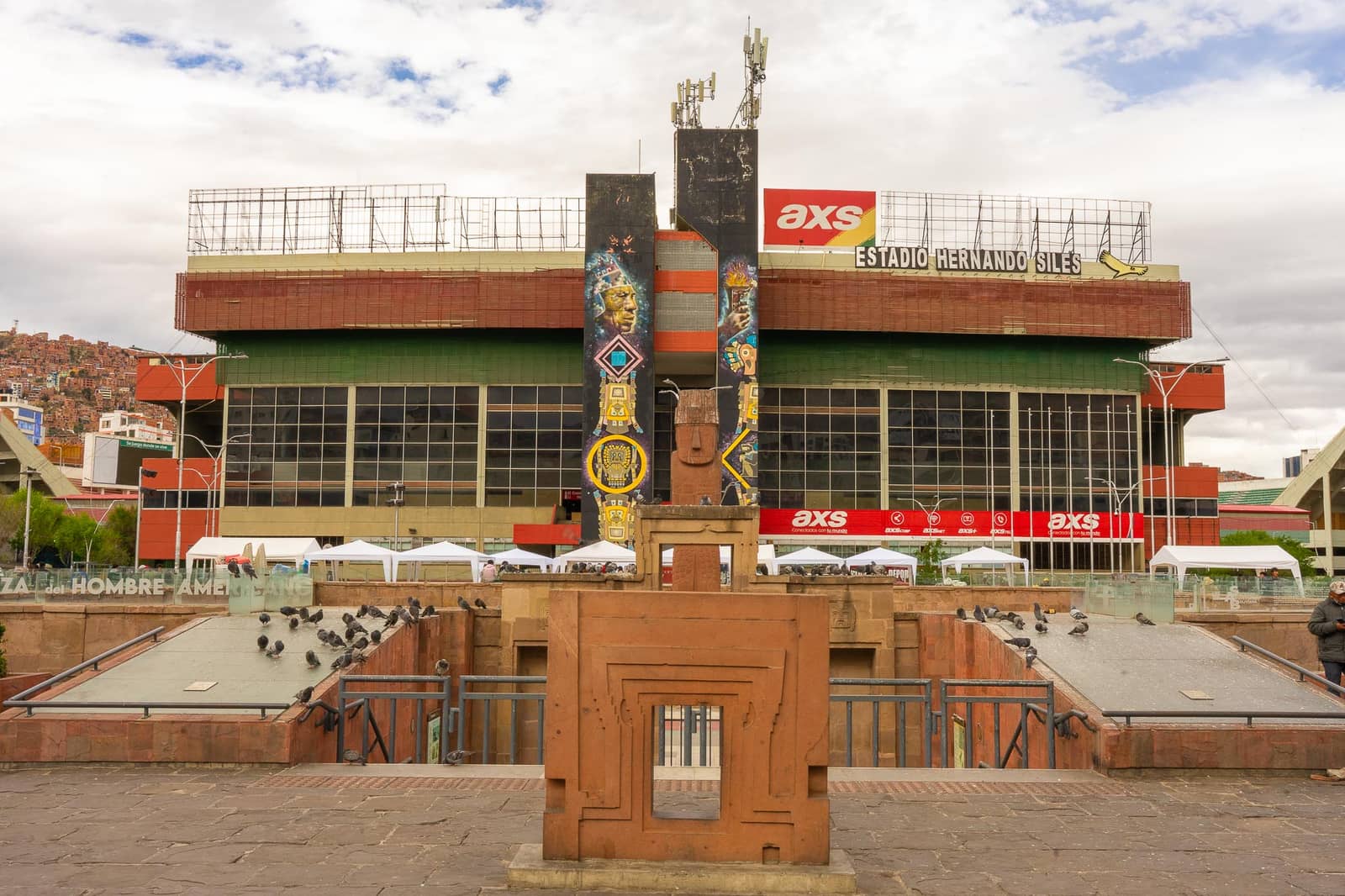
The day ended at the exterior of Estadio Hernando Siles. The stadium is one of Bolivia’s important football grounds, and its high-altitude setting belongs to the country’s football identity. The precinct adds another kind of public space to the day: not the ceremonial square or the museum, but a place built for collective attention and competition.
Lunch at La Rufina Restaurant came before the stadium stop, linking the central museum sequence with the stadium precinct.
Day Three — Beyond the Dense City
Valle de la Luna deserves its own morning. It is close enough to La Paz to be practical, but different enough in shape and texture that squeezing it between central museums would make both experiences smaller.
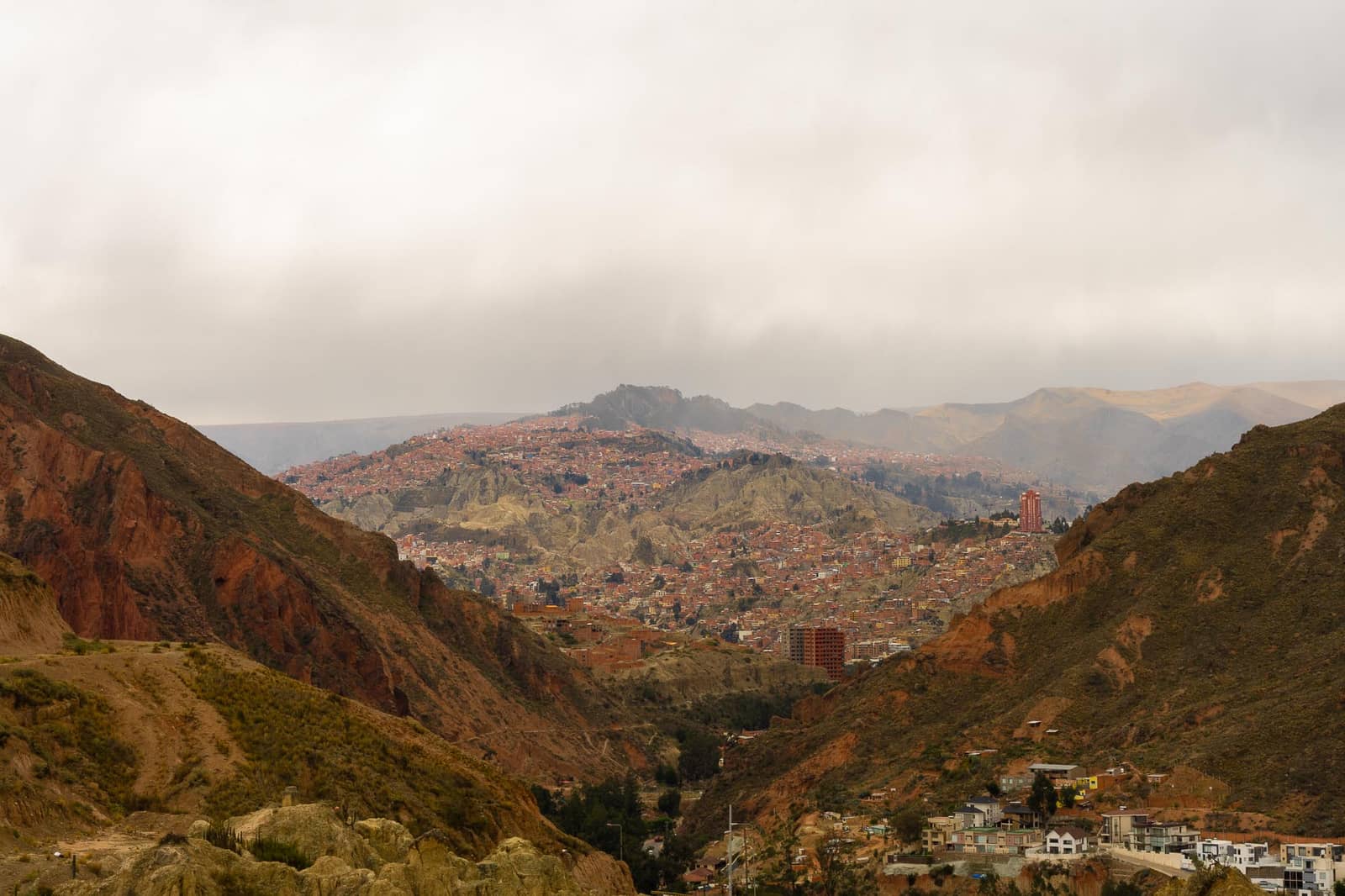
The landscape is shaped by erosion rather than by the masonry and traffic of the city. Soft ground has been cut into pinnacles, channels and narrow ridges, leaving a dry sculpted field that seems to belong to another scale of La Paz. The formations are not a decorative interruption to the city; they explain something about the wider terrain in which the city sits.
Roughly two hours was enough to walk among the formations without turning the excursion into a race back to the centre. The Valle de la Luna guide follows the landscape in greater detail. After two days of civic buildings, museums, markets and cable cars, the third day moves beyond the dense urban bowl and lets the landscape take over.
After Valle de la Luna, the afternoon stayed deliberately loose before dinner at Oliva Restaurant – Cocina Abierta.
Is Three Days Enough for La Paz?
Three days are enough for a strong first reading of La Paz, but not enough to exhaust it. The itinerary reaches the civic centre, the Witches’ Market, the major museum sequence, Mercado Rodríguez, Mi Teleférico, Mirador Killi Killi, Hernando Siles Stadium and Valle de la Luna. It covers the city’s formal, working, vertical and geological registers without pretending that they amount to the whole place.
The first day establishes the bowl and its slopes. The second fills the centre with history, material culture, commerce and football. The third moves beyond the dense city. La Paz rewards a longer stay for anyone who wants to follow more of its neighbourhoods, museums and highland surroundings.
The City in Layers
La Paz does not become simpler in three days. It becomes legible. Plaza Murillo gives the traveller the formal city; the Witches’ Market and Mercado Rodríguez return it to working streets. Museums add the colonial, Indigenous and material histories that the buildings alone cannot hold. Mi Teleférico reveals the vertical city, with neighbourhoods and roads continuing above the basin. Valle de la Luna then carries the journey beyond the dense urban bowl into the eroded landscape around it.
La Paz holds its civic centre, markets, museums, cable cars and dry outer landscape together without making them look alike. The Bolivia stage of the 24 Days in South America itinerary begins with the Cusco-to-La Paz overnight bus and continues through the city in layers.