Lima begins in public space. The Historic Centre gathers churches, convents, government buildings and plazas into a compact colonial core, so a first afternoon can move from enclosed religious architecture into the open civic space of Plaza Mayor and back again. The city’s history is not arranged behind one museum door. It is built into the walk.
San Francisco is the right opening. Its church and convent introduce the religious institutions that shaped colonial Lima, while the streets beyond lead towards the Cathedral, the Government Palace and the municipal buildings around the main square. Santo Domingo and Las Nazarenas extend the same story beyond Plaza Mayor, giving the afternoon a shape rather than a list of façades.
The catacombs add another level beneath the visible city. They are a major visitor feature of the San Francisco complex and belong to the history of burial in colonial Lima, but they should be treated as part of the visit’s current access arrangements rather than assumed from the title alone. San Francisco belongs in the route regardless. The catacombs deepen it when access is available.
For the wider city, continue to the best things to do in Lima guide. For the complete sequence through Barranco, Miraflores, archaeology and museums, use the three-day Lima itinerary.
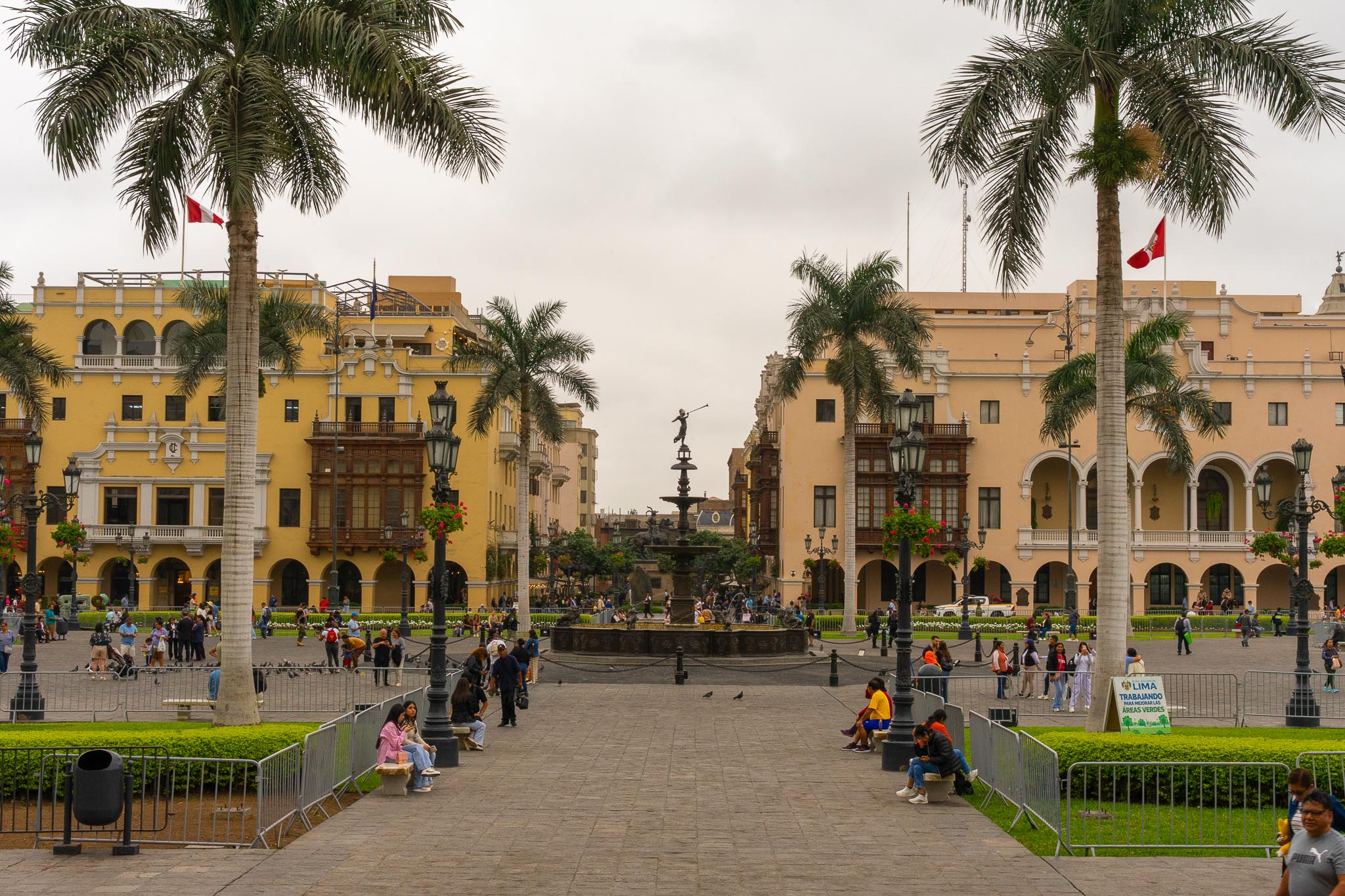
I. The first afternoon in old Lima
The Historic Centre was founded by Francisco Pizarro in 1535 and became the political, administrative, religious and economic capital of the Viceroyalty of Peru. That history explains the concentration visible today. The centre was not simply a settlement with a few important buildings. It was the organising capital of Spanish power in South America, and its churches, convents, plazas and government institutions were built to make that power legible.
The city has changed, rebuilt and suffered earthquakes, but the central pattern remains clear. Plaza Mayor forms the principal public room. Religious orders established large complexes around it. Government and municipal buildings face the same civic space. A short walk can therefore move between different versions of authority without leaving the old centre.
The afternoon works best as a sequence. Begin at San Francisco, cross into the streets around Plaza Mayor, look across the Cathedral and Government Palace area, continue to Santo Domingo, then finish at Las Nazarenas. The order can flex with opening arrangements, but the movement from religious space to civic space and back is the point.
II. San Francisco and the city beneath the city
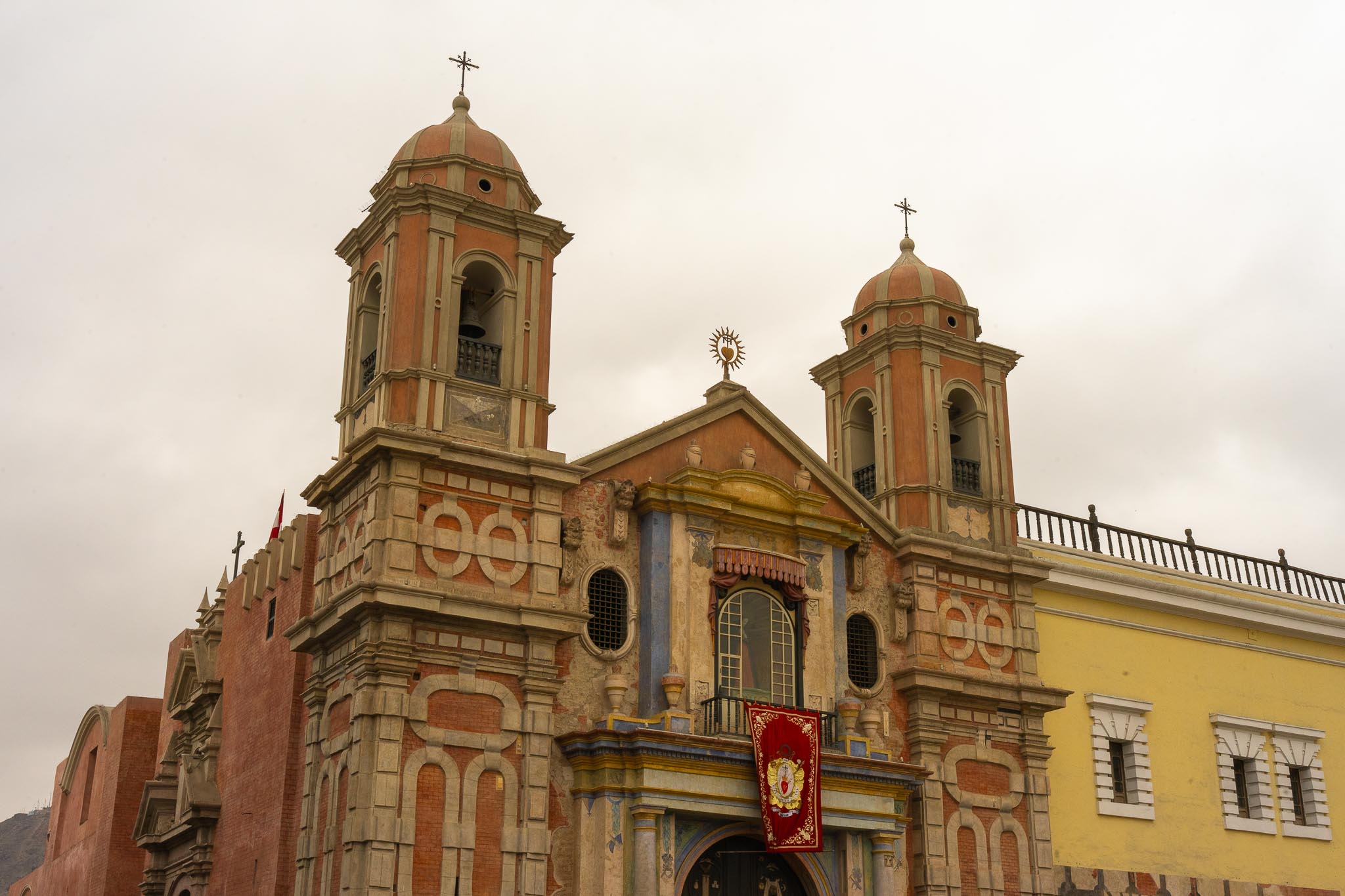
The Basilica and Convent of San Francisco opens the route with one of Lima’s great colonial religious complexes. Construction of the monumental convent began in the sixteenth century, and the complex became one of the major Franciscan centres of the Viceroyalty. Its presence is architectural, institutional and urban at once: the church faces the square, the convent extends behind it, and the surrounding streets retain the pressure of a city that grew around its religious foundations.
San Francisco should be approached as more than a church façade. The complex brings together worship, monastic life, scholarship and burial. Its library, cloisters and other interior spaces belong to the wider history of the convent, while the catacombs connect the building to the burial practices of colonial Lima before modern cemeteries took over that role.
The catacombs are worth including if underground history is the reason for the visit and current access allows it. They add a literal lower level to the Historic Centre: plazas and churches above, burial spaces below. The important practical distinction is simple—San Francisco is an essential part of the walk, while the catacombs depend on the visit available on the day. Check the current complex arrangements rather than assuming every entry includes the same route.
That balance keeps the article honest without making the catacombs seem secondary. They deepen the meaning of San Francisco, but they do not need to carry the entire Historic Centre.
III. Plaza Mayor and civic Lima
From San Francisco, the walk opens into the civic geometry of Plaza Mayor. The square gathers the Cathedral, the Archbishop’s Palace, the Government Palace and the Municipal Palace around one formal space. These buildings do not represent one institution. Together they show how religious authority, executive power and local government were placed side by side in the colonial capital and its successor city.
The Cathedral occupies the site’s foundation-era centre and has been rebuilt and altered over centuries, as Lima’s buildings have had to respond to earthquakes and changing political circumstances. Its importance is not only architectural. It is the principal cathedral of the capital, facing the square where the city’s public life is most concentrated.
The square is the visual anchor because it makes the whole centre readable. San Francisco begins with enclosure and depth; Plaza Mayor opens the view. The Government Palace and municipal buildings turn the walk towards the state, while the Cathedral and Archbishop’s Palace keep the religious structure in the frame. Walk slowly enough to see the relationship rather than treating the square as a place to photograph once and leave.
The Historic Centre is listed by UNESCO because of this concentration of architecture, urban form and historical importance. The designation matters less as a label than as a description of what the visitor can see: a capital planned around institutions whose buildings still face one another across the same public space. UNESCO’s Historic Centre summary places Lima’s political, administrative and religious role at the centre of that history.
IV. Santo Domingo and Las Nazarenas
Santo Domingo continues the religious geography beyond Plaza Mayor. Its church and convent belong to the long history of religious orders in Lima, and the complex is associated with figures including Santa Rosa de Lima and San Martín de Porres. That connection gives the stop a different emphasis from San Francisco: the walk moves from one large colonial foundation to another while the city’s devotional history becomes more local and personal.
Las Nazarenas closes the central sequence with a different kind of religious importance. The sanctuary is associated with the Señor de los Milagros, one of Peru’s major devotional traditions. Each October, the image is carried through Lima in processions that fill the city’s streets with purple, devotion and public movement. The afternoon route does not need to witness that procession for the church to matter. Its significance is already present in the place and in the scale of the devotion attached to it.
Ending at Las Nazarenas gives the walk a strong final note. The sequence begins with the monumental complex of San Francisco, expands into the formal public space of Plaza Mayor and then returns to a church whose importance is tied to the living religious life of Peru. The city’s colonial architecture is not frozen history; it still provides the setting for belief.
How much time does the Historic Centre need?
Around three to four hours works well for a focused first visit. That allows time to move between San Francisco, Plaza Mayor, Santo Domingo and Las Nazarenas, with enough space to stop rather than rush through the centre. It is a useful half-day shape, not a universal schedule.
Allow longer if the day includes a full San Francisco visit, the catacombs, several interiors or a museum. Allow less if the plan is mainly to walk the squares and read the façades from outside. Opening arrangements and access can change, so check the current information for San Francisco, the Cathedral and the churches close to travel.
The main cluster is compact enough to walk, but Lima’s heat, traffic and the density of the streets can make a short map distance feel slower than expected. Start at San Francisco or Plaza Mayor according to the openings that matter most, then keep the rest of the route flexible.
Are the San Francisco catacombs worth visiting?
Yes, if the underground history interests you and current access is available. The catacombs add depth to a complex that already matters for its church, convent and role in colonial Lima. They make visible the relationship between the city above and the burial practices beneath it.
They should not, however, be treated as the only reason to visit San Francisco. If access is unavailable, the complex still belongs at the beginning of the Historic Centre walk. Plaza Mayor, Santo Domingo and Las Nazarenas continue the same civic and religious history above ground.
Is Lima’s Historic Centre worth visiting?
Yes. It is the city’s most concentrated introduction to colonial and viceregal Lima, compact enough for a half-day and distinct from the coastal neighbourhoods that follow. San Francisco gives the route a threshold, Plaza Mayor gives it civic scale, and Santo Domingo and Las Nazarenas carry the religious story beyond the main square.
The centre should not be mistaken for the whole of Lima. Barranco and Miraflores show the city through neighbourhoods and the Pacific edge. Huaca Pucllana and Huaca Huallamarca show that modern districts contain much older ground. The Historic Centre earns the first afternoon because it gives all those later contrasts a historical starting point.
Practical planning
- Give the Historic Centre at least half a day rather than reducing it to a quick Plaza Mayor stop.
- Start with San Francisco if the complex and catacombs matter most; otherwise begin at Plaza Mayor and build outward.
- Treat the catacombs as an additional part of the San Francisco visit, subject to current access arrangements.
- Dress respectfully for churches and follow the photography rules at each interior.
- Walk the main cluster, leaving time for the streets and small transitions between named buildings.
- Check current opening hours, tickets, tours and access close to travel.
The city beneath the city
Lima’s Historic Centre works because the visible city and the buried city occupy the same few streets: plazas above, catacombs below, civic authority beside religious memory. The afternoon begins with San Francisco and opens outward until Plaza Mayor gathers the centre into one view.
Barranco, Miraflores and the huacas show other versions of Lima, but the Historic Centre is where the city’s colonial institutions remain most concentrated. The walk is short enough to make that history physical: one church, one square, another convent, another sanctuary, and the streets that hold them together.
For the wider route through Lima’s neighbourhoods, Pacific edge, archaeology and museums, continue to the three-day Lima itinerary.
But the road is ever onward.