Parque das Aves changes the subject of the Brazilian Iguazú day. In the morning, the river and gorge ask the traveller to think in cliffs, forest and falling water. Inside the park, the frame narrows to wings, leaves, aviaries and individual animals. The change is not a detour from the falls. It is the reason the Brazilian day has a second register.
Parque das Aves sits beside the Brazilian entrance to Iguaçu National Park, close enough to combine with the Cataratas trail and distinct enough not to feel like another viewpoint. After the scale of Iguazú, the park makes attention smaller without making the day less substantial.
For the complete two-country arrangement, continue to Iguazú Falls in 2 Days or the Argentina vs Brazil comparison.
After the Falls, a Different Scale
The Brazilian side of Iguazú is built around distance. The river gathers itself into a gorge, the paths open towards water and the falls keep exceeding the frame. Parque das Aves asks for another kind of attention. Its trail moves through a forested setting and its aviaries bring the subject close: not the whole landscape at once, but a bird, a canopy, a wing in motion.
That change works best after the falls rather than before them. The Cataratas trail establishes the geography of the day; the park then turns from the landscape to the life within it. The two places are close enough to combine without pretending to be the same attraction.
The Brazil-side day can also include Macuco Safari between the falls and the bird park. That is an optional addition, not a condition of visiting Parque das Aves. Falls and park already make a coherent day: one opens the frame as far as it will go, the other brings it back to individual animals.
An Atlantic Forest Conservation Park
Parque das Aves is not simply a collection of attractive enclosures beside a major natural landmark. Its own description places conservation of Atlantic Forest species at the centre of the institution. That matters in Foz do Iguaçu, where the waterfall is often the first subject and the surrounding forest can become background.
The Atlantic Forest is not an abstract setting here. It is the ecological world the park is asking visitors to notice: a landscape of native species, fragments of forest and the work required to protect animals within it. The park’s conservation focus gives the visit a clearer purpose than a short list of birds would suggest. The attraction is designed to bring people close to wildlife while keeping that wildlife connected to a larger environmental story.
Environmental educators are part of that visitor-facing work, alongside the park’s immersive aviaries and conservation projects. The result is best understood as a conservation institution with a public trail, rather than a conventional display zoo assembled around the falls.
That distinction should not be overstated. A short visit cannot explain every project or measure the institution’s wider impact. It can, however, make the forest’s inhabitants the subject of the afternoon instead of leaving them as an implied part of the waterfall landscape.
Inside the Aviaries
The park’s current visitor guidance describes a self-guided paved trail of roughly two kilometres, with six immersion aviaries and environmental educators along the way. That gives the visit a useful shape without requiring a rigid tour. The trail is long enough to feel like a place rather than a room of displays, but contained enough to sit comfortably inside a day already centred on Iguaçu National Park.
The experience is built around proximity. Toucans and macaws are among the birds the park presents, while the wider visit includes butterflies and hummingbirds. Those names describe the park’s attractions; they do not make every photograph a species identification. The interest lies in the shift between scales, from the enormous Brazilian falls to the individual life held inside the forested enclosures.
The immersive design also changes the traveller’s role. At the falls, the visitor looks out across a landscape. In the aviaries, the visitor moves through an environment shaped for closer observation. The path, vegetation and enclosure boundaries become part of the way the place is read.
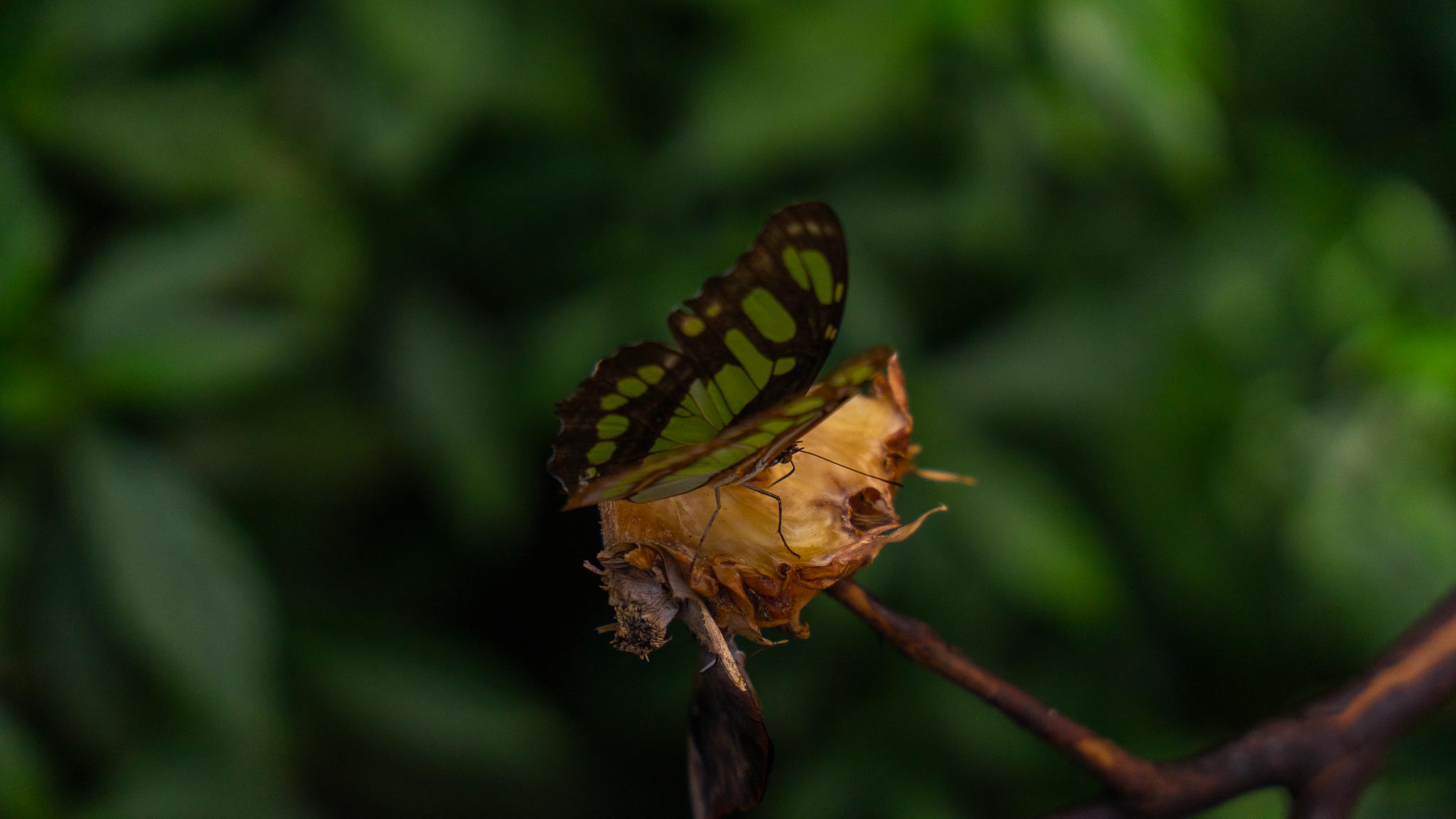
The butterfly area extends that change of subject. After the river, cliffs and broad water of the national park, the visit can settle on a smaller movement and a nearer frame. The park’s official visitor material also lists hummingbirds alongside the butterfly experience, keeping the afternoon connected to the wider variety of Atlantic Forest life.
Why It Works on the Brazil Day
The geography is the practical reason to pair Parque das Aves with Iguazú Falls. The park is beside the Brazilian entrance to the national park, so it can be treated as part of the same outing rather than as a separate city transfer. The sensible order is falls first, bird park afterwards: the major landscape in the morning, the closer wildlife experience later.
Macuco Safari can sit between those two stops for travellers who want a fuller Brazil-side day. Its operator presents it as a separate attraction, with its own trail and boat experience, and park admission is separate. It is worth checking the current arrangement rather than assuming that every ticket or facility is bundled together.
The more important planning choice is not whether to collect every attraction. It is whether the day has room to change pace. A falls-only visit keeps the focus on water and gorge. Adding Parque das Aves introduces conservation, birds and the Atlantic Forest at close range. Adding Macuco as well makes the day denser; it does not make the bird park more necessary.
How Long to Allow
The park’s current visitor guidance gives a minimum visit of about one hour and an average visit of about three hours. For a Brazil-side Iguazú day, around two hours is a useful working allowance: enough to walk part of the paved trail, spend time in the immersion aviaries and leave room for the butterflies and hummingbirds without turning the afternoon into a race.
Photography, interpretation and the pace of the trail can all extend the visit. The practical point is to protect more time than the bare minimum if Parque das Aves is one of the reasons for making the stop. Current opening hours and ticket information should be checked close to travel; the official listing currently shows daily opening from 8:30am to 4:30pm.
Can You Combine Parque das Aves with Iguazú Falls?
Yes. The two attractions are especially easy to combine because Parque das Aves sits next to the Brazilian national-park entrance. Start with the Cataratas trail, then move to the bird park while the day is still open. If Macuco Safari is part of the plan, place it between them and allow more time for the whole outing.
The wider two-country arrangement needs separate planning. The Argentina and Brazil sides are distinct visits, and border requirements can change. For the full structure, including the Argentina-side circuits and onward travel, use the Iguazú Falls in 2 Days itinerary. For the question of how the two national-park experiences differ, see the Iguazú Falls: Argentina vs Brazil guide.
Is Parque das Aves Worth Visiting?
For a Brazil-side Iguazú day with enough room for another attraction, yes. Parque das Aves is close to the falls, its conservation purpose gives the visit substance, and the immersive aviaries offer a genuine change of scale. It does not ask the traveller to choose between wildlife and the waterfall; it makes the two subjects legible in succession.
The case is weaker when the available window is only a few hours. Iguazú Falls should take priority if the choice is between the Brazilian trail and the bird park. Parque das Aves earns its place when the day can hold both, especially for travellers interested in the Atlantic Forest, conservation or a slower counterpoint to the falls.
FROM WATER TO WINGS
Iguazú spends the morning teaching the traveller to think in rivers, cliffs and kilometres of falling water. Parque das Aves reverses the scale. The forest closes in, the frame narrows and attention returns to wings, leaves and individual animals. That change is exactly why the park earns its place after the falls.
It does not need to imitate Iguazú to justify the time. Its value is the shift from the geography of water to the life held inside the Atlantic Forest, giving the Brazilian day a second subject rather than a second version of the same attraction.
But the road is ever onward.