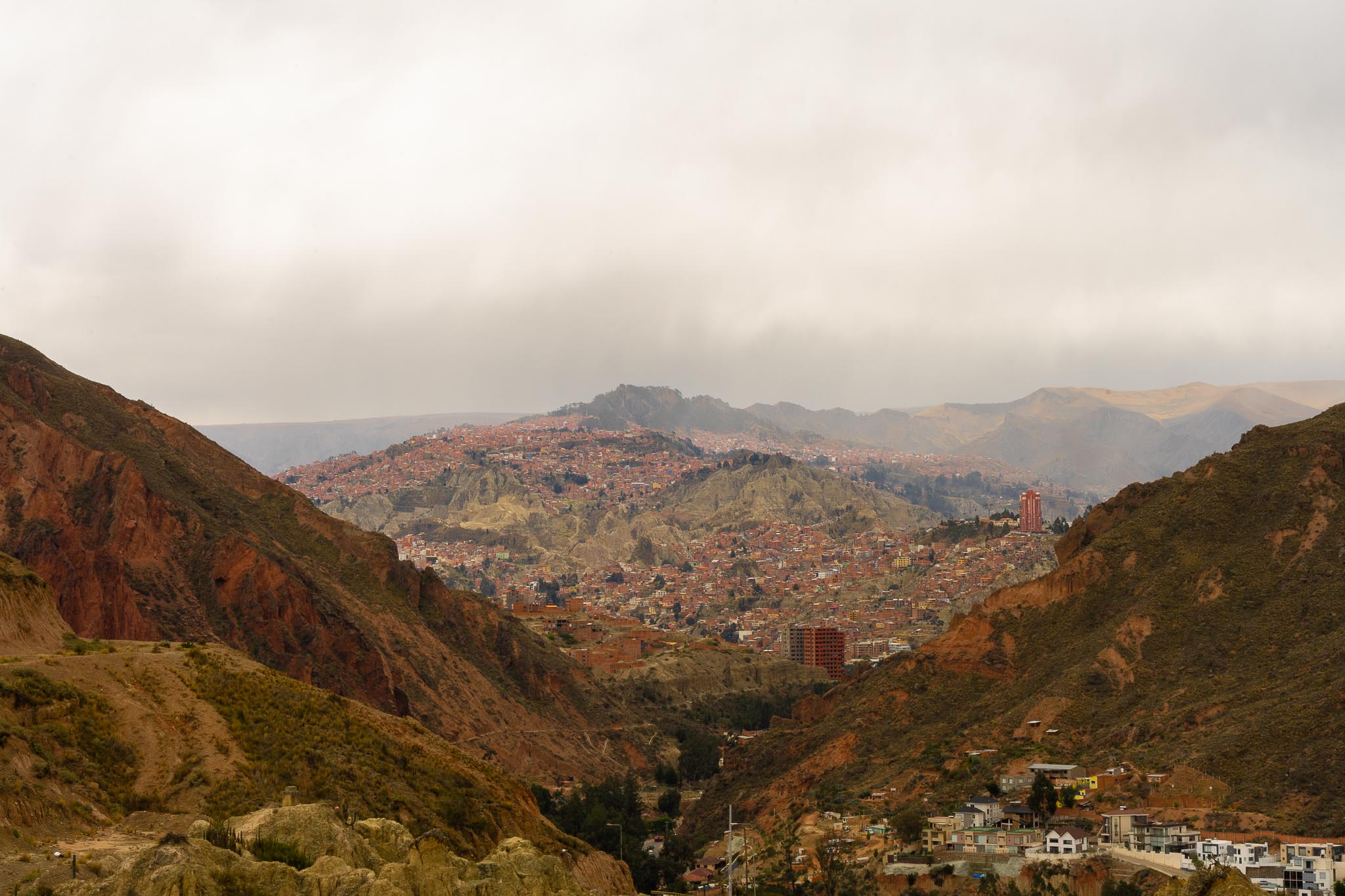
Valle de la Luna is where La Paz leaves the dense city without leaving its landscape. After plazas, markets, museums and cable cars, the streets give way to exposed earth, narrow ridges and paths between eroded formations. The city remains close, but it is no longer the thing in the foreground.
That change is the reason to go. Valle de la Luna is not a grand mountain expedition and it does not need to compete with La Paz’s central districts. It is a contained morning walk that gives the itinerary another physical register: less wall and roof, more clay, shadow and open sky.
The visit fits naturally after two days in central La Paz. For the complete sequence, use the three-day La Paz itinerary. For the wider city, the best things to do in La Paz guide places Valle de la Luna beside the markets, museums and Mi Teleférico.
I. When the city gives way to earth
Valle de la Luna lies in Mallasa, south of central La Paz. The setting matters because the excursion does not take the traveller into a distant wilderness. It follows the same broad geography that shapes the city, but shows it with the buildings stripped away.
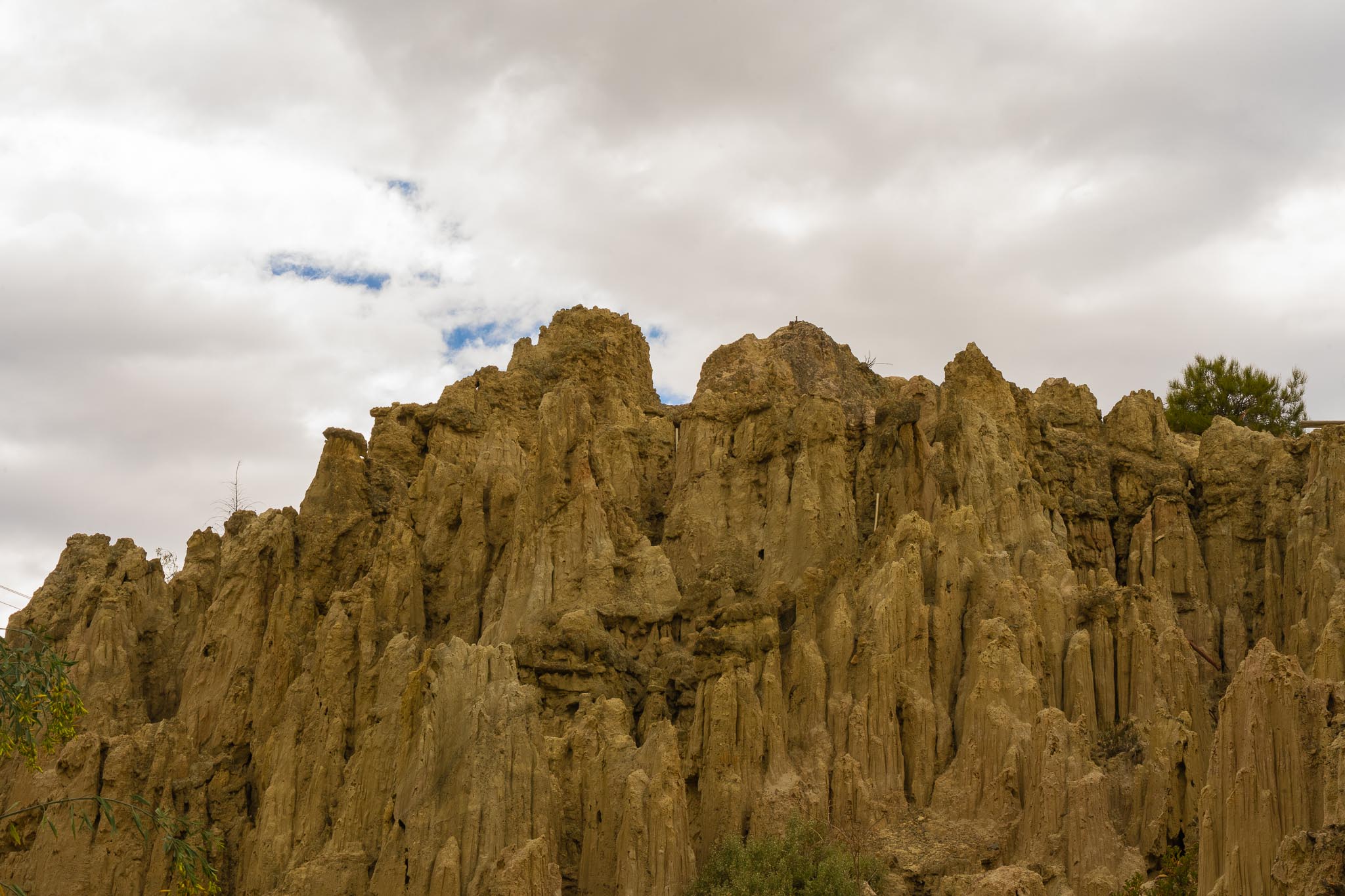
The formations are made from soft, clay-rich earth shaped by erosion. Water has cut gullies and channels through the material, leaving narrow spires, ridges and walls that gather around the paths. Mineral content gives the ground variations of brown, ochre and red, while the high, dry environment keeps the surfaces exposed. The result looks less like a single monument than a concentrated field of fragile forms.
The name invites comparisons with the moon, but the useful description stays closer to the ground. Valle de la Luna is a landscape of sediment, weather and walking paths. Its drama comes from the repetition of small changes: a ridge narrowing ahead, a gully dropping beside the route, a wall of clay replacing the urban wall that had been present all morning.
That makes it a good La Paz excursion. The city is built across a difficult basin, with roads, houses and cable cars negotiating the slopes. Here, the same forces are visible without the streets and buildings. The landscape becomes the structure of the visit.
II. Walking through the formations
Valle de la Luna works on foot. The paths thread between formations rather than leading to one single lookout, and the view changes as the ground changes. A narrow passage can open into a wider group of ridges; an exposed section can close again around the next turn.
The physical experience is contained but not flat. There are uneven surfaces, narrow sections and repeated changes of level, so sensible walking shoes are more useful than an ambitious idea of the visit as a quick photo stop. This is ordinary walking through eroded terrain, not technical mountaineering and not a substitute for a longer high-altitude hike.
The traveller spent about two hours at the site. That was enough time to move through the formations rather than look at them from one edge, and enough to let the contrast with central La Paz settle. The visit felt like a walk with a beginning and an end, not a single landscape viewed through a vehicle window.
The distinction matters for planning. Valle de la Luna is not a full-day trek, but it is also not best treated as a five-minute detour. Allow time for the paths, the changing ground and the pause between one formation and the next.
III. Why it works after two urban days
The first days in La Paz are read through built form. Plaza Murillo gives the city a civic centre. The Witches’ Market and Mercado Rodríguez bring commerce and belief into the streets. Museums hold older histories in rooms close to the centre. Mi Teleférico then lifts the whole arrangement above the roofs and makes the slopes legible.
Valle de la Luna changes the subject without breaking the geography. The exposed formations belong to the same high, dry landscape, but they are no longer background to a city. The ground takes over. The route becomes a sequence of ridges and paths rather than façades, traffic and station platforms.
That is also why the excursion works better after some time in central La Paz. With only one day, Plaza Murillo, the markets and Mi Teleférico are the stronger priority. With a third day, Valle de la Luna gives the visit a necessary widening. It prevents La Paz from becoming only an urban story.
Mi Teleférico reveals the city from above while keeping the urban fabric central. Valle de la Luna temporarily removes that fabric from the centre of attention. The two experiences complement one another because one explains how La Paz is built and the other shows the earth on which it is built. The dedicated Mi Teleférico guide explores the first half of that contrast.
How much time should you allow?
Around two hours worked well for this visit. For many travellers, roughly 1.5 to 2.5 hours at the site should be enough to walk through the formations without turning the excursion into an entire day, but the exact pace depends on how much of the paths is open and how long each person spends stopping along the way.
Keep the time at the site separate from the transfer. Valle de la Luna is south of the central city, so allow a morning block rather than counting only the minutes inside the formations. The municipal tourism listing currently gives opening hours of 09:00 to 18:00, but access arrangements and operating information should be checked close to travel.
Getting to Valle de la Luna
The simplest practical approach is to arrange transport from central La Paz and treat the visit as a return excursion. Taxi, rideshare or an organised city tour may all be useful depending on the day and the current service available. There is no need to force a complicated public-transport connection into a short morning unless the route is clear and suits the rest of the plan.
Check the current entrance arrangements, transport options and opening information before leaving. Prices, payment methods and services can change. The important planning fact is more stable: Valle de la Luna belongs south of the central walking route and deserves its own block.
Is Valle de la Luna worth visiting?
Yes, particularly on a three-day stay. The excursion does not consume the whole day, yet it supplies a genuinely different physical experience. The traveller walks through eroded earth, narrow ridges and open space, then can return to La Paz with the central city still available.
Its value is not that it is grander than the city. It is that it makes the itinerary physically broader. After two days of stone façades, market streets and cable cars, the formations give the eyes and feet a different problem to solve.
With only one day, keep the priority on central La Paz. With two days, choose between the museum cluster and the excursion according to interest. With three, Valle de la Luna earns the morning because the contrast is strong enough to justify leaving the centre and short enough to fit within the wider route.
Practical lessons from the visit
- Give Valle de la Luna a dedicated morning rather than squeezing it between museums and markets.
- Allow about two hours at the formations, with separate time for the transfer.
- Wear sensible walking shoes for uneven paths and changing ground.
- Carry water and sun protection in the exposed, high-altitude environment.
- Treat trail difficulty and altitude as separate questions: the walk is contained, but La Paz is high and individual responses vary.
- Check current access, opening information, transport and ticketing close to travel.
The traveller had already spent time at altitude before La Paz, and the visit was comfortable enough to complete on foot. That is not a universal promise. Pace the morning, especially when newly arrived, and seek medical advice if symptoms are concerning.
The earth takes over
For two days La Paz is read through civic buildings, market streets and cable cars. At Valle de la Luna, the city gives up the foreground and the earth takes over. The formations do not replace the city; they show the landscape that has always been organising it.
That is why the excursion deserves its place. A morning is enough to leave the dense centre, walk between ridges and return with La Paz enlarged rather than interrupted. The city’s vertical geography remains in view, but the ground becomes the story for a while.
For the complete route through central La Paz, Mi Teleférico, the markets and Valle de la Luna, continue to the three-day La Paz itinerary.
But the road is ever onward.