La Paz is difficult to understand from street level. The centre gathers plazas, churches, museums and markets into a dense urban bowl, while brick neighbourhoods climb the slopes above it. Cable cars cross over roofs and roads, making the city’s vertical shape visible. Then the streets give way to the eroded formations of Valle de la Luna, where the city becomes a landscape rather than a collection of buildings.
The strongest experiences here are the ones that explain those changes. Plaza Murillo gives the city a civic centre; the markets bring belief, produce and daily commerce into the same central streets; the museums hold older histories in rooms close enough to walk between. Mi Teleférico and Mirador Killi Killi make the geography legible from above, while Hernando Siles connects the city to football and public life. Taken together, they make La Paz more than a list of stops.
Three full days give these layers room to sit beside one another. For the same places arranged as a dated journey, use the three-day La Paz itinerary.
Ride Mi Teleférico
Public transport above the city, and the clearest introduction to its vertical geography
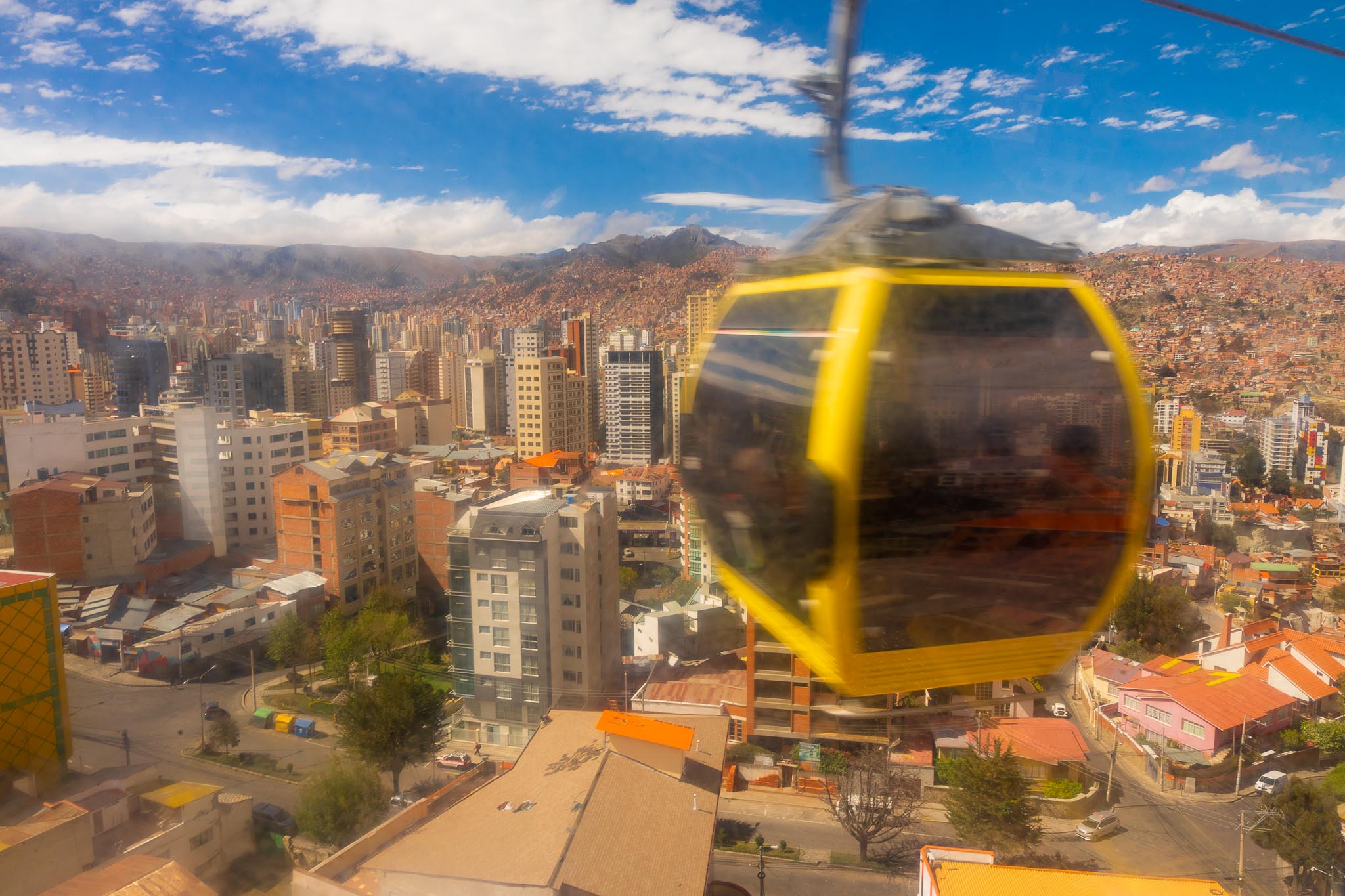
Mi Teleférico is the best place to begin because it is both a practical way through La Paz and a changing view of the city. From a cabin, roofs, roads, steep hillsides and dense neighbourhoods share one frame. The city stops looking like a flat centre with an edge and starts to read as a basin built upwards.
That double function matters. A cable car can shorten a crossing between parts of the city, but it also shows how those parts sit together. Streets disappear beneath the cabin; slopes that seemed distant become the next neighbourhood; the high plain and the lower bowl take their place in the same view. The specialist Mi Teleférico in La Paz guide goes further into the network. For a first visit, the useful rule is simple: use the system as transport rather than saving it for a single scenic ride.
Walk Plaza Murillo and Central La Paz
Civic buildings, old streets and the public face of the city
Plaza Murillo gives central La Paz its formal centre. The square is named for Pedro Domingo Murillo, one of the leaders associated with the 1809 uprising in Upper Peru, and its surrounding buildings keep that political history close to the present. The Metropolitan Cathedral, government buildings and the traffic of the surrounding streets make the square a place to read the city’s public life, not simply to pass through on the way to the markets.
From there, the central walk can widen through Sucre Square, the streets around San Francisco and the museum district. Colonial religious buildings, civic façades and the slopes beyond them occupy the same short sequence. It is a good counterweight to the cable cars: first see how La Paz rises above the centre, then spend time in the streets where its institutions meet.
Walk the Witches’ Market and Mercado Rodríguez
Two market districts where belief and everyday commerce sit within the city’s centre
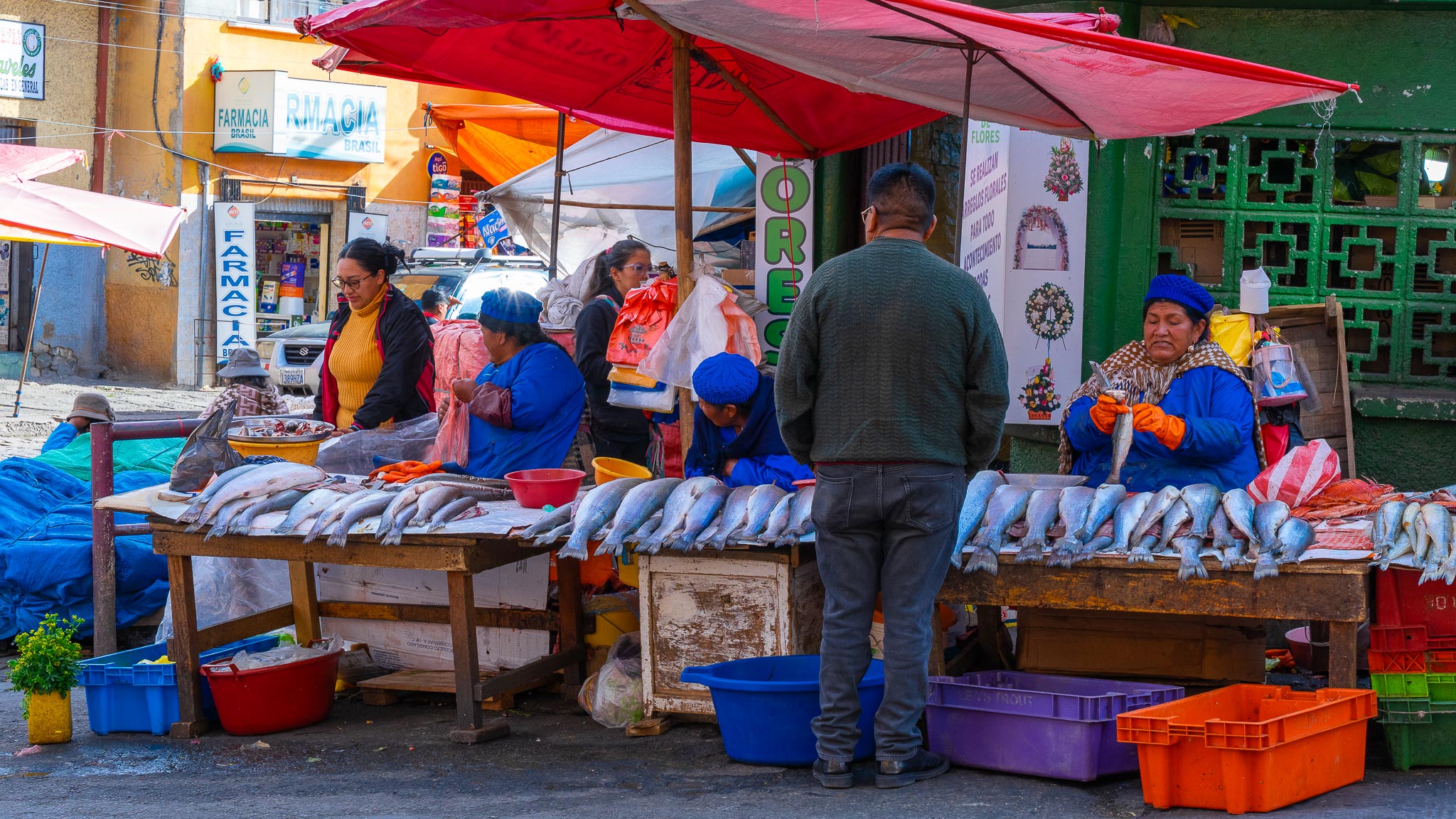
The Witches’ Market is not a single grand market hall but a set of shops and stalls around Calle Linares. Offerings associated with Pachamama sit beside herbs, candles, amulets, crafts and other goods. The place is most useful when approached as part of La Paz’s living culture rather than as a stage set for unusual photographs. Look closely, move respectfully and let the street remain a working place for the people who use it.
Mercado Rodríguez gives the day a different emphasis. It is one of the city’s emblematic markets, with produce, vendors and the ordinary business of buying and selling. The contrast between the two areas is not a neat division between ritual and reality; both belong to the city’s working centre. The dedicated La Paz markets guide keeps the two visits together and gives the practical sequence more room.
Visit Valle de la Luna
A separate morning where the city gives way to eroded formations
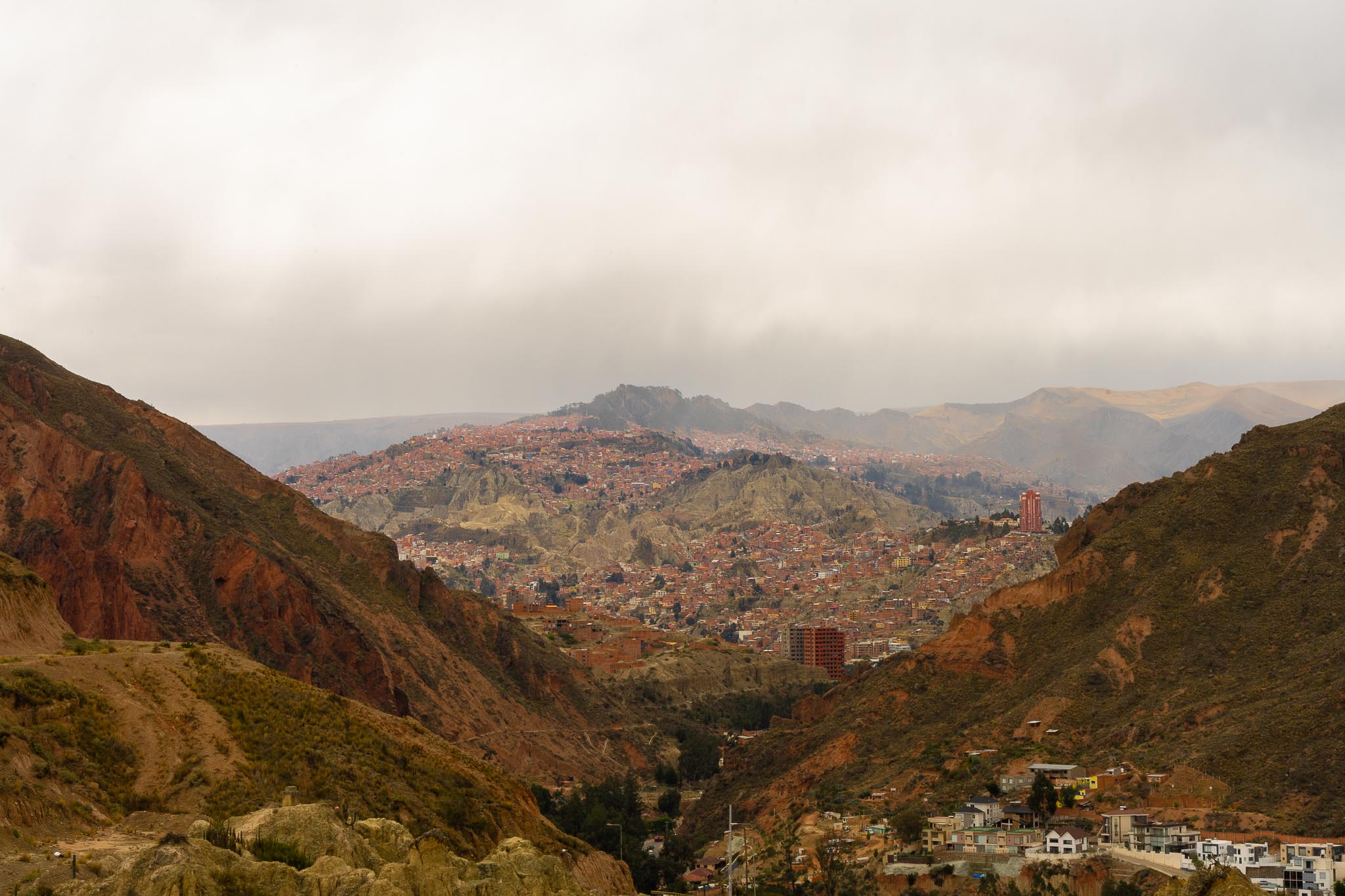
Valle de la Luna earns a place because it changes the scale of the visit. After plazas, museums, market streets and cable cars, the route leaves the dense urban bowl for formations cut into pale, dry earth. The paths move between spires and ridges rather than between buildings, and the surrounding city becomes something seen beyond the landforms.
Give it a separate block rather than trying to fit it between central stops. The transfer is short enough to make the excursion practical, but the point is the change of setting. The Valle de la Luna guide is the better place to settle questions about the visit; here, the recommendation is simply to let La Paz have a landscape chapter of its own.
Spend Time in the Museums
History, art and material culture within walking distance of the centre
La Paz’s museum district works best as a cluster. The Coca Museum, MUSEF, the National Art Museum and the Museum of Precious Metals each offer a different way into Bolivia’s history and culture. None needs to carry the whole day alone. Together they make the centre less like a sequence of viewpoints and more like a place with deep material history.
San Francisco belongs naturally in the same central walk. Its church and surrounding complex connect religious history with the streets and markets outside, while the nearby collections provide a wider frame. Choose the museum that most interests you, then leave enough time to walk between the buildings. The value is in the movement from public square to collection, not in rushing through every door.
Look Out from Mirador Killi Killi
A city-wide view after the city has been walked at street level
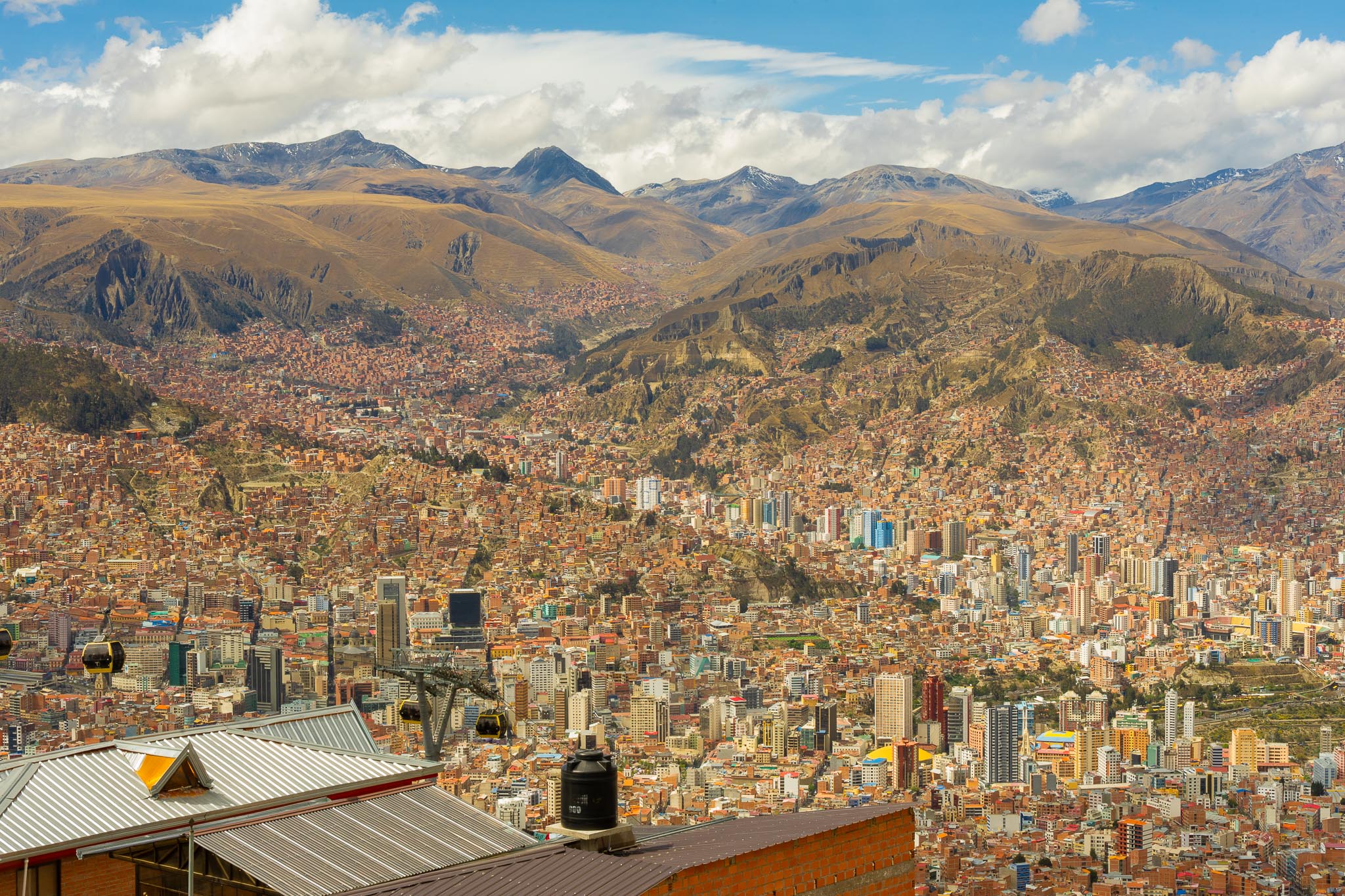
Mirador Killi Killi is most useful after the centre has become familiar. From above, La Paz gathers itself into one broad image: the bowl, the roads, the brick slopes and the mountains beyond. The view does not replace the markets or museums. It gives them a geography.
This is the viewpoint to choose when the question is how the city fits together. Mi Teleférico shows the urban fabric in motion; Killi Killi holds it still. After both, the steepness of La Paz is no longer an abstract fact but the organising feature of the city.
See Estadio Hernando Siles
Football, public space and the city’s high-altitude civic geography
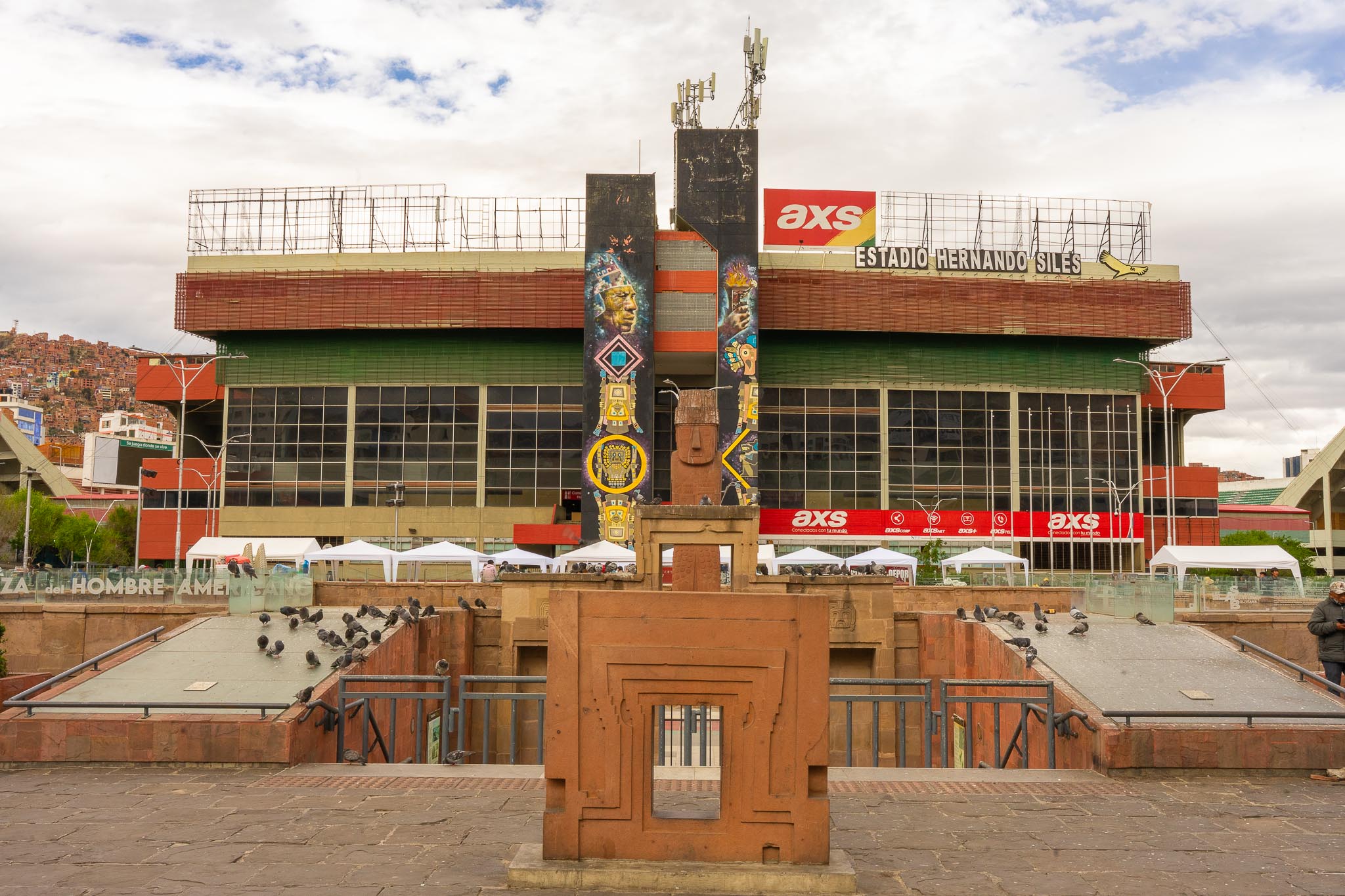
Estadio Hernando Siles adds a different kind of public space to the list. It is one of Bolivia’s major football venues, set within the city rather than separated from it as a distant attraction. Even from outside, the stadium belongs to the same geography as the plazas, markets and cable cars: a place where the city gathers around a shared institution.
The visit does not need a match to justify the stop. The exterior and its urban setting are enough to make football part of the way La Paz is read. It is a useful final experience because it returns the journey from wide views and dry landscape to a building made for collective attention.
Shortest route to a great first visit
What each part of La Paz does best
Watch-outs
What to prioritise with one or two days
With one day, keep the central sequence compact: Plaza Murillo, the Witches’ Market, Mi Teleférico and Mirador Killi Killi. It moves from civic space to market street, then uses the cable cars and viewpoint to show how the city rises around them.
With two days, give one day to the centre and markets, then choose between the museum cluster and Valle de la Luna according to whether history or the landscape matters more. Add Hernando Siles if football and public space are part of the interest. With three days, follow the fuller La Paz itinerary, which gives Valle de la Luna its own day and keeps the movement between central stops manageable.
Practical planning
La Paz works best when transport and walking are treated as part of the sightseeing. Use Mi Teleférico where it connects the day, stay central if the markets and museums matter, and avoid forcing Valle de la Luna into a short gap between urban stops. The exact order can change; the contrast between the settings is the important part.
Altitude shaped the plan through walking and cable cars rather than harder training. The traveller had already spent time at altitude before La Paz, but individual responses differ. Keep the first walks manageable, allow extra time for climbs and seek medical advice if symptoms are concerning.
In the markets, photograph the street rather than treating people or ritual objects as scenery. For museums, choose a small group rather than trying to cover every collection. Those choices leave enough space for the city to be read rather than merely completed.
The City in Layers
The cable cars explain La Paz’s vertical shape. The markets explain how belief and daily commerce share the centre. Plaza Murillo explains civic power; the museums give history material form; Valle de la Luna carries the city into a different landscape. Killi Killi gathers the geography into one view, and Hernando Siles brings the attention back to public life.
That is why the best things to do in La Paz are not interchangeable stops. They move between elevation, history, commerce, landscape and collective space until the city begins to hold together. The three-day itinerary is the natural next step when those layers need to become a route.
But the road is ever onward.